

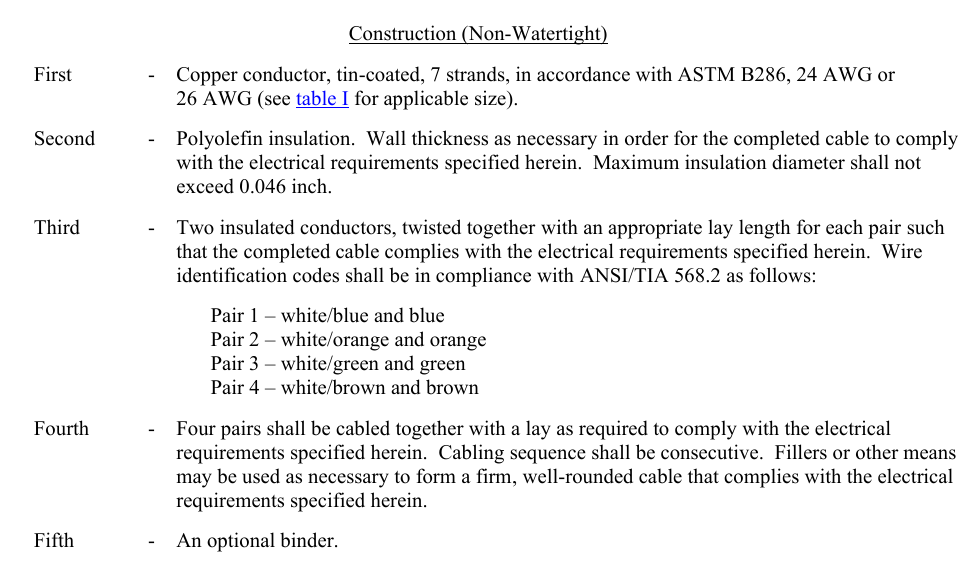
On March 12, 2026, the Navy’s MIL-DTL-24643/61 detail sheet was issued with Amendment 1 incorporated. Its four-pair M24643/61-02UO cable contains eight copper conductors, each assembled from seven tin-coated strands, and a shield that includes a separate copper braid. The sheet gives the manufacturer a precise copper-bearing product to make.
Getting the metal through wire-making is part of that commitment. An inclusion embedded during casting or drawing can become a point where the wire cracks and breaks. Inspection-equipment maker FOERSTER describes the consequences: interrupted production, scrap and unplanned downtime.
Those are manufacturing costs incurred before anyone tests a completed cable.
A copper source earns commercial value by helping the converter produce wire that meets the electrical requirement and runs through manufacturing without avoidable defects. For a cable business considering additional domestic supply, that connects a sourcing opportunity with something it can examine: the intermediate being supplied, its behavior during processing and the finished construction it must support.
 Taylor Cross
Copper carries the signal and helps protect it
The eight internal conductors provide the cable’s electrical paths. Copper’s low resistivity supports that function; the U.S. Geological Survey identifies it as the most electrically conductive non-precious metal. The selected cable uses 24-AWG stranded conductors, arranged into four insulated pairs. Strand construction and pair arrangement turn the metal’s conductivity into a specified cable.
Around the pairs, metallic foil/polyester tape contacts a tin-coated copper braid. This copper has a different job. Conductive braid forms part of the barrier against electromagnetic interference, as Glenair’s technical explanation describes. The Navy detail sheet separately specifies shield continuity and shielding performance.
Copper is present in both the electrical path and the construction protecting it.
There is very little room for an abstract material promise here. The selected LSC5POS-4 cable has an overall diameter of 0.290 to 0.370 inch. Its conductors, insulation, foil, braid and jacket share that defined space. The braid itself uses finer, 36- or 34-AWG tin-coated copper wire. A manufacturer needs these particular copper constructions, rather than an interchangeable quantity of metal.
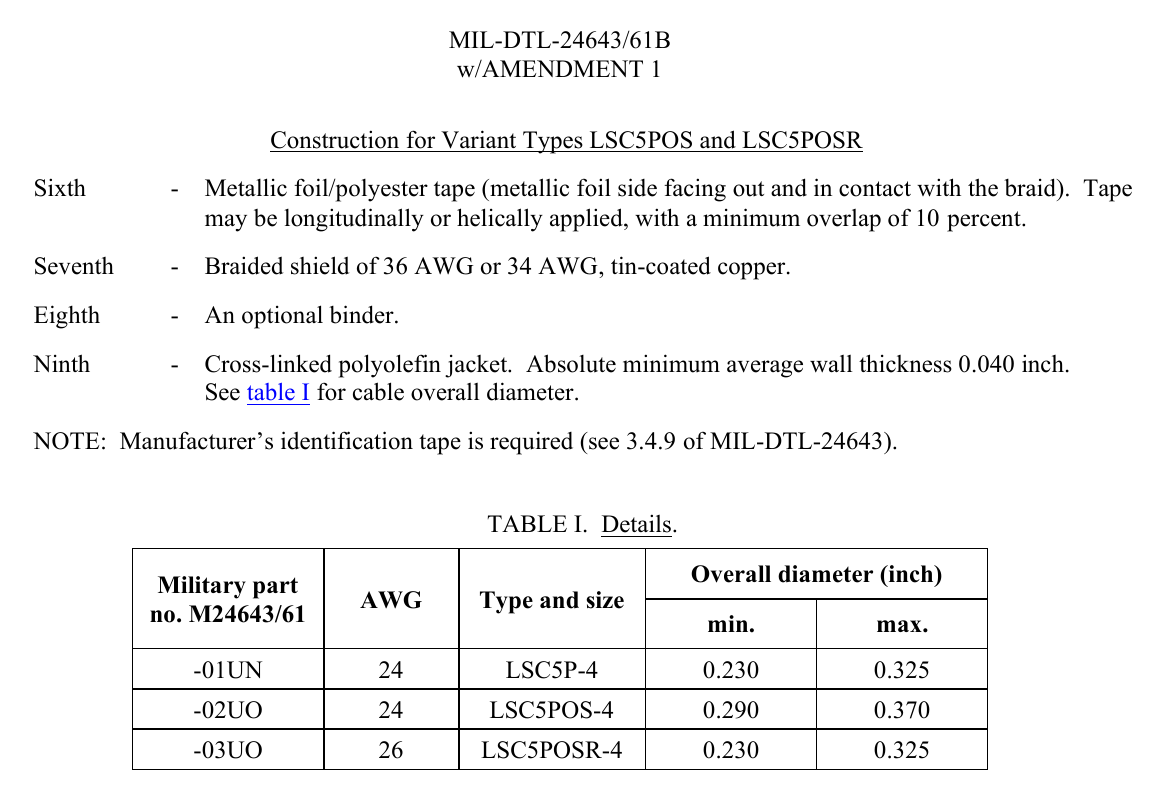
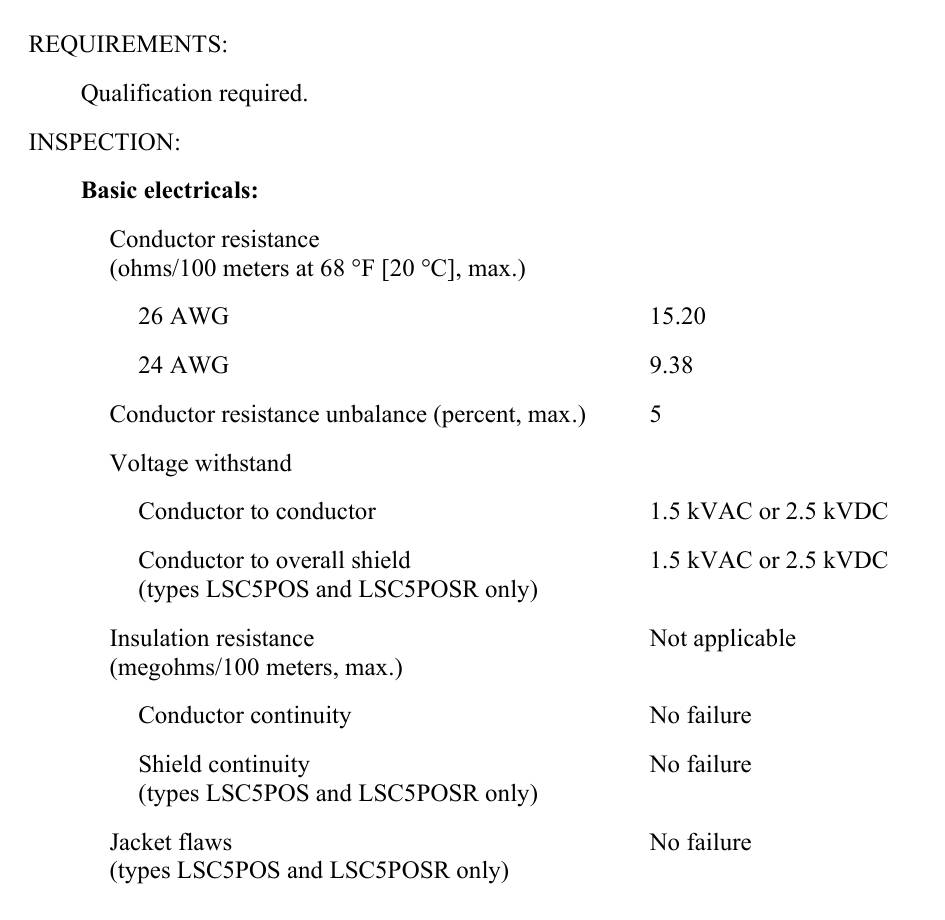
The sheet’s basic electrical requirements limit conductor resistance to 9.38 ohms per 100 meters at 20 degrees Celsius for the 24-AWG construction. Maximum resistance unbalance is 5%. Those are finished-conductor requirements within the cable specification; a cathode purity figure measures something else. Both can be useful, provided the buyer keeps the question attached to the material being evaluated.
 Taylor Cross
An inclusion makes quality a production question
Wire drawing reduces metal through dies to the required size. A hard inclusion can behave differently from the surrounding copper as it deforms. FOERSTER explains that this mismatch concentrates stress and can initiate a crack. The defect’s consequence reaches beyond the affected piece of metal when a break interrupts a continuous drawing operation.
That mechanism has been observed in copper wire. In a published microanalysis application note, instrument maker Rigaku examined wires with embedded inclusions that had caused production faults. The investigation compared the composition near the damaged tips with the wire shafts. Its images and measurements distinguish a local inclusion from the surrounding material—information a general description of the copper would miss.
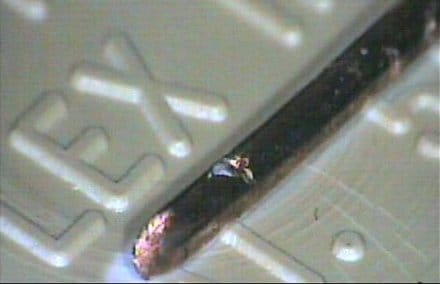
Rigaku’s note is a laboratory case study of the submitted wires. It explains why a small, localized defect can matter even when most of the material is suitable.
Where the defect entered the wire determines what the manufacturer can correct. Casting, drawing and tooling can each contribute defects; a failed draw therefore needs a cause before it can support a judgment about the input source. This is one reason a sourcing comparison benefits from the converter’s production results alongside its material specifications.
ASTM’s public abstract for B49-20 reflects that distinction at the rod stage. It describes drawing stock for further fabrication into electrical conductors and separates unacceptable defects from blemishes that do not interfere with the intended application. The practical objective is usable rod, with the characteristics needed for the next operation.
For the cable business, the implication is a more useful comparison between sources. The team buying drawn wire needs the wire supplier’s performance; the operation buying rod needs results from drawing that rod. An upstream cathode option can contribute through the converter’s output. Evidence at those handoffs reveals whether another source supports usable production, instead of leaving the buyer to infer performance from origin or purity alone.

GUNNISON COPPER (GCUMF) / PR
Release Routing Desk
Achieves Key Milestone Under U.S. Department of Energy 48C Program
A domestic cathode source has a defined place to enter
Southwire’s SCR Copper Rod Systems provide an established process example. Its described furnace accepts conventional cathode, permanent-blank cathode and cathode made through solvent extraction and electrowinning, commonly shortened to SX-EW. It can also use up to 20% high-quality copper scrap. Melting, casting and rolling then produce rod.
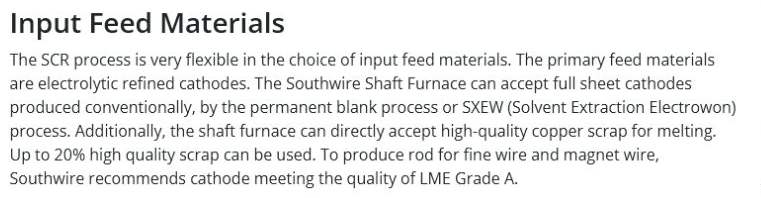
Several feed routes can therefore serve one type of industrial conversion. This is the useful opening for an additional domestic cathode producer: supplying an input form the converter already recognizes. It gives the discussion a real starting point without requiring the cable maker to buy cathode directly or redesign the finished cable around the mine’s product.
Southwire also recommends cathode meeting LME Grade A quality when making rod for fine wire and magnet wire. The recommendation is specific to that process and intended output. It demonstrates how the use of the finished wire reaches back into the feed decision. For the selected Navy cable, conductor and braid requirements would remain with the actual converter and manufacturer involved.
Primary and recycled copper can both participate in this described process. Neither the feed’s origin nor the presence of scrap establishes how a particular rod lot will draw. The converter’s work adds its own influence to the material it receives. This is a documented process example. The supply route for a particular cable remains a separate, manufacturer-specific matter.
 Taylor Cross
More supply has to produce useful wire
The Qualified Products Database, in a display carrying an April 1, 2026 dataset update, lists two manufacturer designations for M24643/61-02UO. It identifies the qualified finished-product endpoint, without reporting spare capacity or naming copper suppliers. As the Defense Standardization Program explains, listing follows evaluation against governing requirements; that status does not transfer upstream to cathode.
The commercial choice still has room to develop before a new source reaches that endpoint. A converter can assess whether an accepted feed form produces suitable rod. A wire supplier can establish how that rod performs in its drawing operation. Those results can make another domestic source a credible production option while the cable’s conductor, shield and electrical requirements remain the same.
The potential gain is usable wire with fewer avoidable interruptions. Its value can be assessed in the manufacturing operation rather than assumed from the source’s location. Separating incoming defects from process-created faults also gives the buyer a fair basis for keeping a source, improving the conversion work or considering an alternative.
The conductor and the braid give domestic copper somewhere specific to go. Drawing results help establish whether another source can reach that destination dependably. The stronger copper option is the one that can become compliant wire with production performance the business can use.