 Strategic Resource Intelligence
The White House gave the Department of War 180 days to turn raw-material supply-chain mapping into policy and implementation guidance.
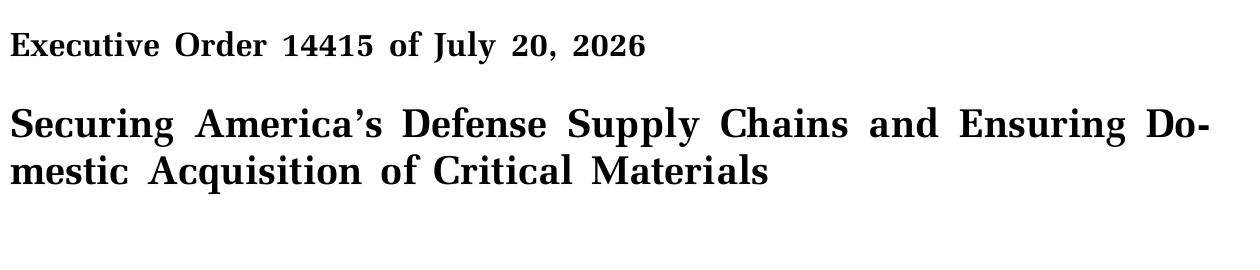
Executive Order 14415 then sets another 90-day period for implementing regulations after that work is complete. The second clock does not begin until the first assignment is finished, so there is no honest basis for inventing a publication date.
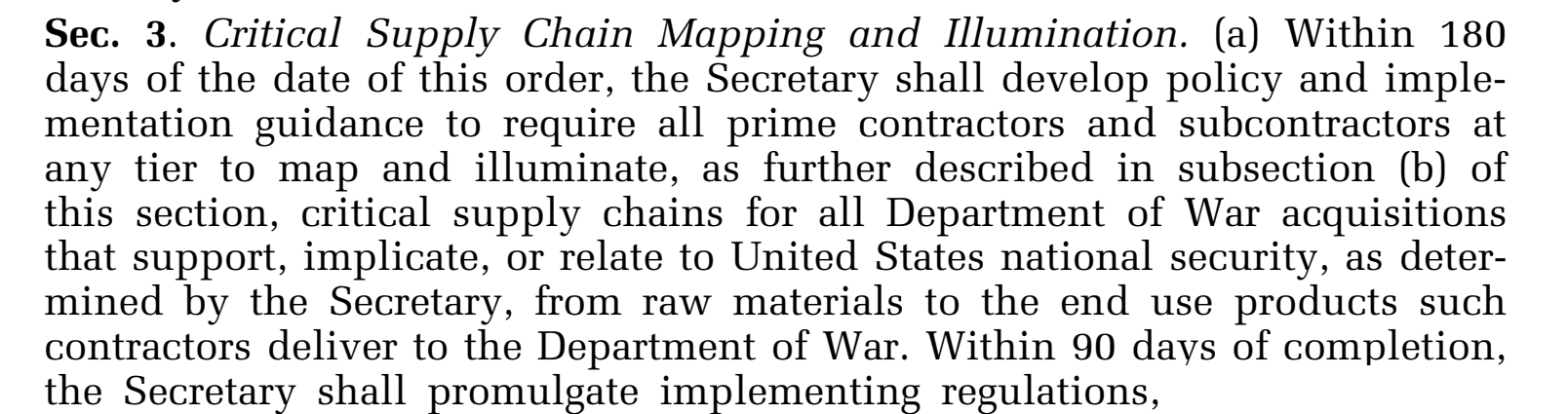
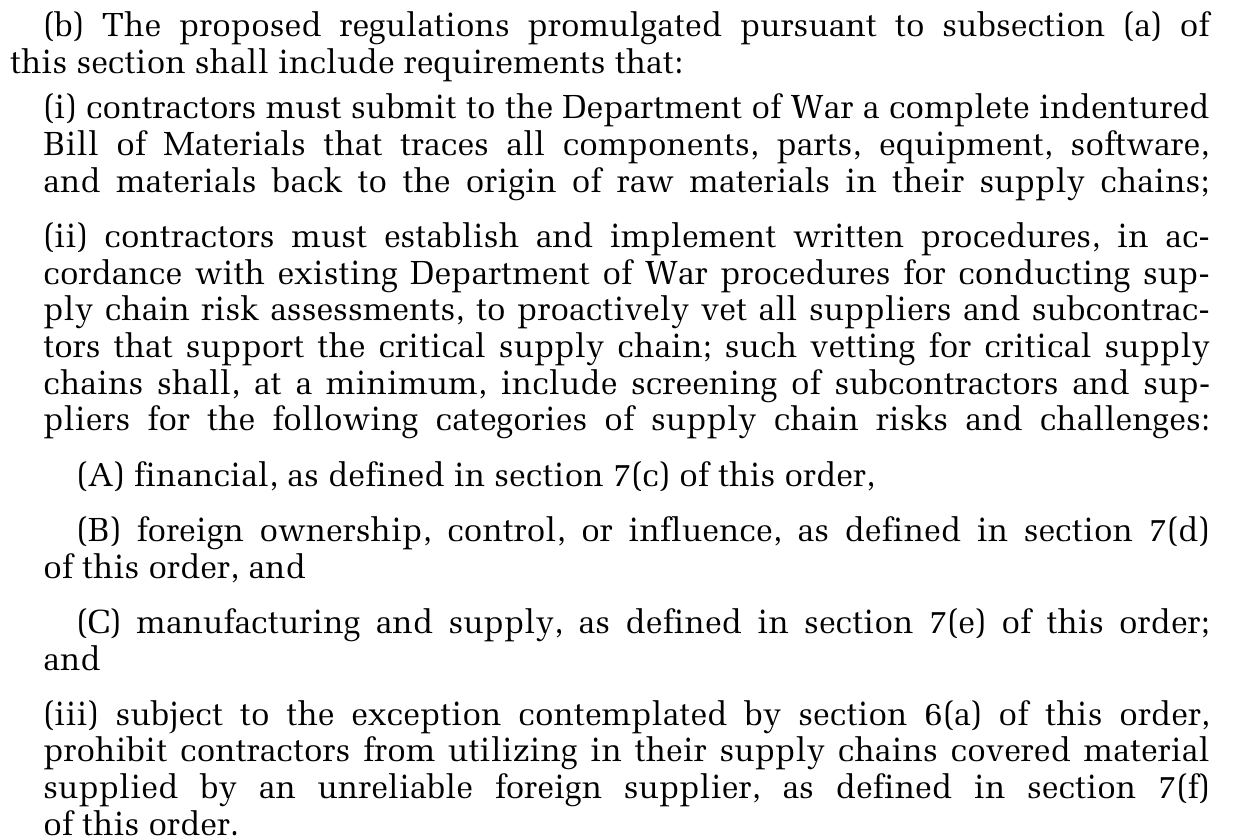
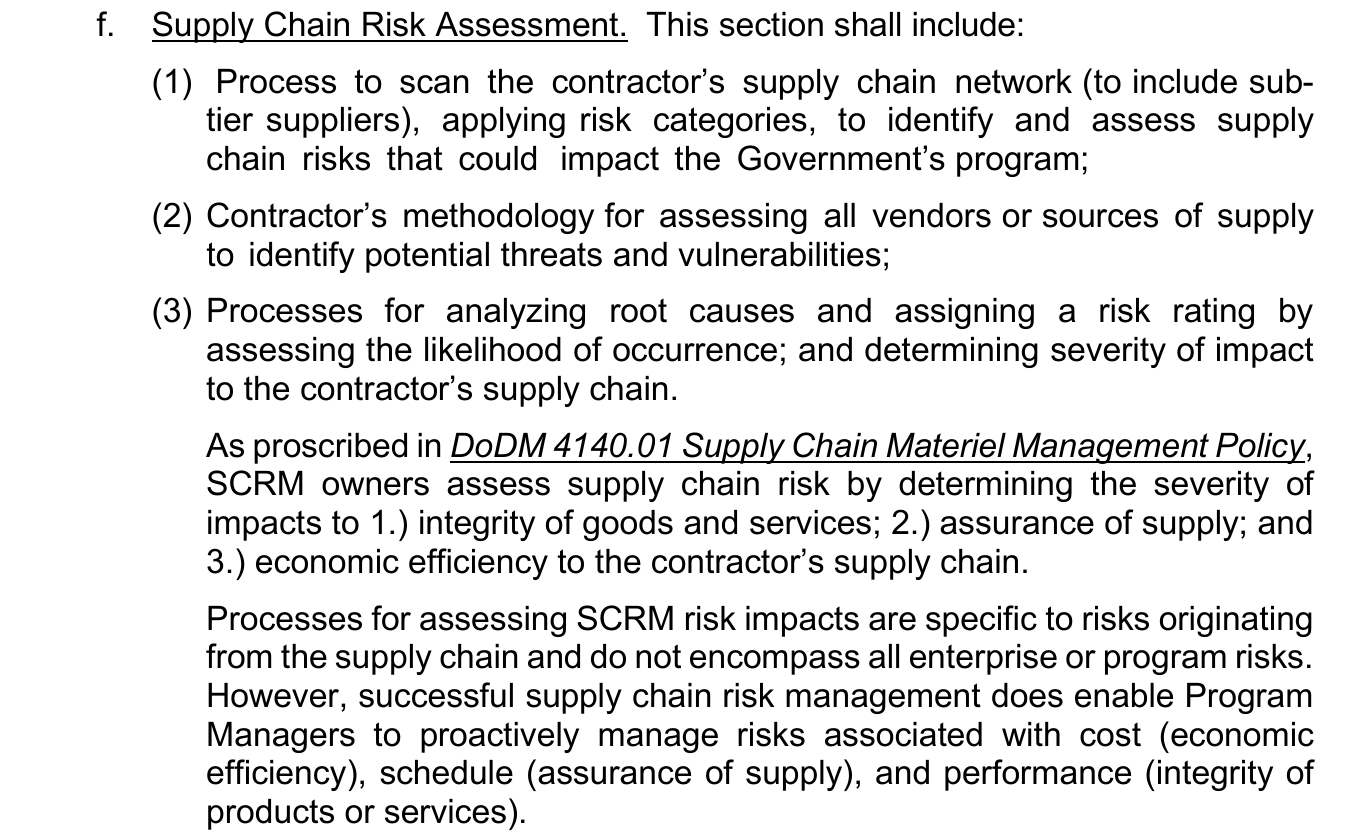
The order contemplates an indentured bill of materials that follows assemblies, parts and lower-tier materials to the origin of their raw materials. Written vetting would extend across supplier tiers and include financial risk, foreign ownership, control or influence, and manufacturing or supply risk. Significant risk is meant to move through mitigation, corrective action and closeout.
EO 14415 does not itself create a current blanket copper contract requirement. It leaves the acquisition universe, required data and implementation mechanics to later Department policy and guidance. That boundary gives a prime room to study records already in hand without pretending a future clause has arrived.

The immediate decision is more concrete than a data-modernization program. When a copper record cannot support a program answer, the prime needs to know what kind of work would make it usable and how far that work reaches. A document search, a configuration decision and a physical supplier change do not belong on the same schedule merely because a dashboard paints all three red.
The expensive mistake is a valid answer to the wrong question
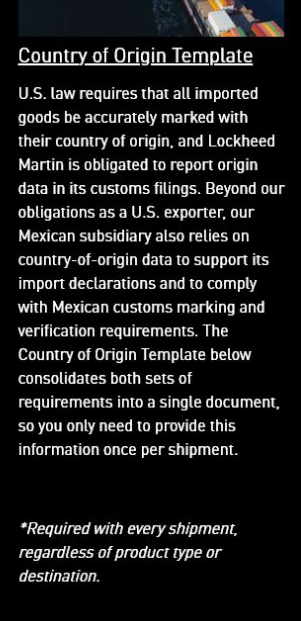
Lockheed Martin's public RMS procurement page shows how much copper information can already exist for another purpose. For shipments containing copper or copper derivative articles, the business area calls for a Section 232 questionnaire covering country of melt and pour, material composition, tariff codes and exclusions. It separately requires a country-of-origin template for every shipment.

Those records can be complete and current. Yet they can answer a different question from the one engineering or a program office needs answered. A trade declaration can govern a shipment, commodity or customs-origin concept. Engineering controls a part number, drawing revision and configured use. A supplier-risk entry may describe a company while the engineering concern sits at one site, process or part. A quality action may apply to a supplier, site, process, lot or revision.
The records do not become bad because their boundaries differ. Trouble begins when a familiar name makes those boundaries look interchangeable. A company-level risk finding may not follow every site. A site approval may not cover every process. An "approved supplier" label may apply to a company, site, process, commodity or specific part; it cannot settle a part-revision question merely because both records name the same supplier.
That is why scope comes before connection. The copper declaration has to say whether it governs this shipment, this material form or this source. The risk record has to reveal whether its judgment follows the company, the site, the process or the part. Only then can the program decide which configured uses inherit the finding.
The physical metal makes the distinction unavoidable. Copper can move from concentrate or recovered feed into refined metal, then into rod, strip, tube or another semifabricated form before becoming wire, windings, connectors, buswork, heat-transfer hardware or a finished assembly. Commercial responsibility and identifiers can change at every transformation. A raw-material identity and a finished part belong to the same chain, but they do not describe the same object.

USGS estimated that the United States produced 1.0 million tonnes of recoverable copper in 2025, valued at $11 billion, while putting net import reliance at 57% of apparent consumption. Those national figures do not measure copper inside a defense program. They show why a common, transformation-heavy material is a demanding scope test: the national market and one configured assembly are not the same object.

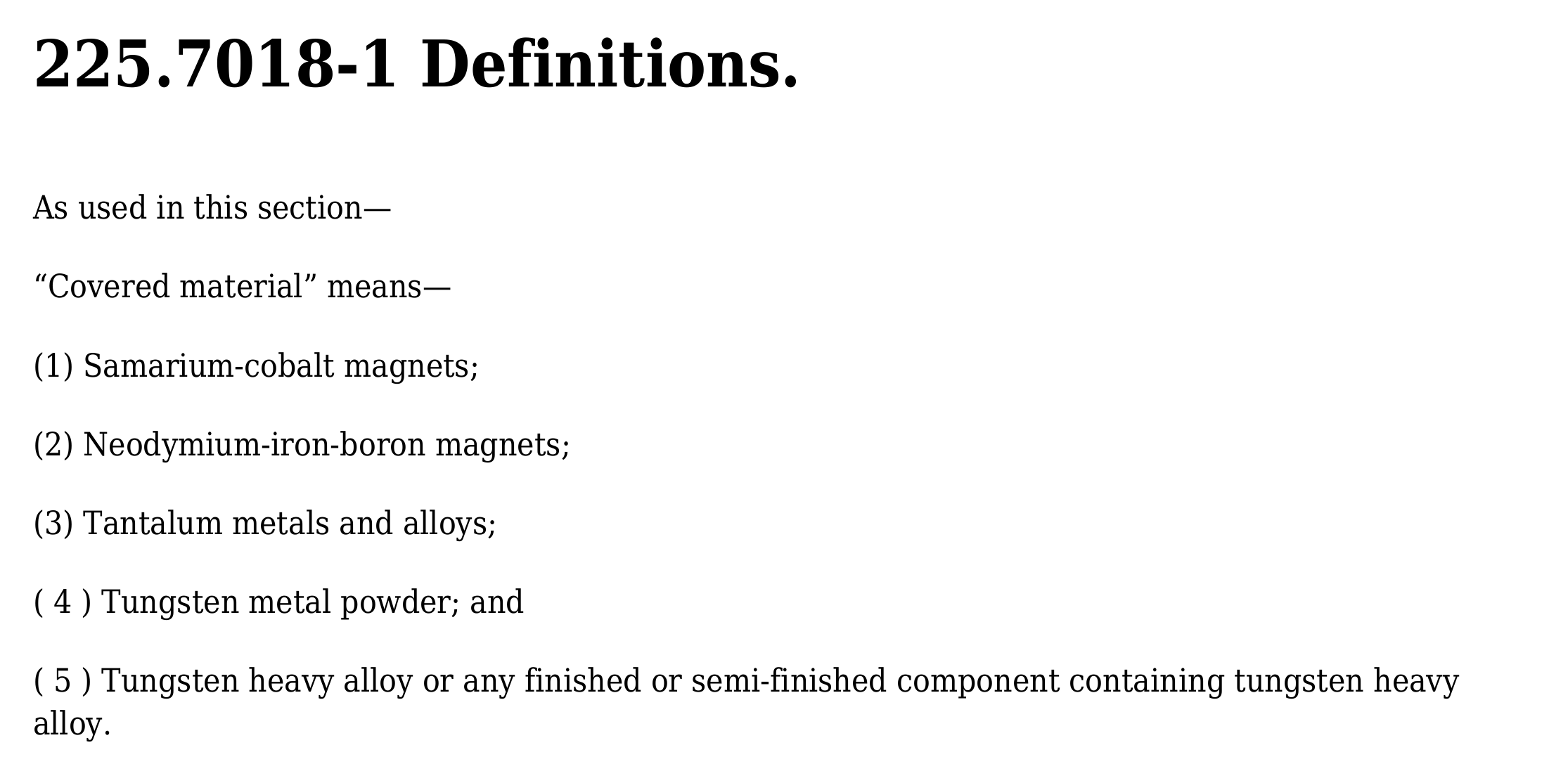
The legal record supplies another clean boundary. Copper appears on the final 2025 U.S. critical-minerals list, but it is not among the materials currently listed in the DFARS definition associated with 10 U.S.C. 4872. Those are different legal scopes. Future Department work may define another acquisition universe; a prime can examine its copper records now without presenting that future choice as current contract policy.
Scope errors spend schedule in both directions. A company-wide warning can send teams toward assemblies that are not affected. A finding drawn too narrowly can leave configured uses outside the response until a program is already under pressure. Before anyone commissions an interface, someone has to decide what the evidence governs. That decision determines whether the repair stops at a record boundary or travels into engineering and the supply base.
A blank record and an old one put different work on the calendar
Now consider the origin declaration itself. If it is absent, a configured part, known supplier and closed quality action cannot substitute for evidence that was never captured. The sensible opening move is recovery: find the accepted declaration in an existing repository, obtain the missing submission through the authorized channel, or record that it does not exist.

A new enterprise platform cannot manufacture a declaration that was never supplied. Nor should one blank field automatically trigger another questionnaire across the supplier base. EO 14415 directs attention to burdens on small businesses, nontraditional companies and new entrants. The prime should first distinguish evidence that is truly absent from evidence sitting in a trade, engineering, risk or quality system under another name.

That distinction keeps a retrieval job from being priced like a supplier problem. The schedule changes when recovery reaches outside the existing record, requires authorized engineering work or exposes a physical change. Until then, the prime may be looking at document work rather than a production risk.
An old answer is different. A declaration can remain on file after a supplier or sourcing route changes. The engineering part may have moved to a new drawing revision, or a quality action may have closed while another record continues to carry the old status. The evidence exists. Its age has changed what it can support.
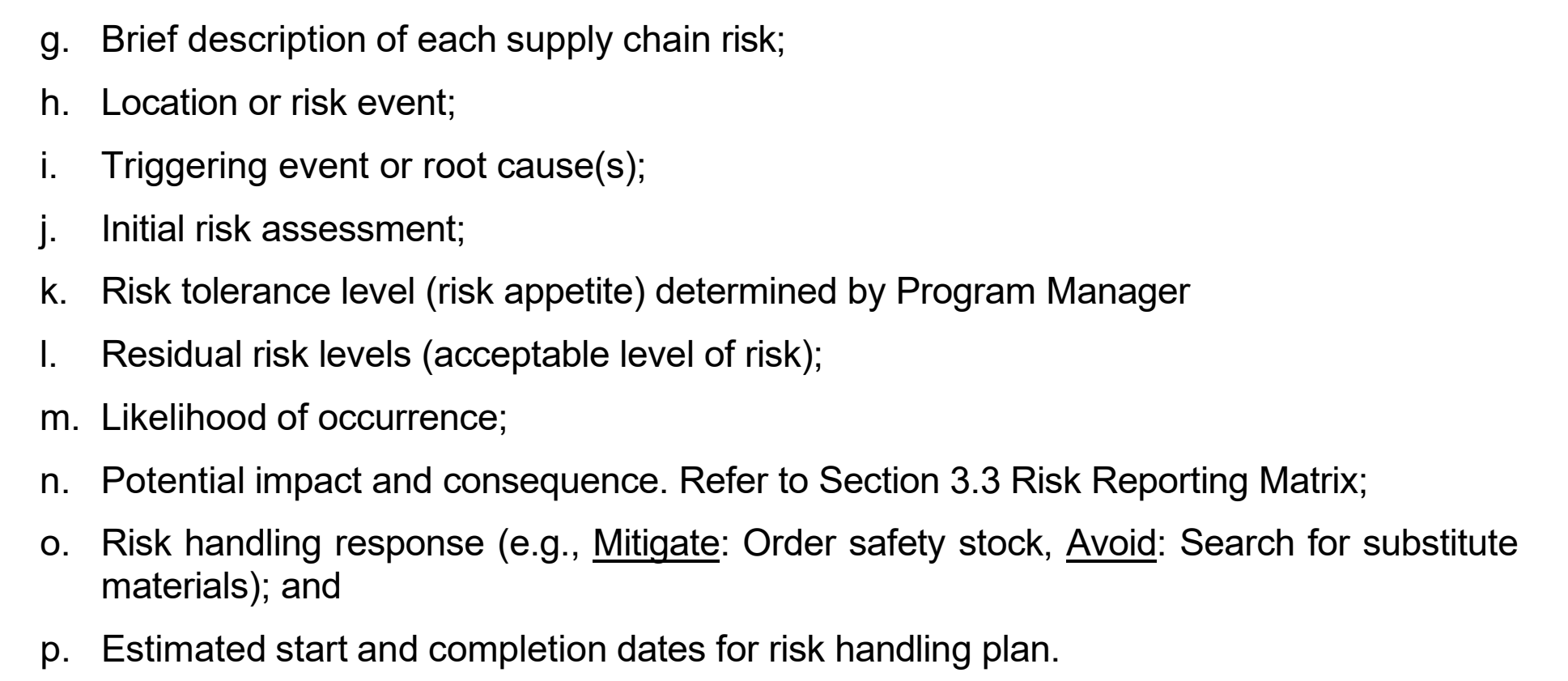
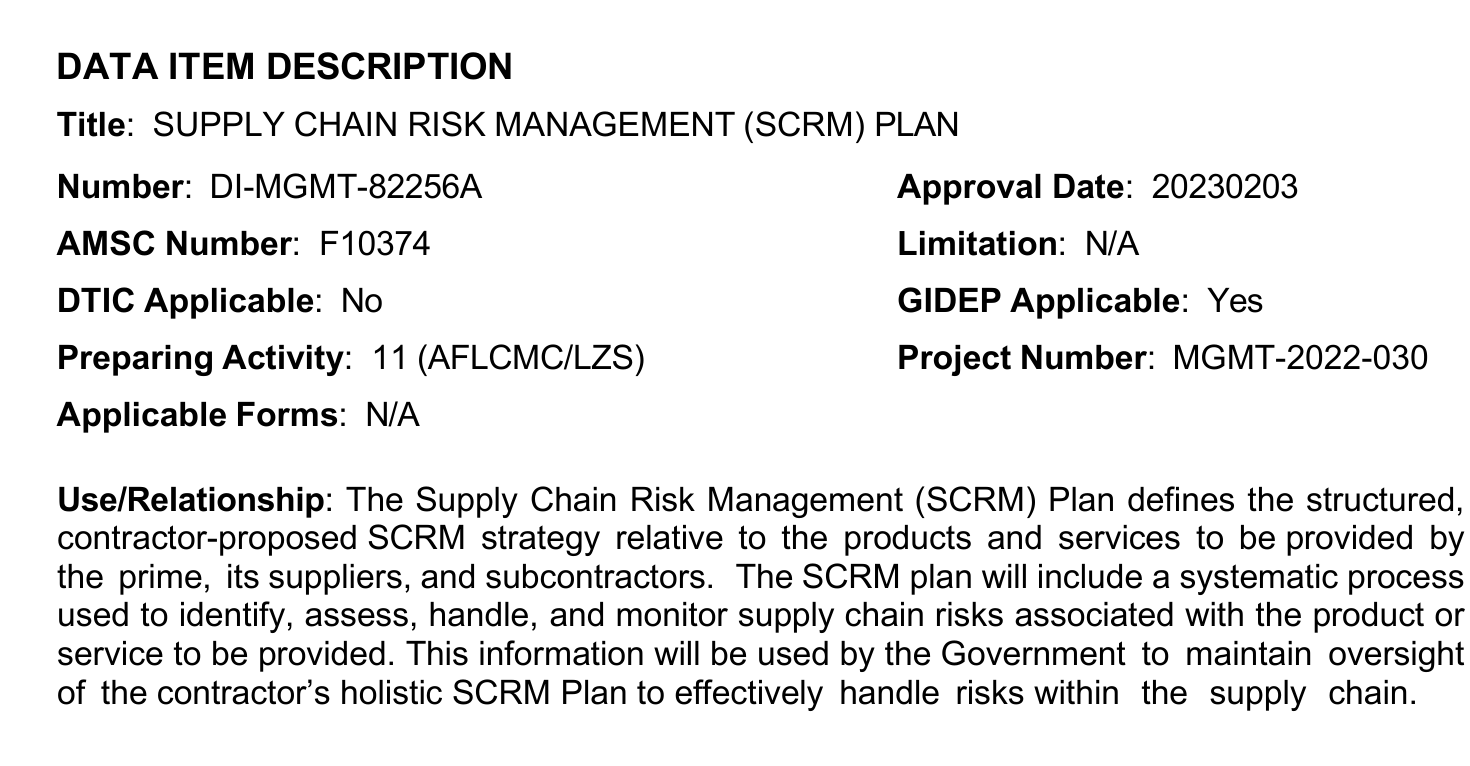
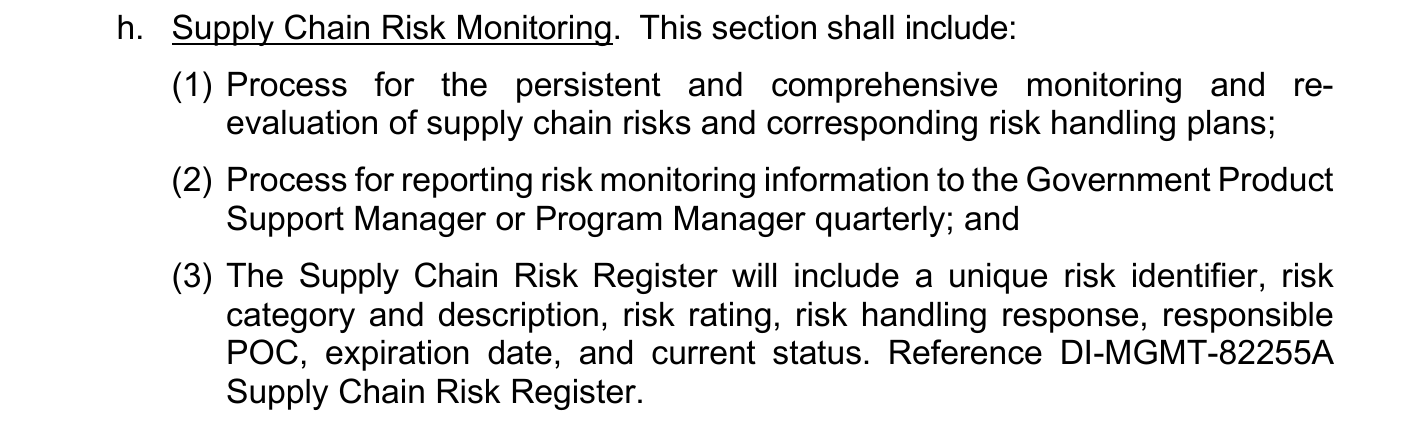
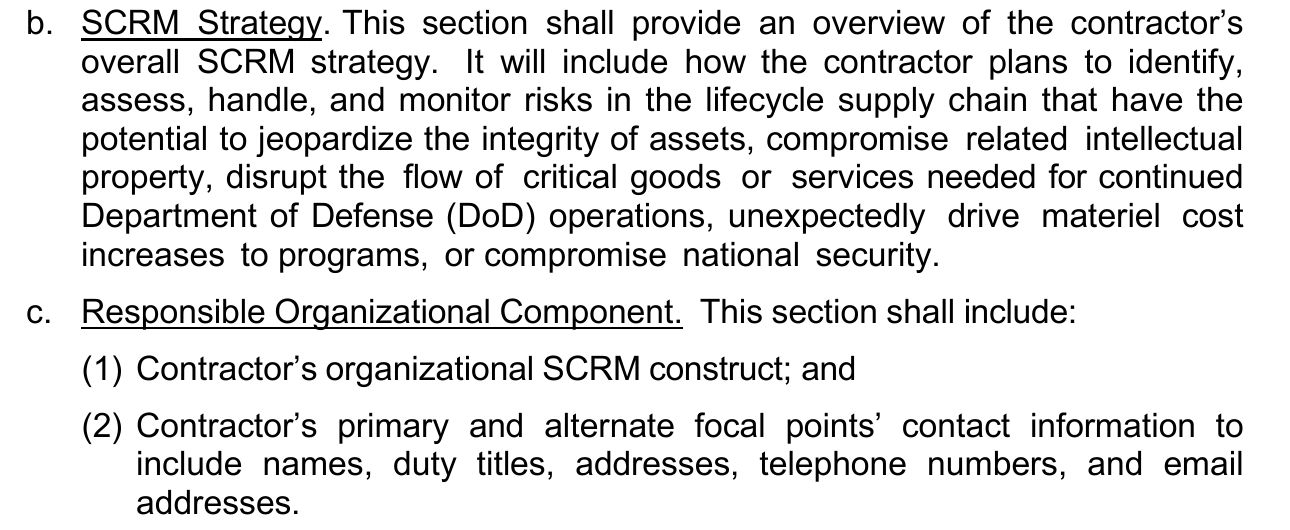
The two public DLA data-item descriptions were both approved February 3, 2023, and provide part of the needed structure. The Supply Chain Risk Management Plan covers suppliers and sub-tiers, source assessment, monitoring and mitigation. The Supply Chain Risk Register carries a reporting period, risk owner, current status and planned start and completion dates for risk handling.
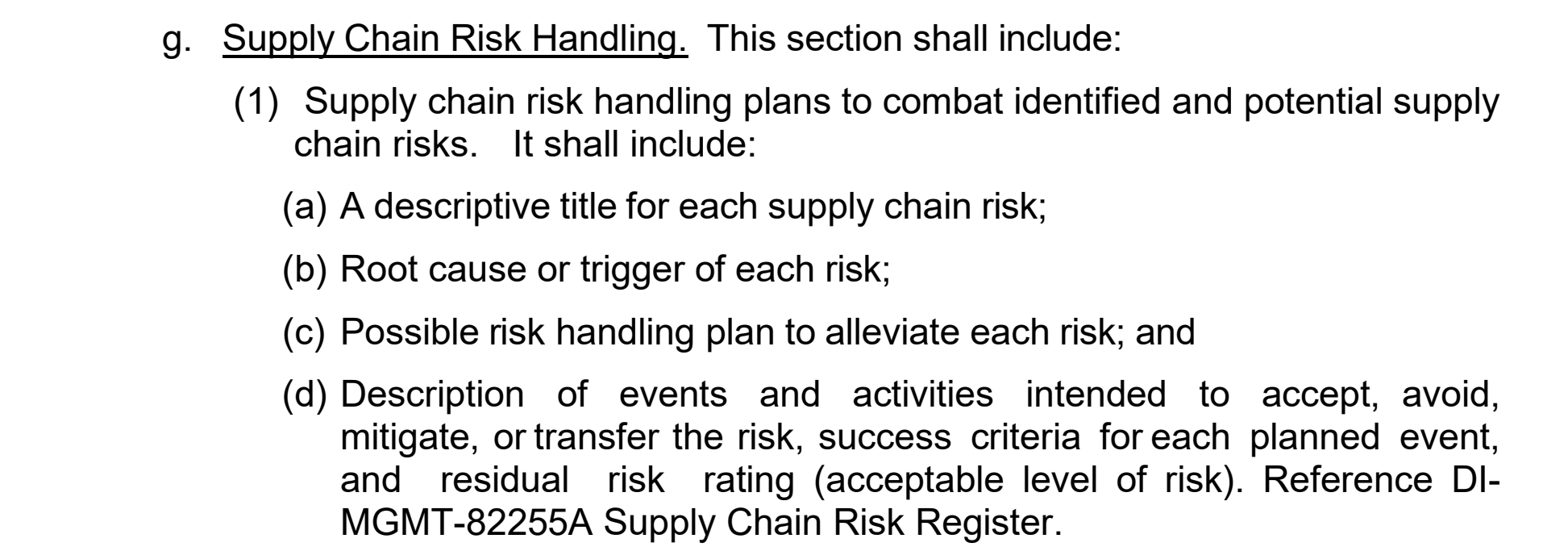
Those fields support ownership and a risk-handling chronology. They do not establish evidence freshness without an effective-date or refresh control tied to a changed supplier, site, material source, part revision or quality status. A current-status field cannot tell a program that the declaration beneath it is still current unless something makes the record answer that question again.
This is where apparently clerical work can become physical. In March 2026, Lockheed Martin described a Javelin production ramp involving nearly 100 part-level suppliers and 25 major subcontractors. Suppliers spent eight to ten months on changes that included tooling, test sets and floor space.
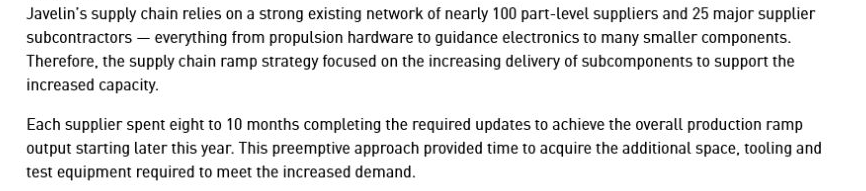
That example is a schedule marker, not a copper study or a universal qualification lead time. Its relevance is the point at which an old answer conceals a real change. A declaration found in another repository may remain a record-recovery job. A declaration tied to a superseded source can open onto capacity, tooling, testing or engineering work that consumes program time long before a future reporting deadline arrives.
The visible symptom can be identical. The program cannot rely on the origin field in front of it. The cost is not. Treating a blank record and an obsolete one as the same data-cleanup task is how a cheap recovery gets overbuilt and a physical change gets discovered late.
 IA
IA
Connect the systems only after the repair is understood
A genuine systems problem still remains after the evidence is present, current and scoped to the right object. A trade file may use a shipment identifier or supplier reference that does not resolve to engineering's part number and drawing revision. The risk entry may use a site or process key, while quality carries its own corrective-action number.

At that point, a maintained crosswalk earns its place. It should show which identities are equivalent, which are merely related and which must remain separate. When a source system changes or two records disagree, the program needs a way to settle the exception and update what depends on it.
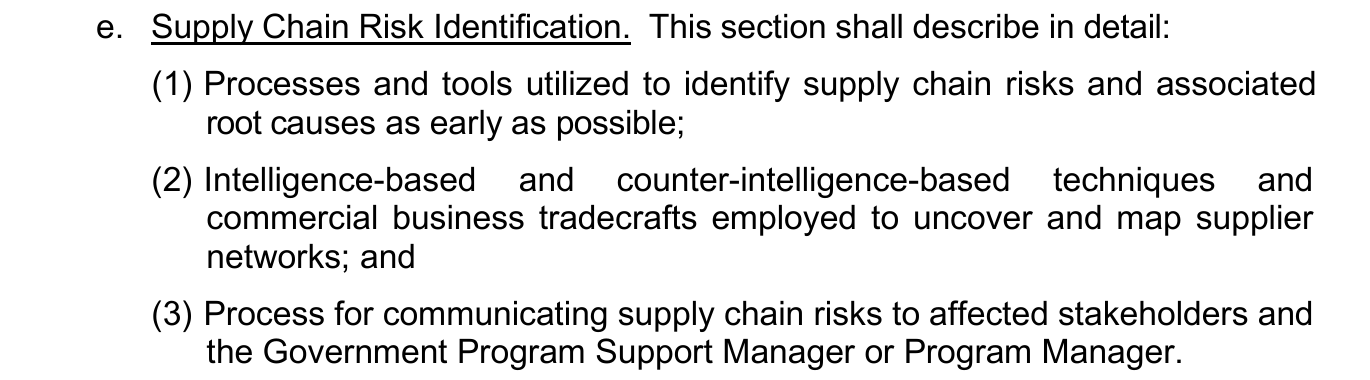
The judgment behind the crosswalk matters more than the connector. Engineering's revision and trade's declaration do not become equivalent because a dashboard finds the same supplier name in both. The people accountable for each record still decide what it can support; the crosswalk preserves that decision for the next system and the next change.
Software becomes useful after that logic is explicit. A platform can move a sound answer quickly, and spread an old or wrongly scoped answer faster. Choosing the platform first merely hides the expensive question inside an integration project: what is the record allowed to mean, and what work follows when it cannot support that meaning?
EO 14415 has started the federal clock. A prime does not need the future data standard to make the schedule decision now. For each unusable copper record, it can name the work that would make the answer dependable and identify the program schedule that work would touch.
Until the repair is understood, a system estimate is not a readiness plan. It is only the price of moving uncertainty between screens. The platform decision gets easier after the prime has priced the repair, because software is no longer being asked to decide what the evidence means or how far the correction must travel.