 Strategic Resource Intelligence
The Department of Energy advanced eight lithium-ion recycling teams into a Phase IV that adds validation, evaluation, techno-economic analysis and life-cycle analysis. In May, the International Energy Agency had reported that LFP accounted for more than 55 percent of the battery capacity in newly registered EVs globally in 2025, up from nearly 50 percent in 2024.

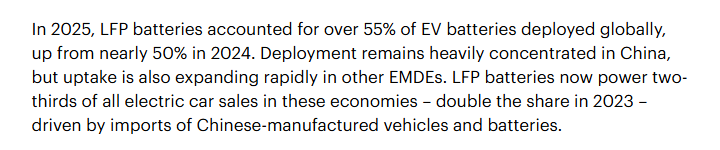
LFP cathodes contain neither nickel nor cobalt, removing two metals that can support recovered-material revenue. The chemistry’s success is forcing a practical question into the capital plan: what else pays the recycler when metal resale no longer carries enough of the line?
LFP puts the contract at center stage
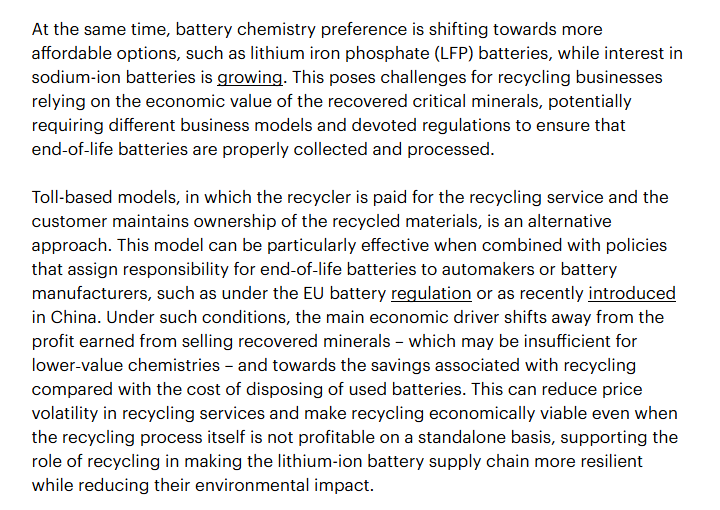
IEA analysis says lower-value chemistries challenge recycling businesses that depend on recovered-mineral value and may require different models. One option is tolling. Under that arrangement, the customer retains ownership of the recycled material and pays the recycler for the service, shifting more of the business away from commodity resale and toward work the plant can contract and perform.
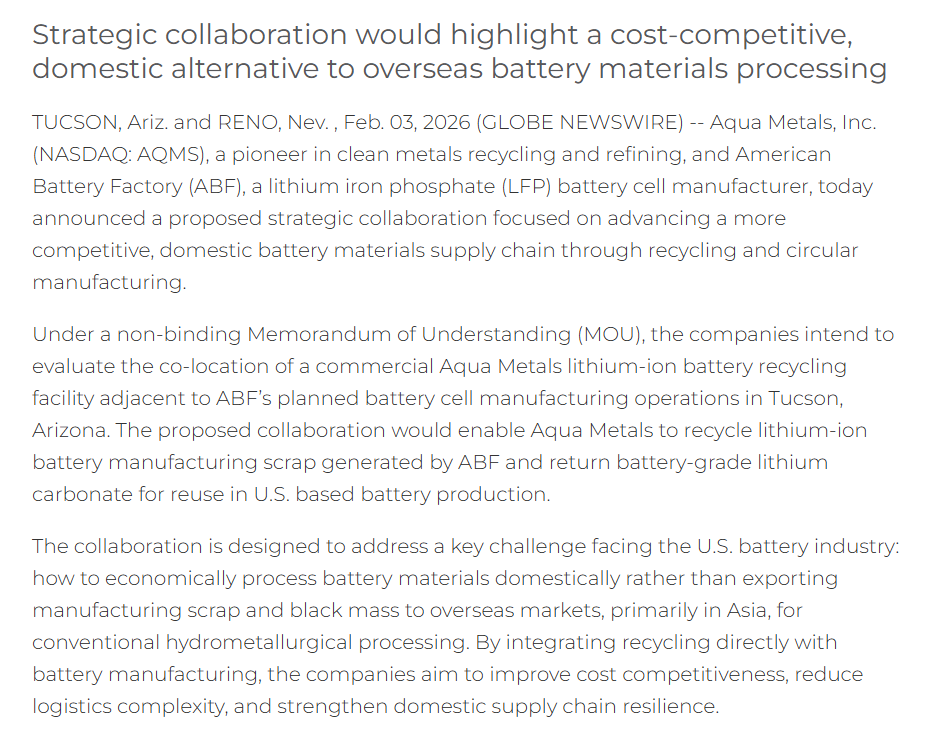
The proposed Arizona pairing shows what such a relationship could look like. In February, Aqua Metals and LFP cellmaker American Battery Factory signed a nonbinding memorandum to evaluate a recycling plant beside ABF’s planned Tucson factory. The concept would send manufacturing scrap into the recycler and return battery-grade lithium carbonate to domestic battery production. No definitive agreement, fee, yield specification or plant economics were disclosed. Even at that early stage, the proposal names a prospective feedstock stream, a location and a target product instead of stopping at a circularity diagram.
Any commercial version of that proposal lives or dies in the contract. Enforceable volume and a creditworthy payer keep the line from waiting on spot resale. The processing fee has to move when costs do, and yield loss, off-spec material or an interrupted stream cannot remain ownerless. Tolling can take different forms, but it supports an LFP-heavy stream only when ownership, customer acceptance and fee economics align.
Factory scrap brings the idea closer to a plant. In its global outlook, the IEA projects manufacturing scrap to supply two-thirds of available battery-recycling feedstock in 2030. In the National Laboratory of the Rockies’ U.S.-focused LIBRA work, manufacturing scrap remains the dominant lithium-ion waste stream until 2040. Forecast availability is not contracted volume; a recycler still has to win the stream. With factory scrap, the recycler can know the origin, chemistry and production history before processing begins.

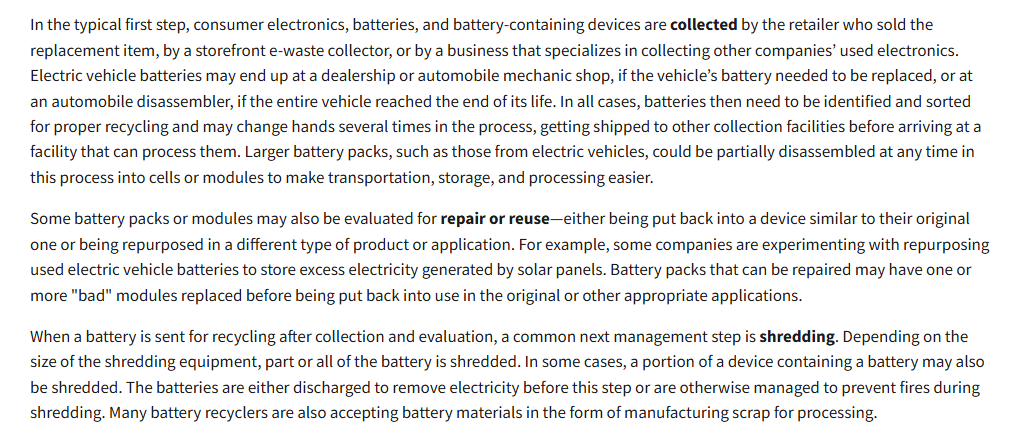
An end-of-life stream gives the plant a different task before recovery starts. EPA describes batteries moving from retailers, dealerships, mechanics and dismantlers through identification, sorting and sometimes several collection facilities. Larger packs may be partly disassembled, and batteries must be discharged or otherwise managed to prevent fires before shredding. Merchant black mass arrives later in that chain, but its constituents and properties still depend on the input batteries and shredding process. Controlled manufacturing scrap does not eliminate yield or quality risk. It gives the recycler a better chance to define the starting material with one customer before collection history, chemistry and pack design multiply the variables.
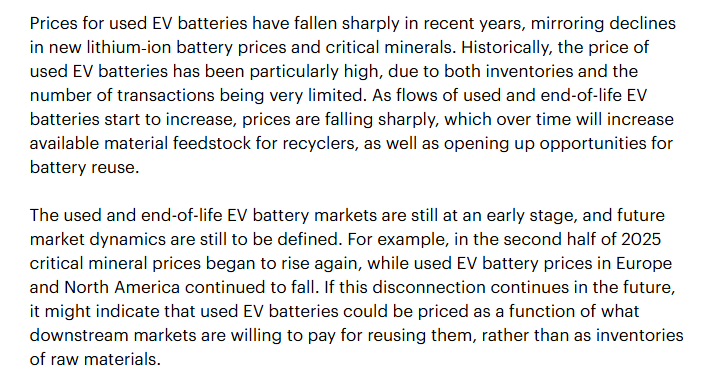
The business changes with ownership of the incoming material. When a customer retains ownership of chemistry-known factory scrap and pays for processing, the plant is selling dependable conversion; acceptance of the returned product completes the job. When the recycler buys black mass, it has purchased assay, recovery, working-capital and commodity-price risk before selling anything. Mixed end-of-life batteries add collection, safe handling and sorting before that recovery risk is known. The IEA observed used-EV-battery prices in Europe and North America continuing to fall in the second half of 2025 even as critical-mineral prices rose. It treated the disconnect as a possible signal, not a settled pricing rule. Feedstock acquisition and recovered-product revenue do not belong on one borrowed commodity curve.
Feedstock control protects the output
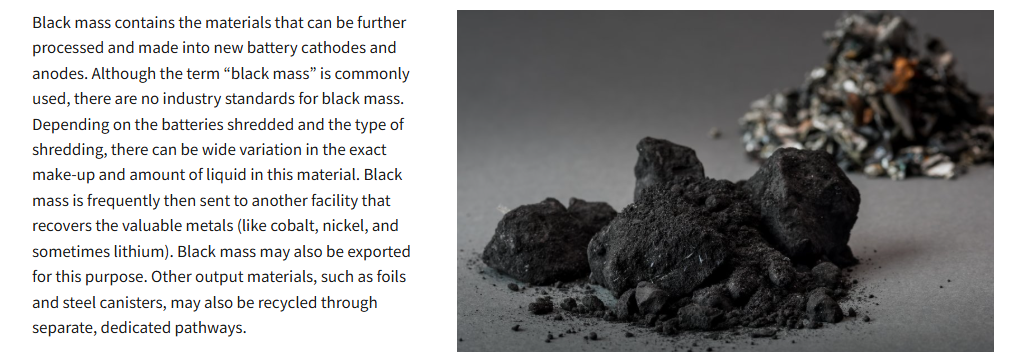
Feedstock knowledge is worth more before the batteries are shredded. EPA says no industry standard governs black mass, and composition and liquid content can vary with the batteries and shredding process. A purchased lot therefore needs composition evidence—sampling and assay or an equivalently verified certificate—tested against the contract specification before pricing and process routing. Cells can be sorted before shredding, while chemistry-known production scrap can be segregated at receipt. In every case, the processor has to understand what enters the line and how it expects to earn on the output.

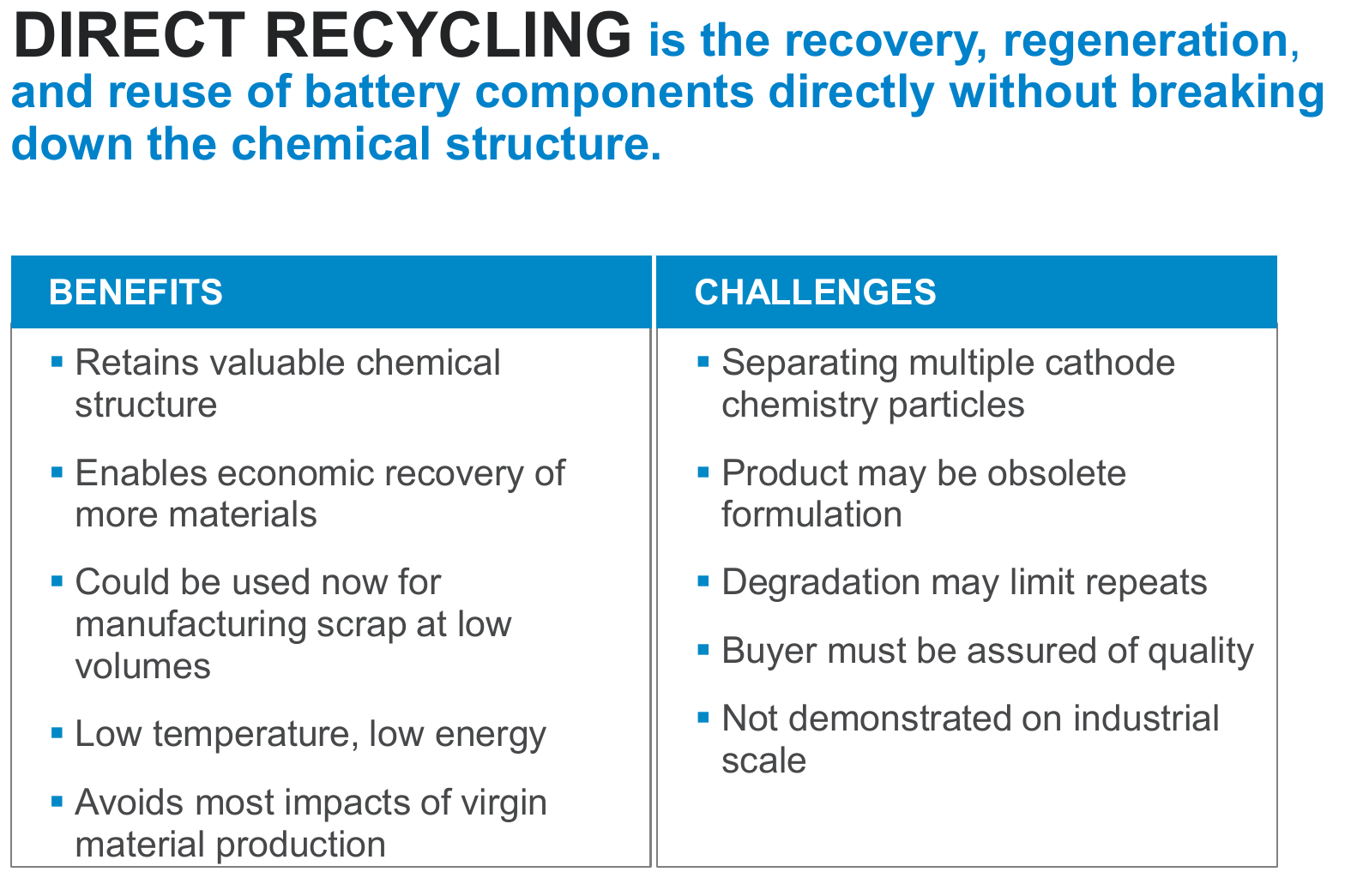
Controlled manufacturing scrap is a plausible early feedstock for direct recycling because its chemistry and history can be better constrained. Direct routes seek to preserve the engineered cathode structure instead of reducing it entirely to constituent chemicals. EPA guidance updated September 24, 2025 described the approach as being tested at smaller scale and potentially able to reduce the manufacturing needed to return material to a battery.

ReCell’s 2019 overview was blunt about the trade. It listed retained structure and low energy among direct recycling’s benefits, then identified mixed cathode particles, obsolete formulations, degradation, buyer quality assurance and, at that time, no industrial-scale demonstration among the challenges. A recovered product reaches the battery supply chain when a customer qualifies or contractually accepts it for that use. Material that misses that route may still have a lower-value outlet.
In 2025, Nature Sustainability researchers tested water electrolysis as a way to separate active material from current collectors. The experiments handled LFP cathodes and graphite anodes separately and included electrode types from spent batteries and manufacturing scrap. The team dry-refabricated electrodes from recycled black mass and replenished lithium. It reported laboratory performance. That is technical evidence from controlled material. Mixed chemistries and customer qualification still have to be resolved before throughput and operating economics can be tested at commercial scale.
Underwrite the plant on a low-metal-value day
Annual tonnes dominate the familiar recycling pitch. They do not show how the line performs when its LFP cathode feedstock contributes no nickel or cobalt. Contracted feedstock can keep the line busy, while a processing fee pays for the work the recycler actually performs and gives the next capital tranche a firmer base. When the customer retains the returned material, the recycler does not book that product value directly. Any share comes through a premium, incentive or value-sharing clause; the processing fee remains separate.
 Taylor Cross
The revenue stack becomes clearer when the invoice is separated from the material upside. The processing fee pays for an agreed service, with collection, transport, storage, disassembly or special handling either priced separately or absorbed into that charge. The contract can reserve a qualification premium or value share for the point when the returned product meets the customer’s specification. Recovered foils, metals or other outputs belong in the recycler’s revenue only when the contract gives it title and a credible outlet. When the recycler owns the lot, feedstock shortfall, out-of-spec loads, lost recovery and commodity-price movement remain on its side of the bargain. Tolling can shift some of that exposure, while adding customer-credit and qualification risk. The IEA’s model does not prescribe those terms, but it establishes the key distinction: payment for recycling service can stand apart from customer-owned recovered material.
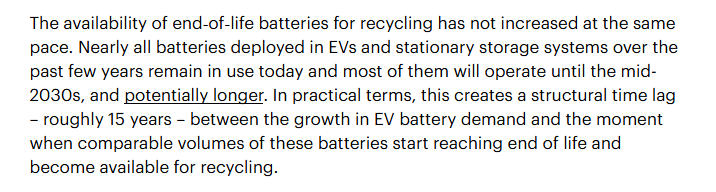
North American timing strengthens the case for staging rather than simply sizing the plant bigger. The IEA says nearly all EV and storage batteries deployed in recent years remain in service, with most expected to operate until the mid-2030s. That creates a roughly 15-year lag between rapid deployment growth and comparable end-of-life volumes. Second-hand vehicles can delay retirement further or move batteries to another region before they reach end of life. The near-term line therefore needs feedstock it can contract now—especially production scrap and customer-linked returns—while its process and commercial terms leave room for a more varied end-of-life stream later. Prove utilization, yield and customer acceptance on the controlled lane; widen the intake envelope when the retirement wave becomes a shipment, not a forecast.
Phase IV’s techno-economic work can distinguish two plants that advertise the same annual tonnes. One has a known stream under contract, a fee tied to the work and a buyer-defined return product. The other purchases variable material, owns the recovery risk and depends on an outlet that may weaken before the product is sold. Their nameplates may match while utilization, working-capital exposure and saleable output do not. For an LFP-heavy line, the stronger capital case is the one whose margin survives a smaller share of output accepted to specification and a weaker off-spec outlet without asking one optimistic commodity forecast to carry the plant.

LFP’s success is an opening for recyclers that price the job before they sell the tonnage. With this chemistry, dependable conversion can become the product. A plant earning contracted revenue for turning known material into a customer-accepted output is operating a recycling business; one depending on every incoming ton becoming a valuable commodity is still taking a metals position.