 Strategic Resource Intelligence
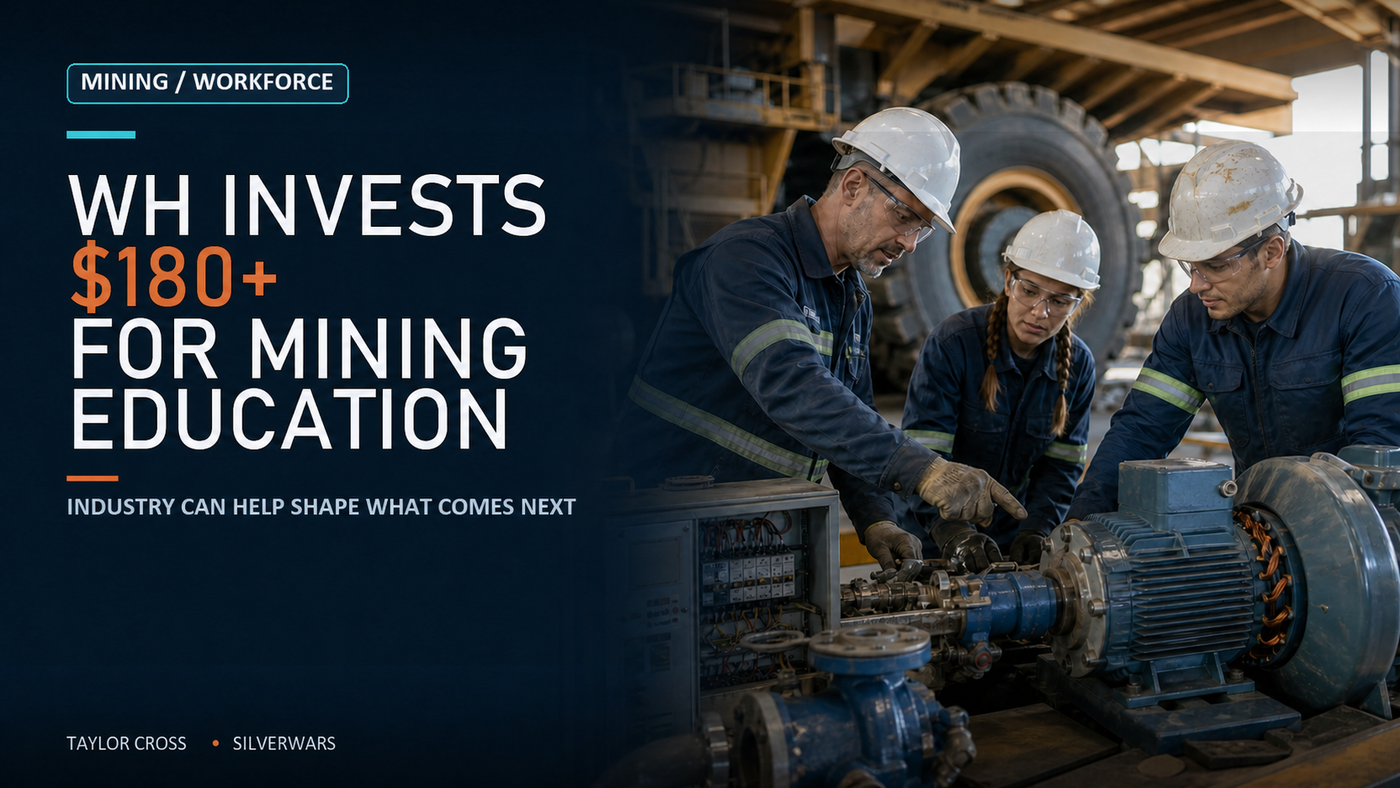
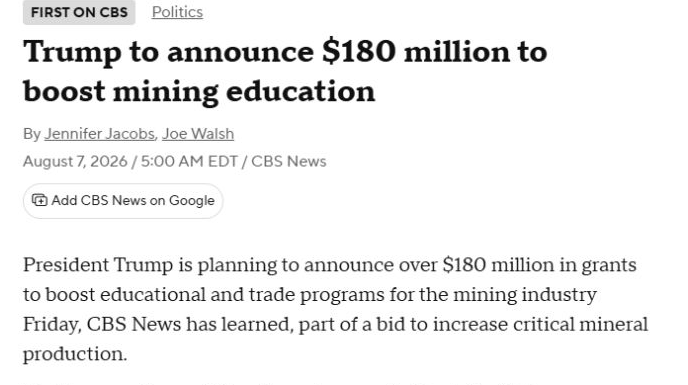
President Trump has announced more than $180 million for mining education and workforce programs at the State Department Mining roundtable.
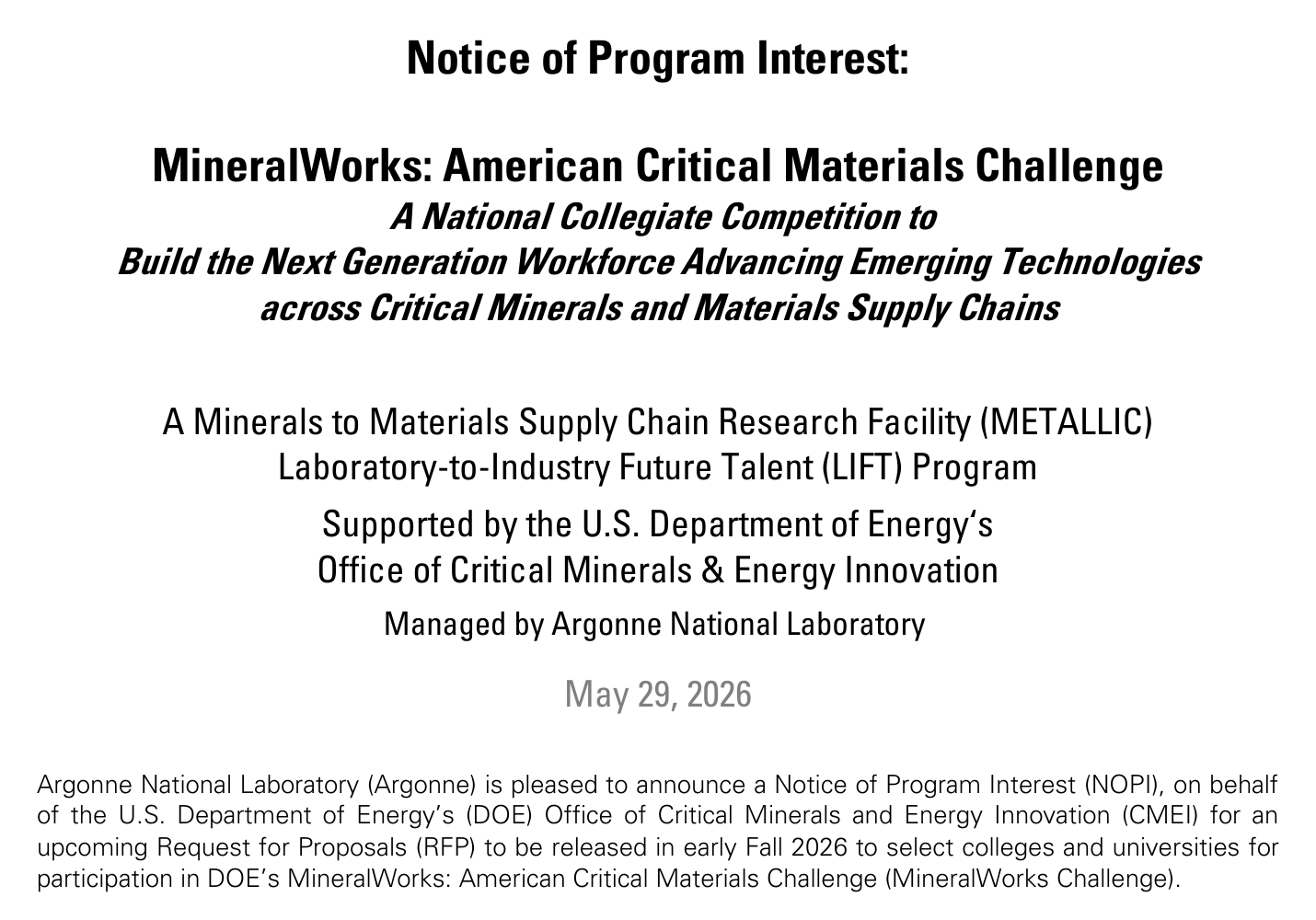
DOE's preliminary MineralWorks notice already gives employers a practical place in the design. It describes university-led teams working from extraction through manufacturing, with companies contributing real problems, mentors, internships, equipment access and facilities while schools build or expand courses, certificates and degrees. The final request for proposals will set the participation rules. As of the August 7 research cutoff, the official announcement had not yet confirmed CBS's amount or its broader description of eligible participants.
The reported scale creates a timely opening. Mine operators can make it useful by identifying durable, hard-to-fill roles and showing educators the work behind them.
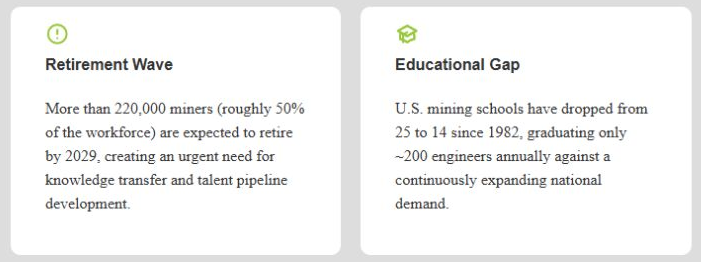
The scale of the workforce opportunity reaches beyond a single degree program. NETL's mining-workforce hub says more than 220,000 miners, roughly half the workforce, are expected to retire by 2029. On the same page, NETL says the number of U.S. mining schools fell from 25 to 14 since 1982 and that they produce about 200 engineers a year. NETL's figures cover mining overall, and their message for operators is clear: new seats become more valuable when they lead into work an operating site expects people to perform.
 Taylor Cross
Give the classroom a real job to aim at
A university can teach mechanics, geology, metallurgy, controls, safety and data. The mine knows where those capabilities meet actual work: which equipment a learner will encounter, which decisions belong to a qualified employee, how much supervisor time the site can provide, when paid experience can begin and what a credible hiring opportunity looks like. Bring that knowledge in while the curriculum can still respond, and the school has a real job to teach toward.
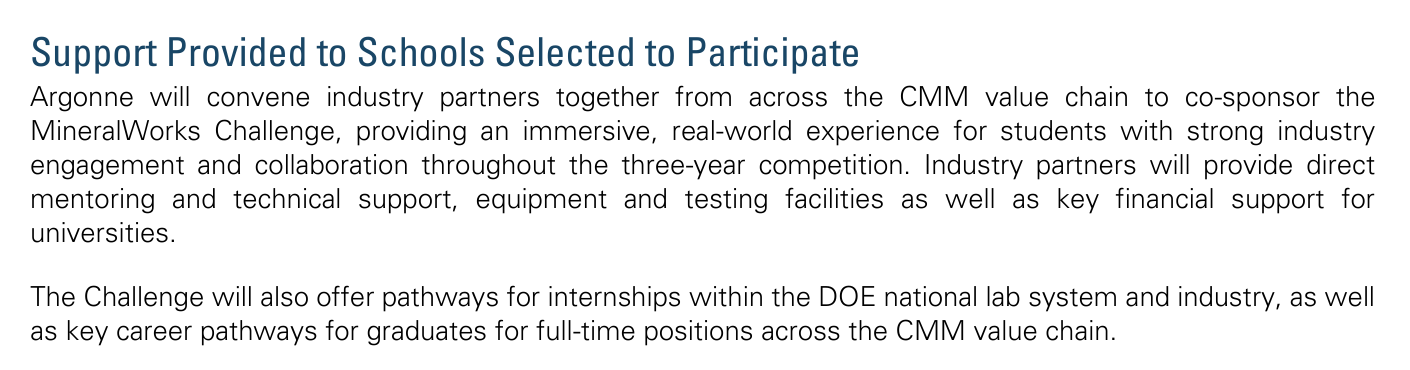
Mining engineer is only one possible role. Freeport's public programs point to heavy-equipment maintenance, fixed-plant maintenance and electrical maintenance alongside engineering. NETL's own description adds automation, remote operations, sensing, data and electrified equipment to the skills mix. The opportunity reaches well beyond one job title. Specific equipment, shifts and tasks give educators a practical foundation for relevant training.

Copper now belongs in that wider workforce conversation: USGS added it to the final 2025 critical-minerals list, while MineralWorks spans the broader minerals chain. Workforce investment can strengthen the pool of people prepared to operate mines and plants over time. Its payoff is long-term operating capacity.


GUNNISON COPPER (GCUMF) / PR
Release Routing Desk
Achieves Key Milestone Under U.S. Department of Energy 48C Program
Freeport has already built parts of the bridge
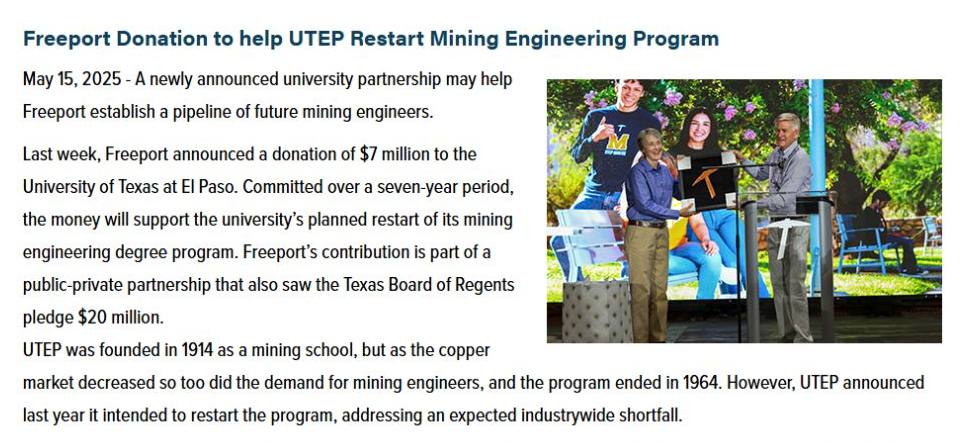
Freeport-McMoRan has put public numbers behind the academic end of that path. In May 2025, Freeport announced $7 million over seven years to support the University of Texas at El Paso's planned restart of a mining-engineering degree program. The seven-year commitment is built for long-term degree capacity.
At its Safford operation in Arizona, the same company documented a more immediate site-learning model. Its first in-house apprenticeship cohort included 18 employees across heavy-equipment, fixed-plant and electrical-maintenance paths. The specificity matters because each path names work a mine already owns, giving training a supervisor, equipment context and operating destination.

Freeport also describes paid skilled-trades internships and an Arizona community-college partnership that links scholarships with job placement. Together, those programs carry the path beyond enrollment into compensated experience and a visible employment opportunity.
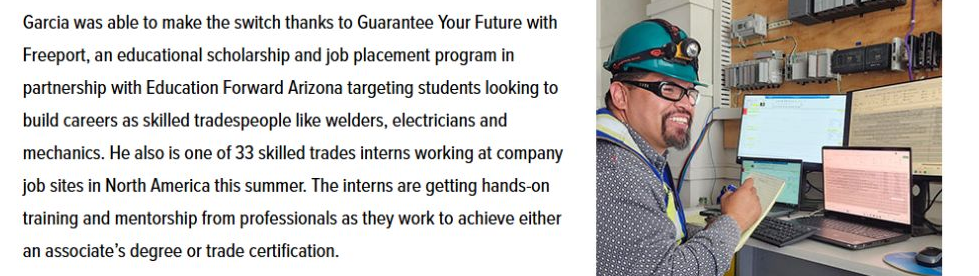
Freeport is already investing at the school, the site and the handoff into paid experience. That creates a useful model for other operators: contribute a distinct mine-site problem, a mentor close to that work or a paid placement connected to a plausible opening. Each company can add the operating context it knows best, giving educators more ways to connect learning with real work.
 Taylor Cross
Start with work that will still matter
Training cycles can outlast a current vacancy, which makes recurring capability needs the better anchor. Employers can follow whether learners completed role-specific work, received paid site experience, entered the relevant kind of job and remained after a declared interval. That record gives companies and educators a practical view of how funded learning is translating into operating talent.
When the official terms arrive, mine operators can begin with one recurring capability need. Name the role, put an operating leader behind it and define the supervisor time the site can support. Add paid experience and a plausible hiring path where they fit. That gives an eligible education partner a concrete operating contribution to evaluate under the program rules, and gives industry a direct hand in building the workforce it will depend on.