


Advertising Disclosure: Gunnison Copper Corp. is an advertising client of SilverWars. SilverWars has received US$36,000 from Gunnison Copper Corp. under an advertising, sponsored content, and distribution agreement that includes this article. This article was prepared by SilverWars using public market sources, Gunnison Copper public disclosure, and SilverWars’ own market analysis. It is for informational and educational purposes only. It is not investment advice, not a recommendation to buy or sell any security, and not an offer or solicitation.
On July 20, the White House put America's defense supply chains on a clock. The new executive order gives the Secretary of War 180 days to establish guidance for mapping critical national-security supply chains from finished acquisitions back to raw-material origin. A separate 90-day deadline calls for a strategy to accelerate the testing and qualification of new sources and materials.
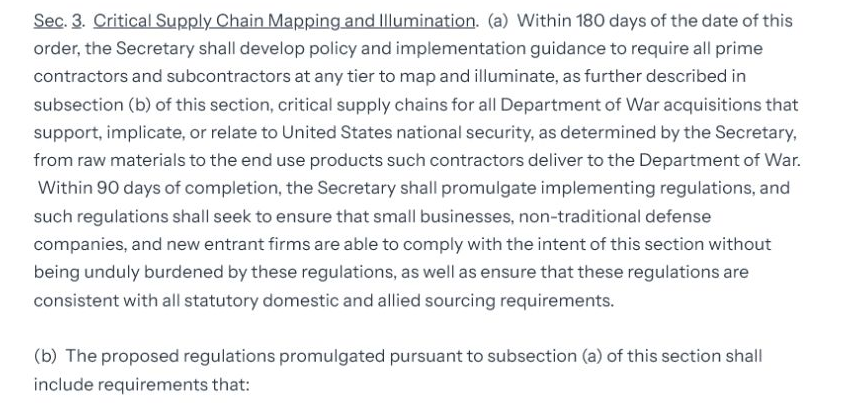
The order reaches beyond the materials already subject to covered-nation sourcing restrictions. It directs the Department to find vulnerabilities, bottlenecks and single points of failure across the supply chains it determines are critical, then shorten the path for testing alternative supply while preserving technical, safety and security standards.
Interior added copper to the federal roster in November 2025. USGS says the listed minerals are vital to the economy or national security and face potential disruption across their supply chains. Copper's widespread use in wiring and cables makes the defense question concrete. Which systems depend on it, what form do they need, and how far can the material be traced?
Copper has a practical place in the opening comparison. It already carries federal critical-mineral status, runs through defense systems and has current U.S. cathode output. The first screen should ask how heavily a program depends on copper and how quickly its supply can recover. Source concentration, substitutes, inventory and qualification time provide the answer. The program's own data decides which copper chains move into full mapping.
The order creates an opening for copper
10 U.S.C. 4872 shows how Congress can turn material-origin risk into acquisition policy for magnets, tungsten, tantalum and molybdenum. Copper's federal designation establishes its national importance. Its use across defense wiring, motors and power electronics makes it useful early. Mapping can show exactly where a copper bottleneck sits and which policy tool fits it.

The order recognizes that a mine reaches a finished defense system through an industrial chain. For copper, one downstream link may ultimately control delivery.
Schedule pressure often sits one step downstream, at the wire-rod mill, alloy, component or inventory position. Find that point early, and qualification, stockpiling or capacity support becomes targeted instead of generic.
Defense systems already rely on copper
In its January 2025 discussion, "Securing Critical Minerals Vital to National Security," the Department said critical minerals feed virtually every defense system and linked domestic mining and processing to supply security. Across those systems, copper carries current through distribution, cables, connectors, motors and power electronics, while its conductivity also supports thermal hardware.
A copper map built around one assembly can expose several industrial handoffs at once. Domestic cathode becomes strategically useful after conversion into qualified wire and fabricated parts a program can place in inventory.
Johnson Camp is producing U.S. cathode now
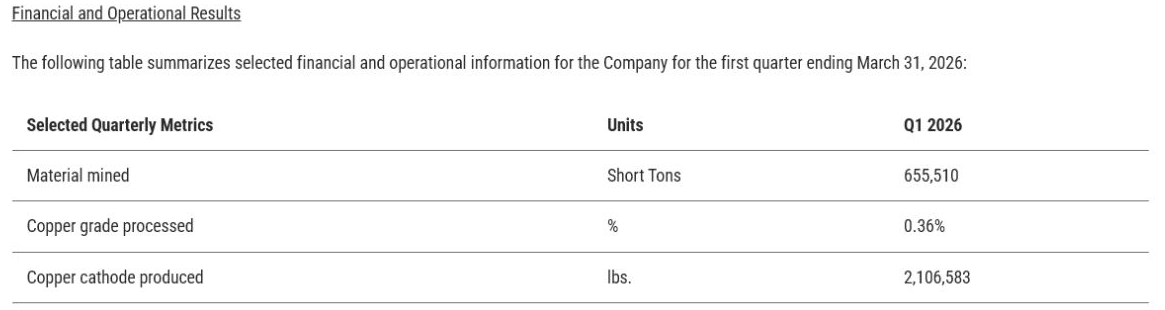
Gunnison's first-quarter operating report reported 2,106,583 pounds of copper cathode produced during Johnson Camp's production ramp. On July 9, the company said the mine was producing and selling Arizona copper from run-of-mine oxide and Nuton bioleaching material.
Johnson Camp also brings a named commercial agreement: in January, Rio Tinto announced that Amazon Web Services would become the first customer for Nuton copper from the mine under a two-year agreement. Rio Tinto says the copper is intended for components used in U.S. data centers, and Amazon includes the agreement in its 2025 Sustainability Report.
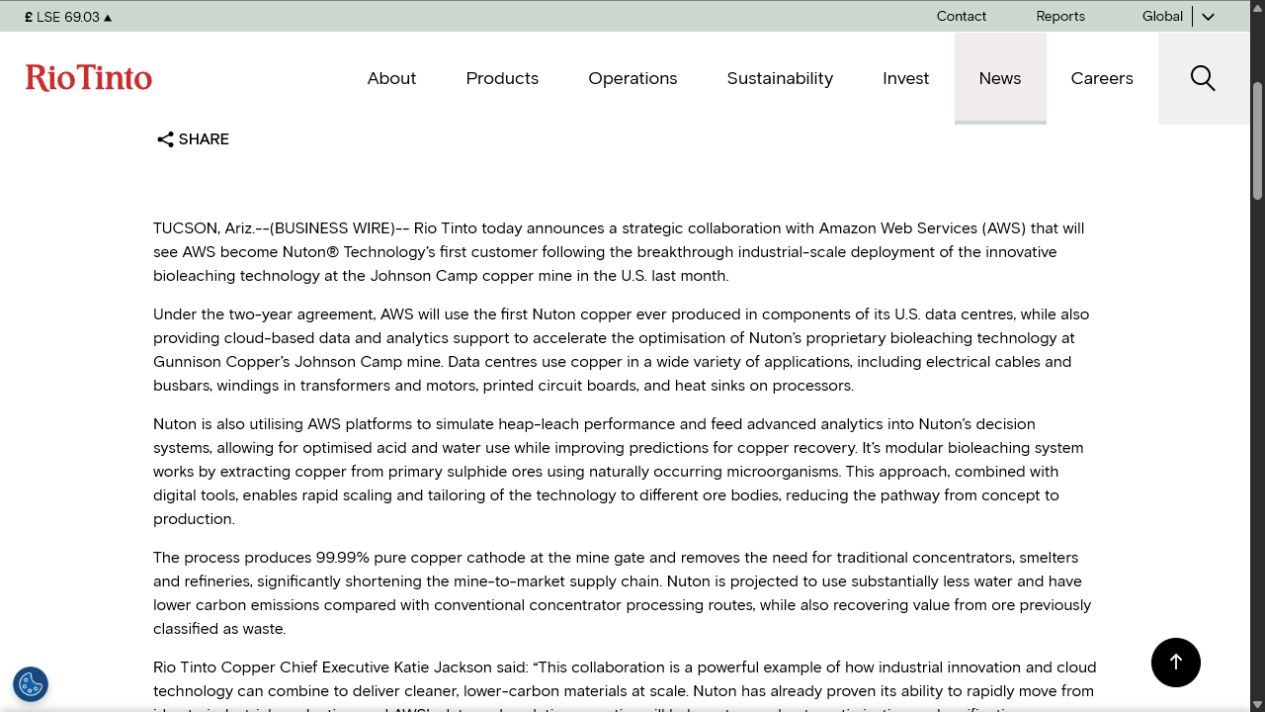
Rio Tinto's agreement matters because it connects Johnson Camp copper to a named U.S. industrial customer and an intended component class. For supply-chain planners, it creates a route to examine: cathode, conversion, intermediate form, component and final use.
The middle of the chain is the opportunity
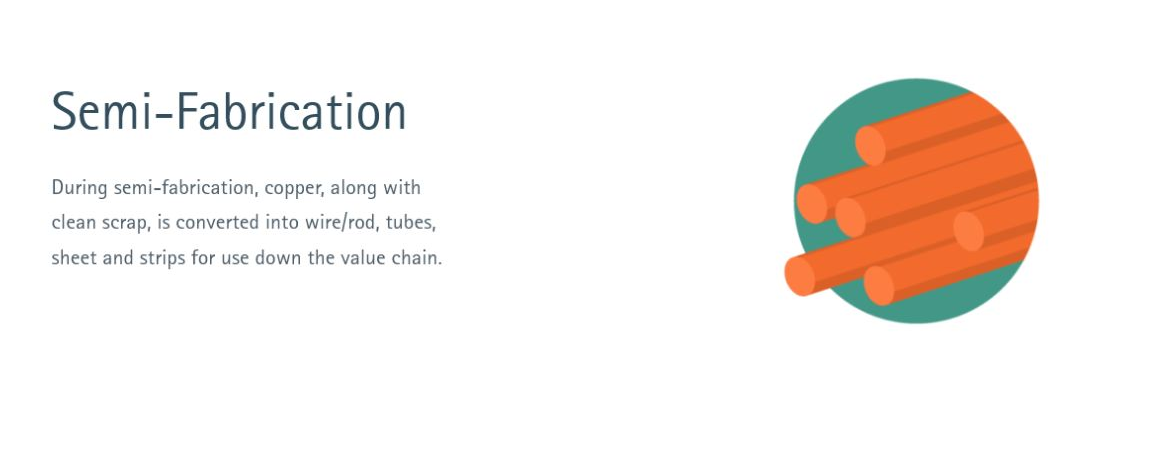
Copper changes form several times before it reaches a defense system. An industry Copper Life Cycle map places semi-fabrication between cathode and finished goods: cathode and clean scrap become wire rod, tube, sheet or strip, then manufacturers turn those forms into cables, connectors and other products.
Commercial cathode can be specified to exact acceptance criteria. ASTM B115-24 addresses composition, handling, foreign material and electrical resistivity for electrolytic copper cathode; its Grade 1 cathode is suitable for wire rod under ASTM B49. LME's copper contract adds recognized Grade A chemistry, cathode shape, 25-tonne lots and an approved brand.
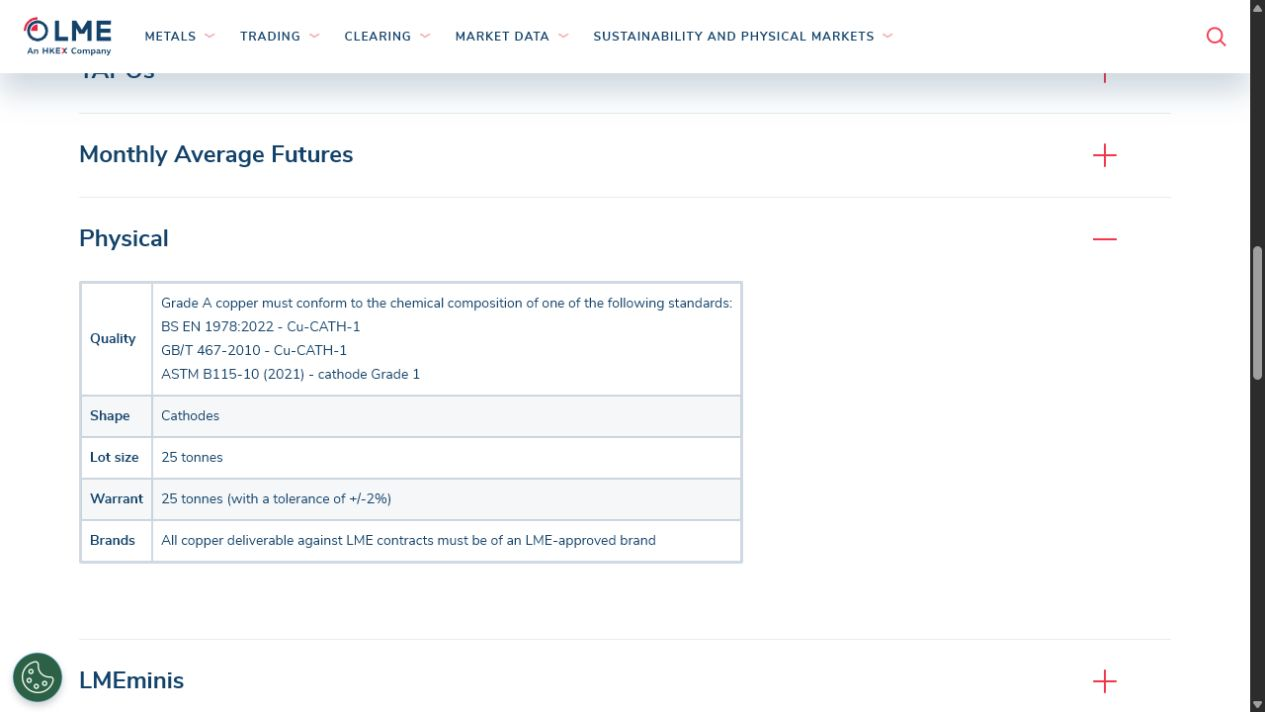
Together, those standards give cathode buyers a common commercial language before the metal enters wire rod or another semi-fabricated form.
For hardware that requires exact source attribution, segregated lots and documented genealogy can carry the record through conversion. At portfolio scale, an audited mass balance can reconcile a facility's inputs and outputs over a set reporting period.
At the mine end, Johnson Camp adds current U.S. output to the comparison. Pair it with a converter's intake rules and a plan for preserving origin through conversion, and planners can see the next qualification step.
Put one copper chain under a stopwatch
The order puts the job on the Secretary. The 180-day guidance should place the pilot with one accountable lead. FAR Part 10 market research and FAR 15.201 industry exchanges provide the tools. Keep the pilot bounded. A copper-dependent motor drive or power-distribution assembly captures several copper forms without swallowing an entire platform.
Follow demand and inventory through the prime and its suppliers, then compare that runway with the time required to convert and qualify another route.
That timing decides what comes next: buy more inventory, qualify another route or expand the domestic link that controls schedule. One copper pilot can inform both the 90-day qualification strategy and the 180-day mapping guidance.
 SilverWars
The payoff is a usable domestic route

GUNNISON COPPER (GCUMF) / PR
Release Routing Desk
Achieves Key Milestone Under U.S. Department of Energy 48C Program
The goal is simple: show how operating U.S. cathode reaches a program component. Once that path is visible, commercial demand and targeted policy support can reinforce the same domestic capacity.
With the deadline set, the opening screen should compare relevant operating U.S. copper sources at the same downstream handoffs. Johnson Camp belongs in that comparison because Gunnison reports Arizona cathode output now. Rio Tinto's two-year commercial agreement gives planners a downstream industrial path to examine.
By January 16, the Secretary's guidance can require every candidate to name its converter and required form, explain how origin stays visible, and compare inventory runway with qualification lead time. Applied to every relevant domestic source, that measure gives decision-makers a common basis for advancing paths where replacement lead time outruns usable inventory or delay would put the mission at risk.
Additional Disclosure and Cautionary Statements: Gunnison Copper Corp. is an advertising client of SilverWars. SilverWars has received US$36,000 from Gunnison Copper Corp. under an advertising, sponsored content, and distribution agreement that includes this article. This article was prepared by SilverWars using public market sources, Gunnison Copper public disclosure, and SilverWars’ own market analysis. It is for informational and educational purposes only. It is not investment advice, not a recommendation to buy or sell any security, and not an offer or solicitation. Readers should review Gunnison Copper’s public filings, technical reports, risk factors, and cautionary statements, and should consult their own financial, legal, tax, and investment advisers. SilverWars has not independently verified Gunnison Copper’s technical disclosure.
Scientific and technical information in this article is summarized from Gunnison Copper’s public disclosure. The Gunnison Project PEA is preliminary in nature and includes Inferred Mineral Resources that are considered too speculative geologically to have the economic considerations applied to them that would enable them to be categorized as mineral reserves. There is no certainty that the conclusions reached in the PEA will be realized. Mineral Resources that are not Mineral Reserves do not have demonstrated economic viability.
This article may contain forward-looking information based on Gunnison Copper’s public disclosure, including statements regarding project design, intended infrastructure, potential production, processing plans, supply-chain positioning, financing relevance, offtake relevance, buyer discussions, and strategic importance. Forward-looking information is subject to risks, uncertainties, and assumptions, and actual results may differ materially.