 Strategic Resource Intelligence
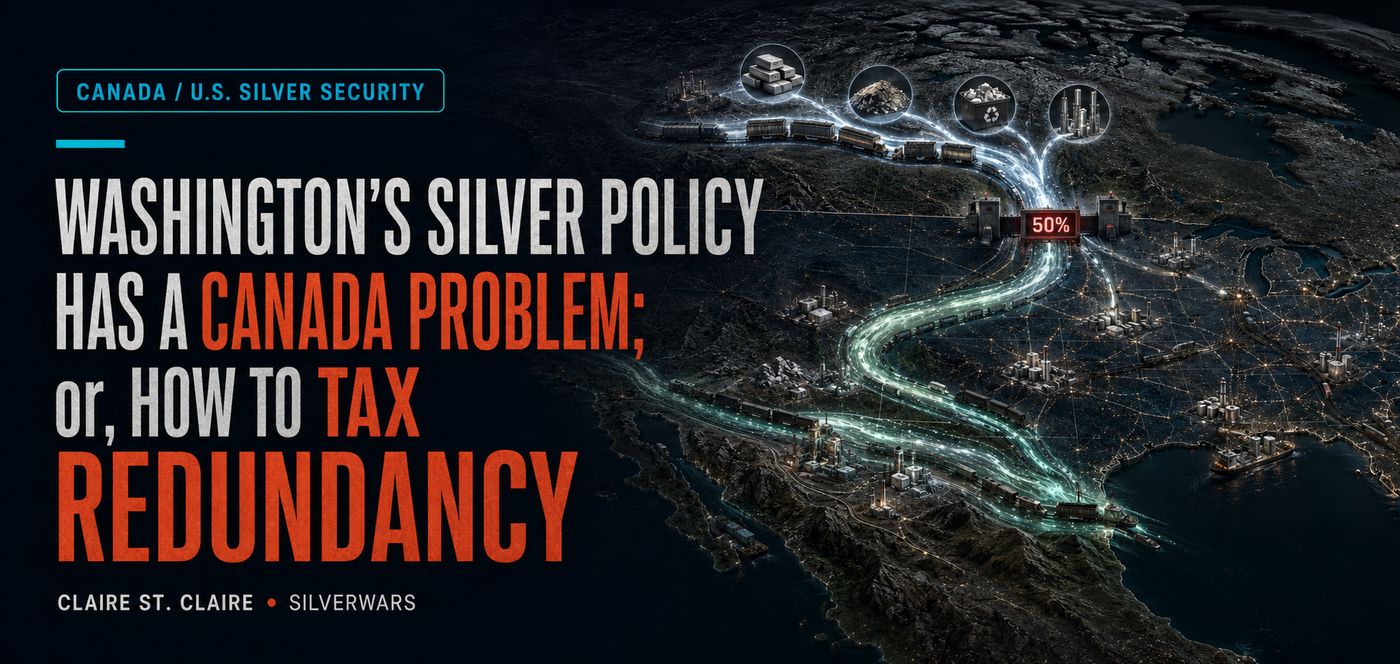
On August 22, a 50% U.S. duty landed on an obscure customs line covering certain forms of high-purity Canadian silver. [1] [2] [3]
The line is narrow. HTSUS 7106.92.10 applies to Canadian-origin, semi-manufactured silver in rectangular or near-rectangular shapes, at least 99.5% pure, marked only with weight, purity or identifying information. It does not cover every ounce mined, refined or shipped from Canada. Whether the charge applies turns on the product as entered and its customs origin, not simply the address of the refinery that handled it. [2]
But the tariff exposes a much larger contradiction. Washington now classifies silver as a critical mineral while making one of North America's closest allied processing routes potentially more expensive. Ottawa has built its own critical-minerals strategy around 34 minerals and metals, yet silver is still missing from the federal list. [5] [6]
Canada answered on August 25 with matching counter-tariffs scheduled to begin September 8. The dispute is widening, but no public Canadian measure restricts silver exports - and this article is not arguing for one. [4]
The consuming country recognizes the vulnerability. The supplying and refining country has not yet recognized the asset.
That asset should not be described as a choke point. Canada cannot shut down America's silver economy, and threatening to try would damage Canadian producers as well as U.S. customers. Canada's real leverage is more useful than that. It is the ability to provide the United States with a trusted second route - a nearby system of mines, smelters, refineries, recycling feed and cross-border logistics that becomes more valuable whenever the first route tightens.
Canada's silver leverage is not a chokehold. It is a reliability premium.
Mexico is scale. Canada is the margin.
Any serious analysis must begin with Mexico.
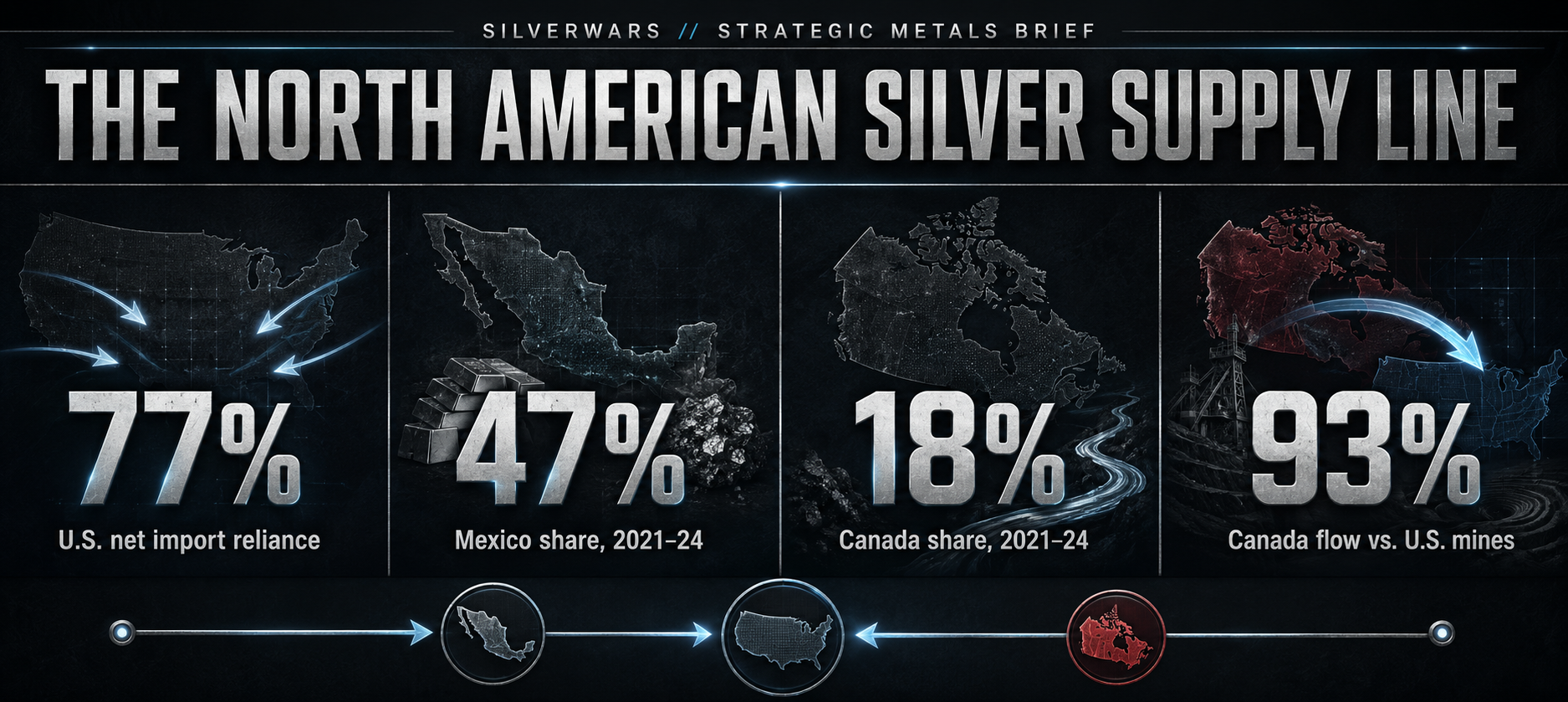
The United States remains deeply dependent on foreign silver. The U.S. Geological Survey estimates that the country consumed 9,400 metric tons in 2025, produced 1,100 metric tons at domestic mines and relied on net imports for 77% of apparent consumption. Across 2021-24, Mexico supplied 47% of the covered U.S. import mix. Canada supplied 18%, with Chile and Turkey at 5% each. [7]
Mexico is therefore the dominant foreign source and the larger modeled disruption risk. It would be wrong to present Canada as America's main silver supplier or as a substitute for Mexico's scale. [9]
Yet Canada's position is still substantial. In the separate full-year USGS trade series for 2025, the United States received 2.74 million kilograms reported as Mexico-origin and 1.03 million kilograms reported as Canada-origin in bullion, dore, ores and concentrates. All U.S. mines produced about 1.11 million kilograms that year. The Canada-origin inflow was equivalent to 93% of total U.S. mine output. [8]
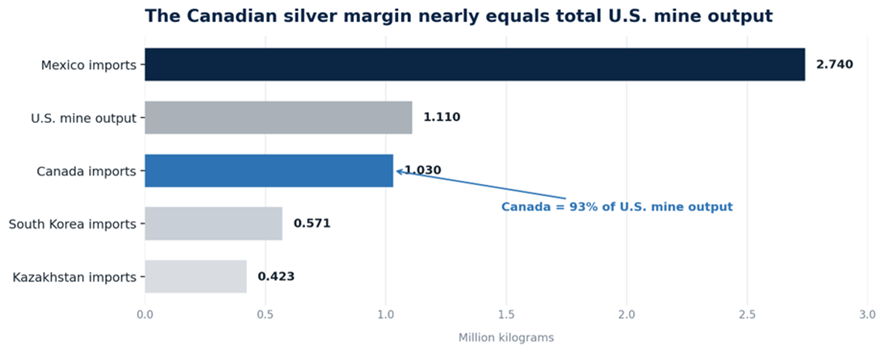
That comparison requires care. Customs country of origin is not necessarily the same thing as mine origin, because qualifying processing can affect origin. The categories include several material forms, and the Canadian number cannot be added to refinery output or gross-weight scrap as though they were separate pools of new metal. What the comparison does show is scale: the Canadian route is large relative to America's domestic extraction base. [17]
If Canadian flow vanished, U.S. factories would not go dark the next morning. The United States has mines, refineries, recyclable material, private bullion and government stocks. USGS estimates roughly 1,000 metric tons of secondary recovery and 2,100 metric tons of primary and secondary refinery production in 2025. Demand can also be deferred, redesigned or thrifted in some applications. [7]
Those buffers are why a silver-apocalypse story is wrong. They are not a reason to dismiss Canada. Removing the largest non-Mexican source in the 2025 flow data would push an already import-heavy system toward greater geographic concentration, longer replacement routes and more competition for available metal. In supply security, the second route often becomes most valuable precisely when the first one is under stress.
The mine map misses Canada's real asset
Canadian mine output alone does not explain Canada's role.
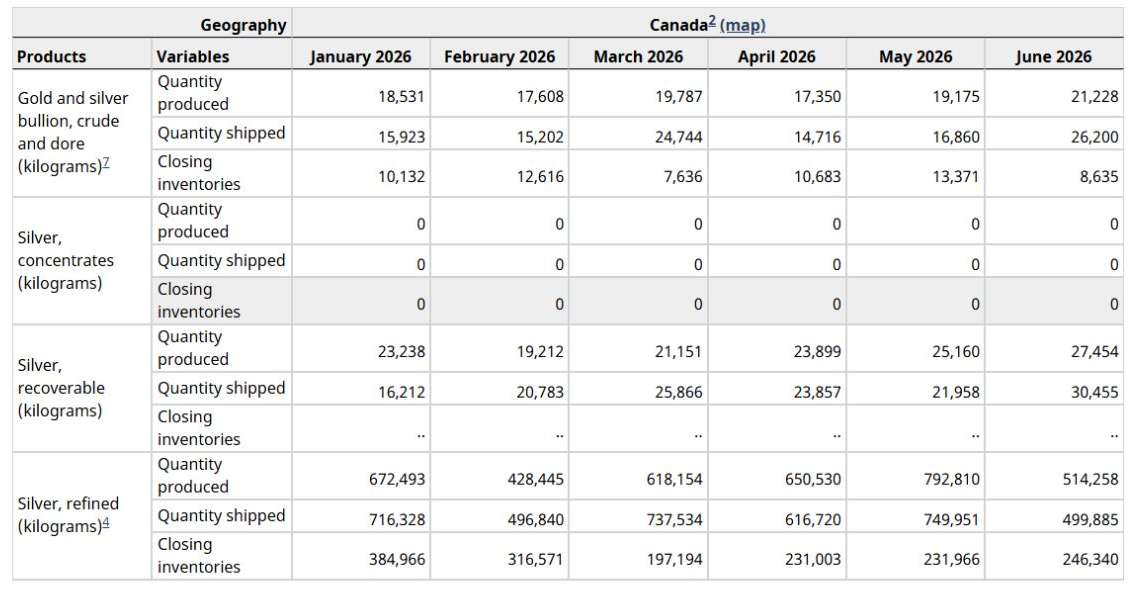
Statistics Canada recorded 304,013 kilograms of recoverable mine silver in 2025. In the same monthly dataset, Canadian refineries reported at least 4,594,820 kilograms of refined silver across the 11 months the agency disclosed; one month was suppressed, so that figure is a floor. For January through June 2026, the series recorded 3,676,690 kilograms of refined silver against 140,114 kilograms of recoverable mine silver. [10]
These are different measures at different stages of the value chain. They are not additive, and refined output should not be relabelled as Canadian-mined supply. The gap is the point. Canadian facilities process domestic and imported feed, base-metal byproducts, recycled material, inventories and intermediate products. Canada's strategic importance lies partly in conversion.
That capability has physical addresses.
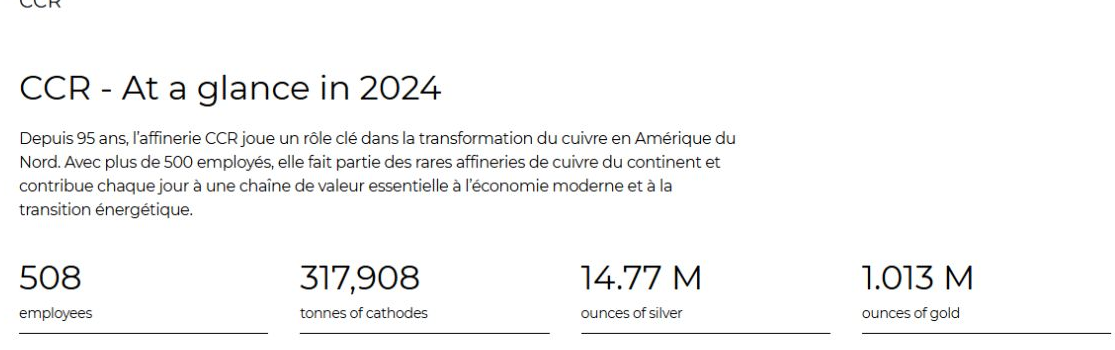
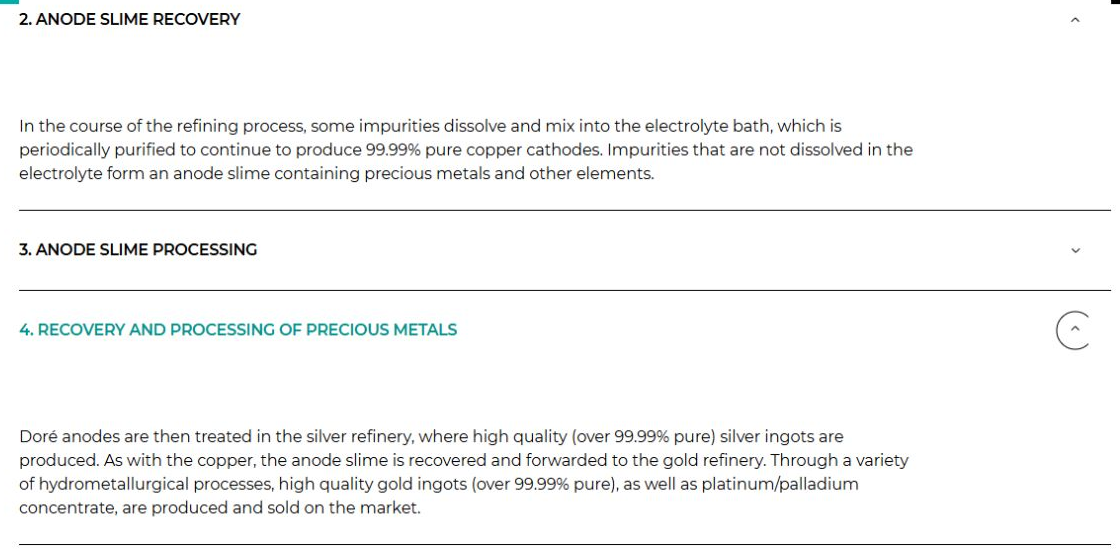
At Glencore's Horne Smelter in Rouyn-Noranda, Quebec, roughly 110,000 metric tons of recycled material enter a broader stream that includes about 740,000 metric tons of copper concentrate and other copper- and precious-metal-bearing feed. Copper anodes move to the CCR Refinery in Montreal-East. There, electrorefining leaves precious metals in anode slime; CCR can also process slime from other companies. The material is converted into dore anodes and then into silver ingots above 99.99% purity. Glencore reported 14.77 million ounces of silver output at CCR in 2024. [11] [12]
The system is strategically important, but not invulnerable. Glencore temporarily suspended major Horne investments in February 2026 amid regulatory uncertainty, then began resuming emissions-reduction work after Quebec established a stable framework through 2033. That episode carries a lesson for both capitals: allied capacity must be maintained and financed before a crisis, not merely admired after one. [13]
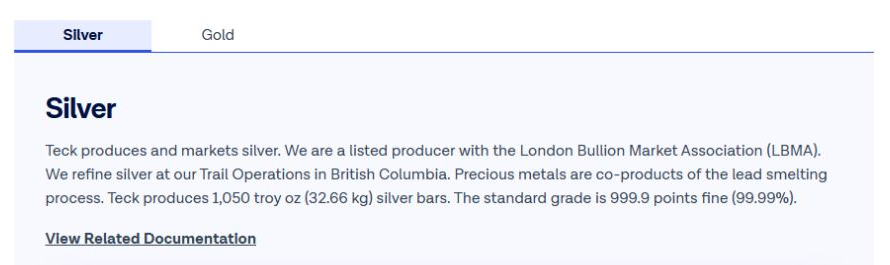
At Trail Operations in British Columbia, Teck refines silver as a co-product of lead smelting and sells 32.66-kilogram bars at 99.99% standard grade. This co-product structure is typical. Much of the world's silver is recovered alongside lead, zinc, copper or gold, which means a higher silver price does not automatically summon a new primary silver mine. Supply depends on the economics, schedules and investment decisions of several other metals. [7] [14]
A mine map therefore understates Canada. A customs-origin table can overstate Canadian geological control. The accurate middle is more interesting: Canada is a significant bilateral supplier and a North American conversion platform.
One tariff line, one policy warning
The new duty does not prove that every Canadian silver route has become uncompetitive. A tariff rate is not a plant quote.
For a shipment to fall under HTSUS 7106.92.10, classification and Canadian origin must both be established. The commercial result then depends on the entered value, treatment charge, freight, financing, product qualification, delivery window and competing offer. A Canadian route could remain the best option after the duty, or lose before the duty matters. [1] [2]
That narrowness is exactly why the tariff is revealing. The problem is not that Washington has walled off all Canadian silver. The problem is that an instrument intended to answer a trade dispute now catches a form of high-purity silver inside a supply chain Washington has separately declared critical.
This is policy friction at the margin - and the margin is where resilience lives.
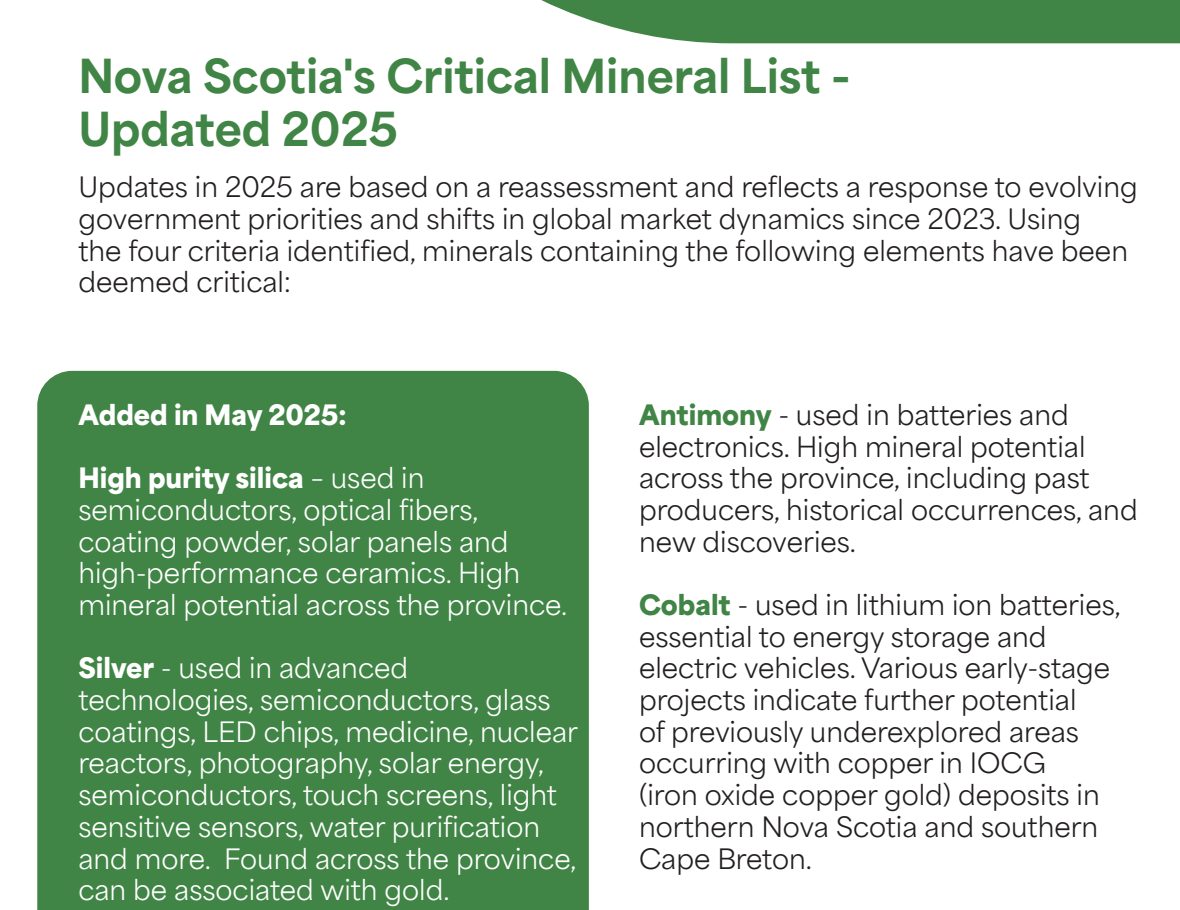
The contradiction runs north as well. The United States added silver to its final 2025 List of Critical Minerals, citing uses in electrical circuits, batteries, solar cells and antibacterial medical instruments. Canada's current federal list names 34 minerals and metals but omits silver. Nova Scotia added silver to its own list in May 2025, recognizing its importance to solar panels and thermoelectric devices, but Ottawa's federal list still leaves it out. [5] [6] [15]
Formal recognition is not symbolic. Critical-mineral status influences data collection, project eligibility, infrastructure priorities, permitting attention, tax treatment, stockpile analysis and the negotiating position a government brings to its allies. Canada's omission makes it easier to treat silver refining as incidental output from copper, lead and zinc rather than as strategic infrastructure in its own right. [5] [6]

Leverage without weaponization
Trade disputes encourage governments to talk about leverage as something that can be withheld. Silver points toward a better definition.
Canada's bargaining strength comes from being able to solve an American vulnerability. The United States gains a close, transparent and politically reliable source of diversification. Canada gains investment, long-term demand and a larger share of the value created between concentrate and qualified metal. Both sides gain a supply chain that is less exposed to any single corridor.
That is leverage through assured access, not threatened denial.
The market backdrop makes that access worth more. The Silver Institute and Metals Focus expect a sixth consecutive global silver deficit in 2026, forecast at 46.3 million ounces after a 40.3 million-ounce shortfall in 2025. They estimate that 762 million ounces have been drawn from stocks since 2021. Above-ground inventories and recycling remain important shock absorbers, but repeated deficits reduce the margin for error and can make route, timing and qualification constraints more expensive. [16]
Canada should not answer that tightness with an export ban, and the United States should not answer it with forced exclusivity. Both would turn a shared asset into a bilateral liability. The more durable answer is a North American silver-security compact built on six practical steps:
1. Canada should add silver to its federal critical-minerals list and recognize mining, refining, recycling and related infrastructure as parts of one strategic value chain.
2. Canada and the United States should map silver by mine origin, country of refining, product form, recycled content, destination and critical end use, so policy is based on flows rather than misleading national totals.
3. Washington should provide stable tariff treatment for qualifying North American silver products and review tariff lines that conflict with its own mineral-security goals.
4. Both governments should support commercially negotiated offtakes, project finance and capacity investment in Canadian and U.S. refining and recycling, with Mexico included because it remains the continent's principal mine-supply pillar.
5. Canada should preserve existing contracts and reliable deliveries while seeking reciprocal investment and more Canadian value creation in future agreements.
6. The three CUSMA partners should establish an emergency consultation protocol for traceability, strategic inventories and temporary surge allocation - without blanket export bans or exclusive rights over future production.
None of this asks Washington to become dependent on Canada. It asks Washington to avoid becoming unnecessarily dependent on fewer alternatives. None of it asks Ottawa to threaten its best customer. It asks Ottawa to recognize that dependable supply is itself a negotiating asset.
The quiet lever
Potash, aluminum, uranium and oil are Canada's obvious levers in any confrontation with the United States. Silver is the quiet one because it is dispersed across mines, scrap streams, smelters, refineries and product classifications. Its importance is easier to miss than a pipeline or a potash railcar.
That is precisely why the new tariff line matters. It has illuminated a piece of shared industrial infrastructure that neither government has treated coherently. Washington calls silver critical, yet now applies a 50% duty to one narrow high-purity Canadian-origin product category. Ottawa possesses meaningful silver flows and conversion capacity, yet does not formally recognize the metal in its federal strategy.
Canada does not need to threaten a single ounce to possess silver leverage. It needs to recognize what it mines, what it refines and what the United States has already declared critical.
The proper use of that leverage is a bargain: secure Canadian value creation in exchange for secure American access. Build the route so well that both countries would rather protect it than test life without it.
Sources and Methodology
Official statistical and government sources control quantitative and policy claims. Company-primary sources support facility descriptions; Reuters supplies the current market forecast. Links were checked for this draft on 25 August 2026.
[1] White House - Section 338 proclamation on Canadian motor vehicles
[2] White House - Section 338 tariff annex, including HTSUS 7106.92.10
[3] White House - Temporary suspension proclamation moving the effective date to August 22, 2026
[4] Department of Finance Canada - Countermeasures announced August 25, 2026
[5] U.S. Geological Survey - Final 2025 List of Critical Minerals
[6] Natural Resources Canada - Current federal list of 34 critical minerals
[7] U.S. Geological Survey - Mineral Commodity Summaries 2026: Silver
[8] U.S. Geological Survey - Silver in December 2025
[9] U.S. Geological Survey - Methodology for the 2025 U.S. List of Critical Minerals
[10] Statistics Canada - Table 16-10-0019-01, monthly metallic-mineral production
[11] Glencore CCR - From concentrate to finished product
[12] Glencore CCR - At a glance in 2024
[13] Glencore Canada - Horne investment update, June 11, 2026
[14] Teck - Precious metals refined at Trail Operations
[15] Government of Nova Scotia - Critical Minerals Strategy update, May 2025
[16] Reuters - Silver faces a sixth deficit year, April 15, 2026
[17] U.S. Census Bureau - Foreign-trade definitions for country of origin and customs value
Mine production, refined output, imports by customs country of origin and gross-weight scrap are distinct measures. They describe different stages of the supply chain and are not added together as one supply total.