 Strategic Resource Intelligence

The Army’s October 6 FALCONS notice asks industry for a replacement battlefield sensor built around a Government-provided third-generation forward-looking infrared kit. The proposed system would replace the Long Range Advanced Scout Surveillance System and Fire Support Sensor System. Its public description makes the thermal-imaging kit part of the integration requirement, while leaving its lens materials unspecified. Army FALCONS Area of Interest, sections 2–3
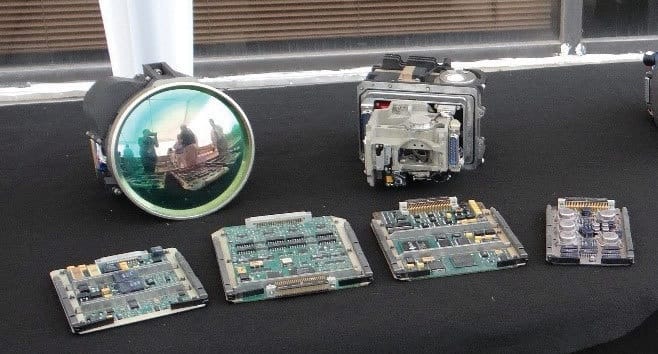
A thermal camera needs infrared radiation from the scene to reach its detector. The material in front of that detector can transmit the useful radiation, absorb it or reflect it away. Choosing the optical material is part of choosing what the camera can receive. FLIR’s explanation of infrared camera lenses

Germanium has an established role in that path. Its optical job can also change form: replacing a solid germanium optic with an infrared glass can leave the element in the glass.
The radiation has to get through
Ordinary glass is an intuitive choice for a camera lens because it passes the light our eyes can see. Thermal imaging works in a different part of the spectrum. Glass suitable for visible-light optics can absorb the infrared radiation a thermal camera needs, which is why manufacturers turn to materials with useful transmission in the relevant infrared band. The word “transparent” only becomes useful here when the wavelength is specified. FLIR on visible-light and infrared lens materials
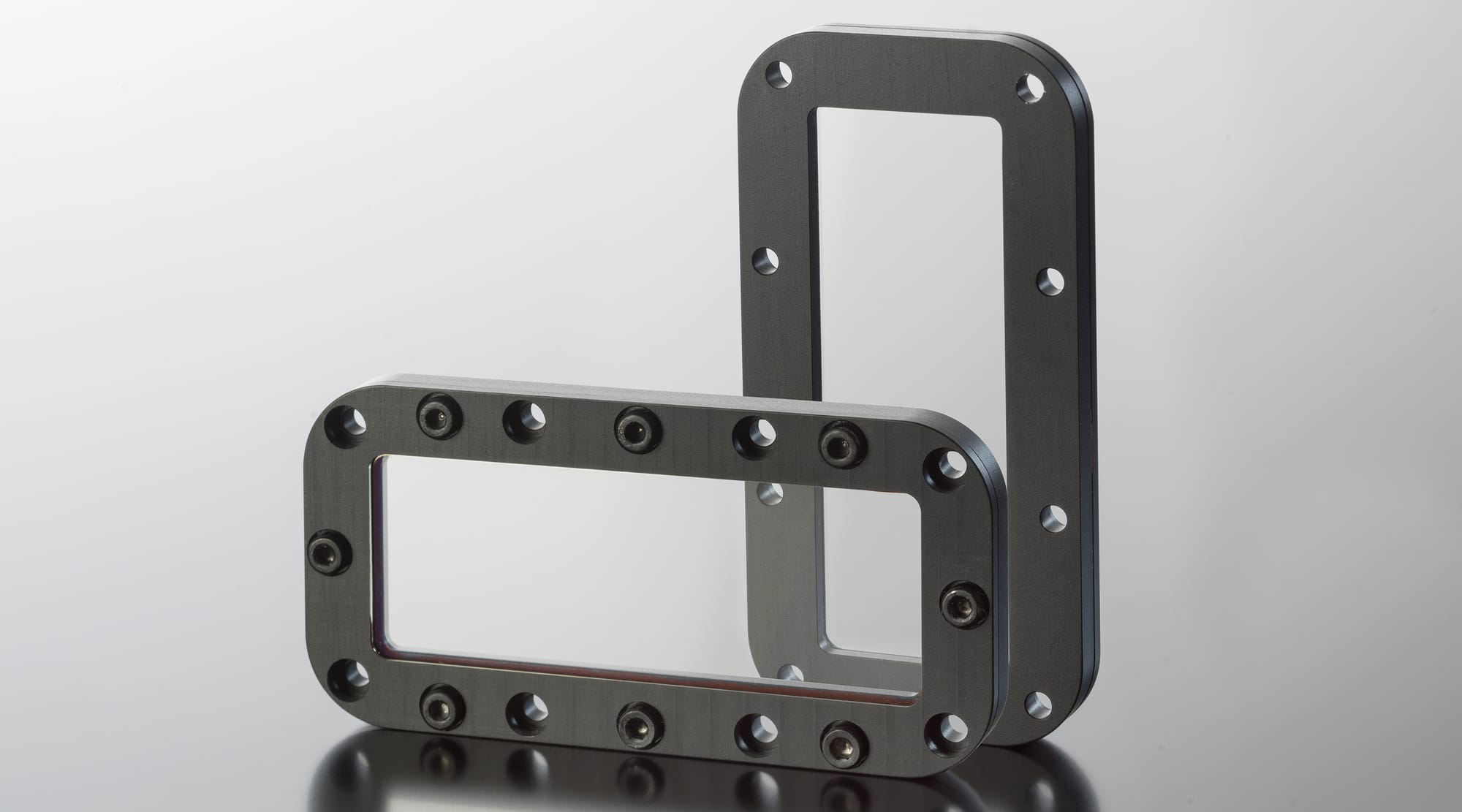
Germanium, included on the United States’ 2025 critical-minerals list, can be made into optical lenses and windows that transmit part of the infrared spectrum. A lens helps form the image; a window lets the required radiation pass through an optical opening. The U.S. Geological Survey identifies these germanium applications in surveillance, reconnaissance and target acquisition, alongside civilian uses. The mineral’s contribution is physical: it provides a path for radiation carrying information about the scene to reach the imaging system. USGS, “Germanium in Infrared Optics,” Appendix 1
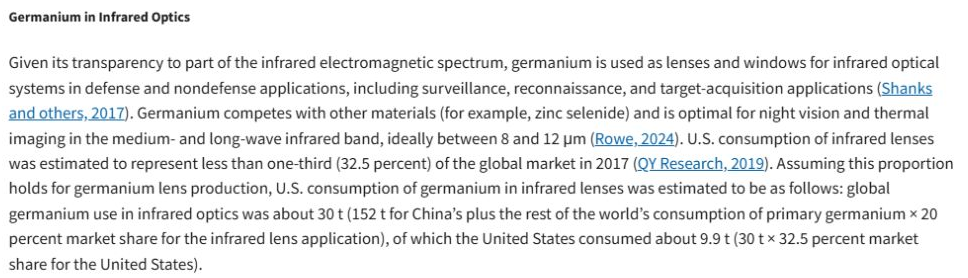
A better detector cannot recover radiation that the window has already absorbed or reflected away. The optical material helps determine how much of the useful signal is available to detect in the first place.
 Taylor Cross
A material still has working limits
A germanium part is not a complete optical specification. Edmund Optics offers commercial germanium windows with antireflection coatings designed for 3–5, 3–12 or 8–12 micrometer wavelength ranges. Those are different choices within the same element. The supplier recommends antireflection coatings because germanium’s high refractive index makes surface reflection a significant consideration. Edmund Optics’ germanium-window specifications
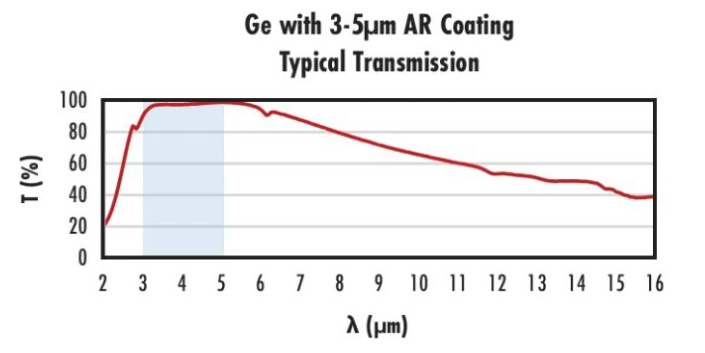
Temperature and weight complicate the choice further. The same supplier explains that germanium transmission falls as temperature rises. It recommends using its TECHSPEC windows below 100°C. It also lists a density of 5.33 grams per cubic centimeter. The temperature recommendation applies to the catalog products described. Edmund Optics’ product description
 IA
IA
A glass replacement can retain germanium
There are alternatives. The USGS reports that chalcogenide glass has been used to replace germanium metal in infrared applications. That makes substitution an established option, although the broad material-family name leaves an important question unanswered: which glass? USGS Mineral Commodity Summaries 2026, Germanium, page 2
SCHOTT’s infrared-glass data show why the formulation matters. IRG22 combines germanium, arsenic and selenium. IRG26 combines arsenic and selenium; both it and IRG27 are explicitly listed as germanium-free. SCHOTT’s composition and material-property tables
At a wavelength of 10 micrometers, IRG22 has a refractive index of 2.4968; IRG26 is 2.7781. SCHOTT’s refractive-index data That difference changes the focusing behavior. For the same positive thin-lens shape in air, the higher index produces a shorter focal length. Keeping the focal length would require changing the curvature in that simple comparison. Edmund Optics’ explanation of the lens-maker’s equation A germanium-free formulation can therefore change the design as well as the material supply; these catalog values do not establish an interchangeable lens for FALCONS.
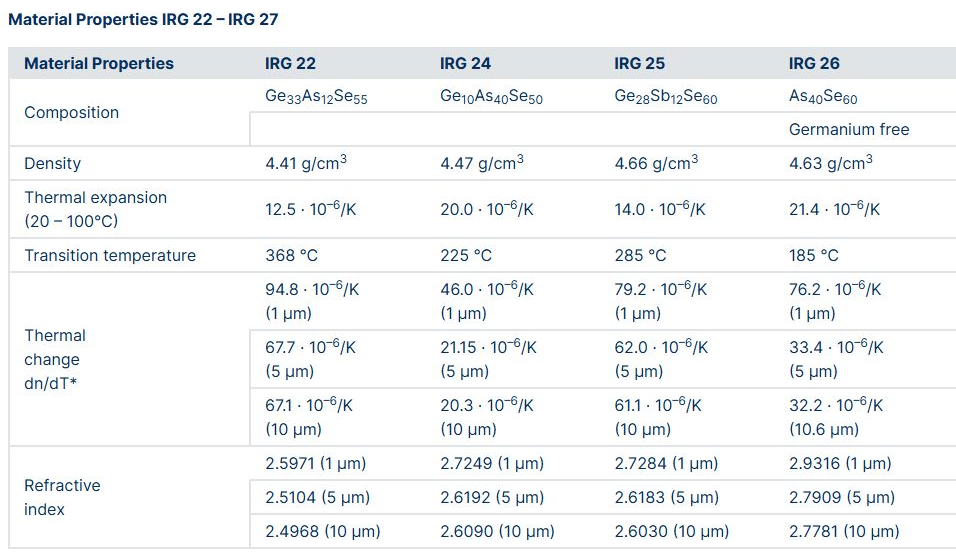
Germanium-free glass gives the designer a real route to investigate, with optical behavior that has to be accommodated in the lens design. Germanium-containing glass offers another outcome: the metal component can disappear while the mineral remains in the material carrying the infrared signal. The substitution can be real even when the need for germanium supply remains.