Strategic Resource Intelligence

Researchers have turned silver recovered from discarded solar panels into a catalyst that kept converting carbon dioxide for more than 600 hours in a laboratory cell. The study, published in the October 2026 volume of the Journal of CO₂ Utilization, puts a familiar recycling question into a different setting: what useful work can the recovered metal perform next?
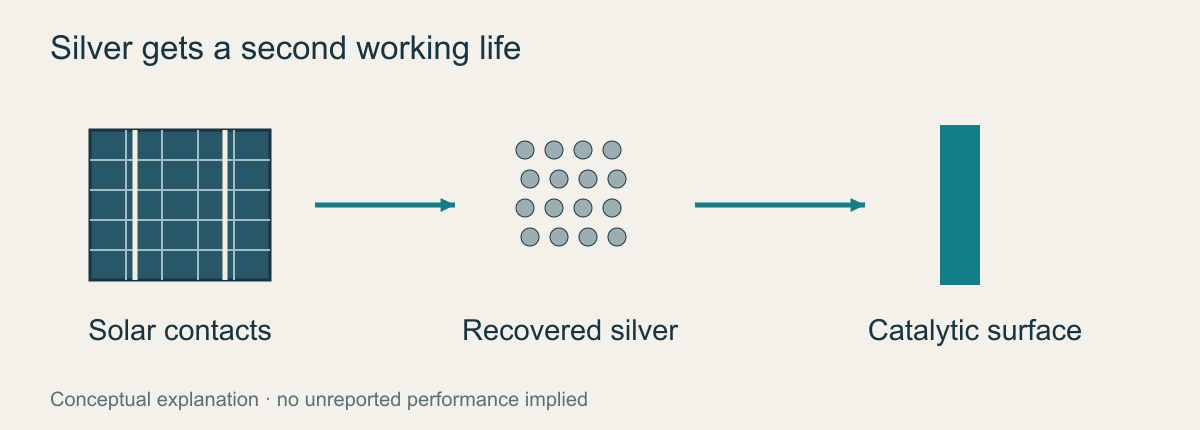
In this experiment, silver becomes part of an electrode that uses electricity to turn carbon dioxide into carbon monoxide, a chemical feedstock. Its catalytic surface favors the desired reaction while the surrounding electrode brings gas, liquid and electrical charge together.
A recovered metal can be chemically pure and still make a poor electrode. Particle structure, support and access to the reaction surface affect how much useful output it can sustain. The new experiment follows the silver beyond extraction and into that working environment.
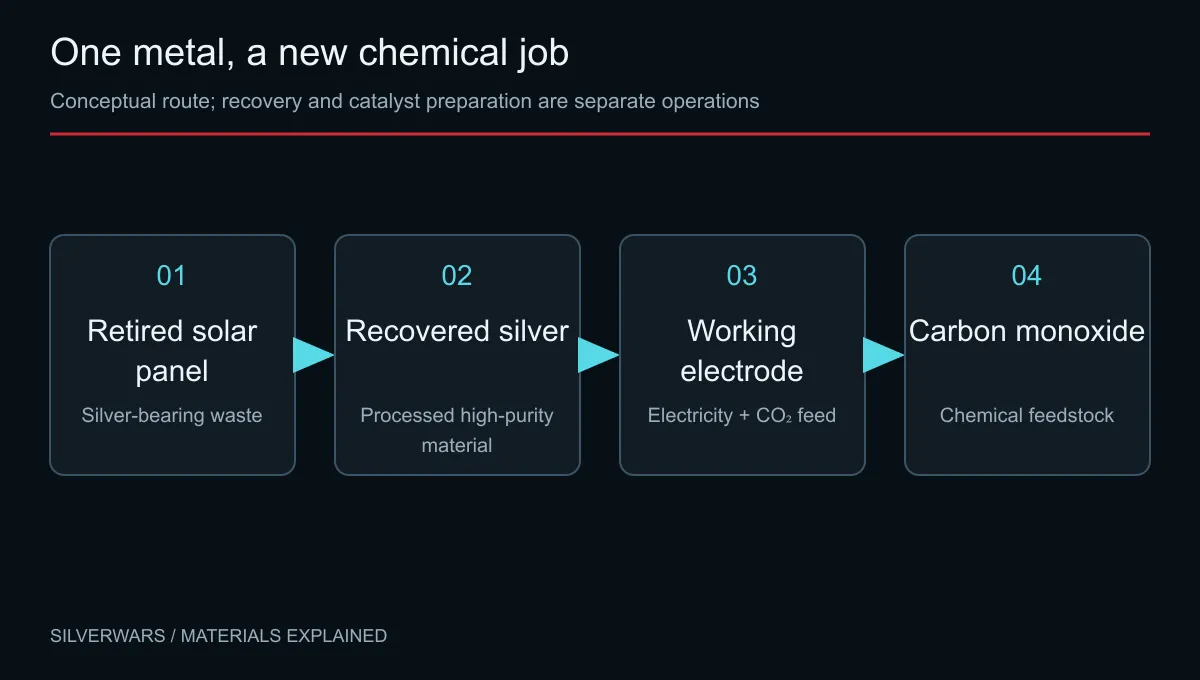
Recovering the part that carried the current
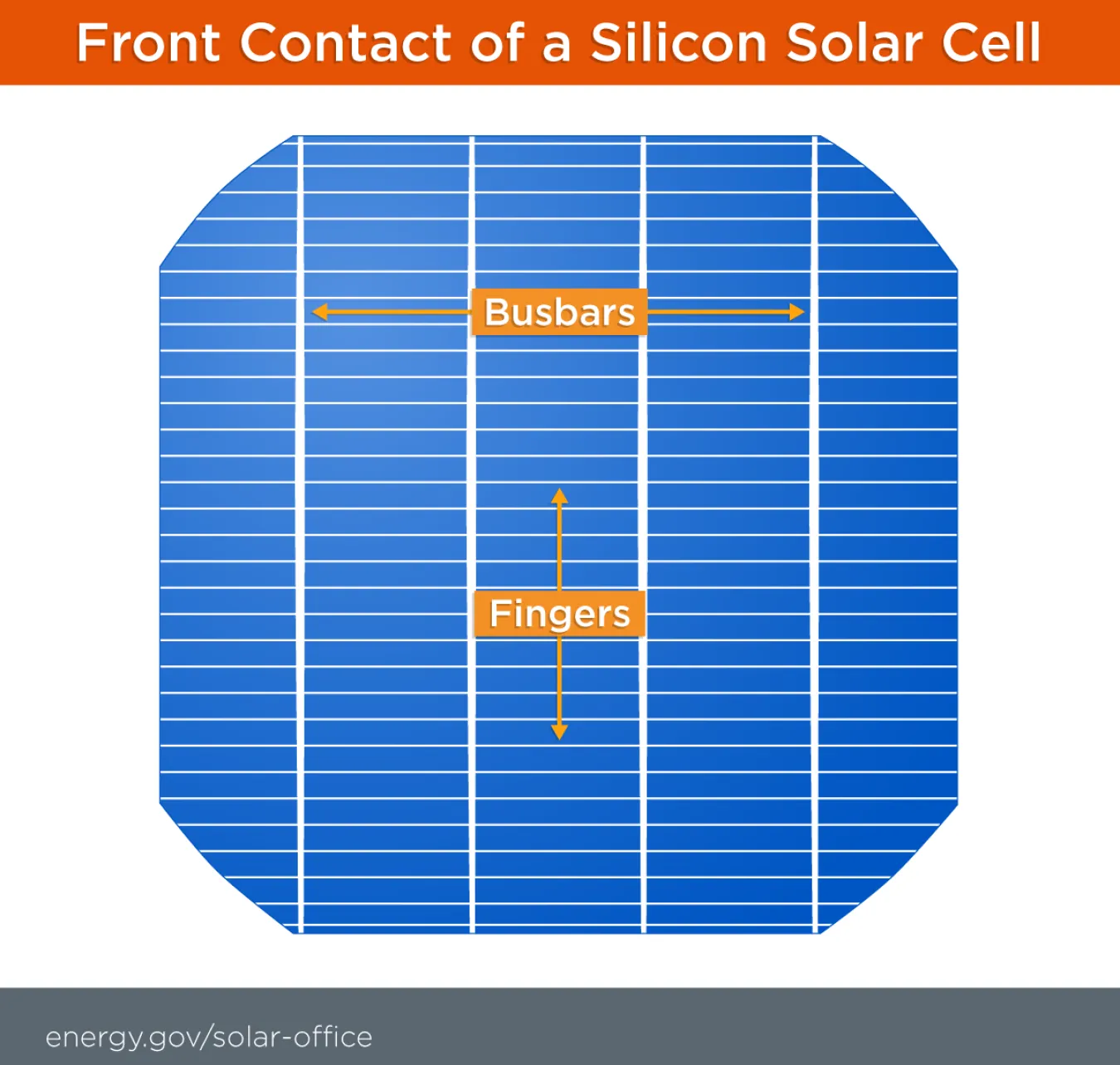
Silver already had a precise job in the panel. The Department of Energy's manufacturing guide describes silver metallization used for electrical contacts on solar cells. These contacts provide a route for the electricity generated in the semiconductor to leave the cell. Recovering the silver preserves a material with useful electrical and chemical properties even when the module around it has reached the end of service.
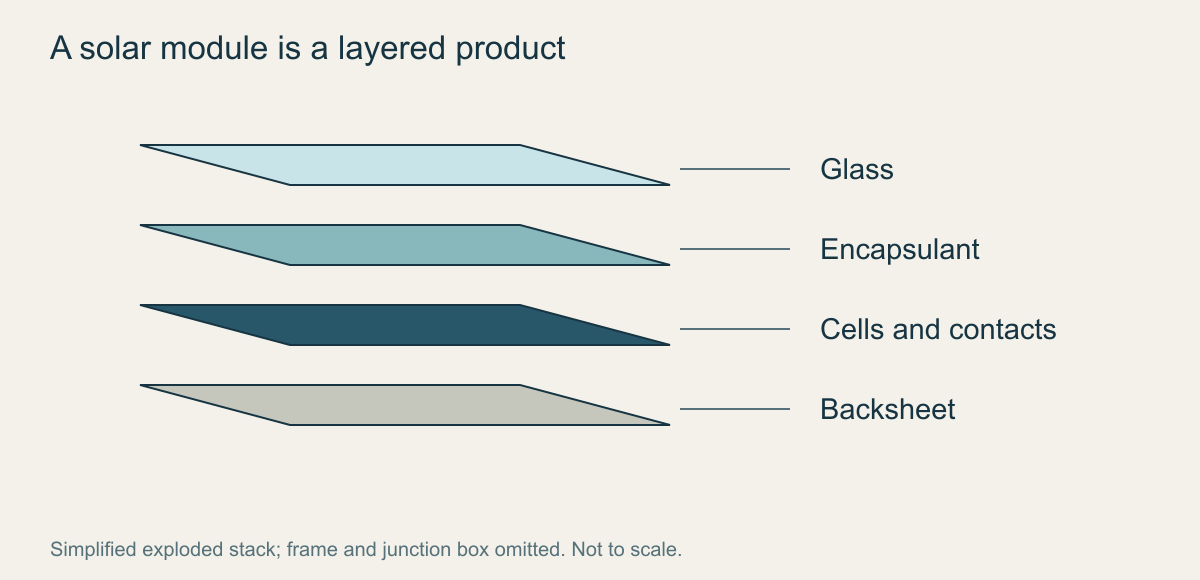
Getting it back is more involved than removing the aluminum frame. A crystalline-silicon module combines glass, polymer layers, cells, wiring and other components. The polymers that protect the working panel also make it difficult to take apart. The Environmental Protection Agency's recycling overview separates disassembly and glass removal from the later separation and purification of metals inside the cells. Recovering a large share of a panel's weight therefore says little, by itself, about how much silver has been recovered.
That distinction gives the catalyst experiment its industrial interest. There are two different accomplishments to pursue: separating a useful metal from a complicated waste stream, then giving that metal a demanding second job. A recovery business would need to account for collection, processing and purification before comparing that route with selling recovered silver into an established market. The electrode study adds evidence about the second job; it does not erase the work required to reach it.

A second working life for silver
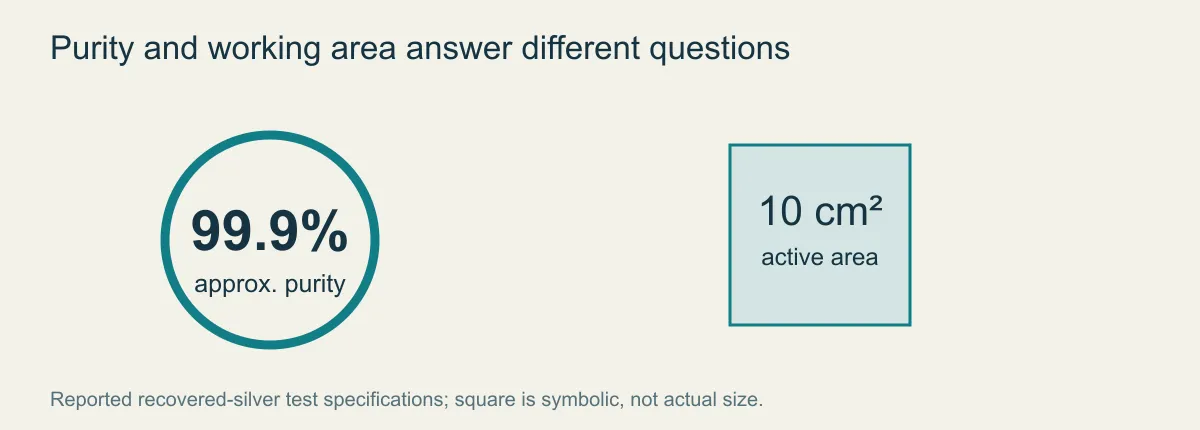
The researchers report silver recovered at approximately 99.9% purity and tested in a membrane-electrode assembly with an active area of 10 square centimeters. Their author abstract describes a hierarchical surface structure that helps resist flooding. These are processed catalyst particles, rather than pieces of solar-panel scrap placed directly into a reactor.
Silver matters because it can favor the electrochemical route from CO₂ to CO. Electricity supplies energy to the cell; the catalyst helps determine which chemical product that expenditure produces. A favorable catalyst therefore contributes something more specific than electrical conductivity. It helps put the current to useful chemical work.
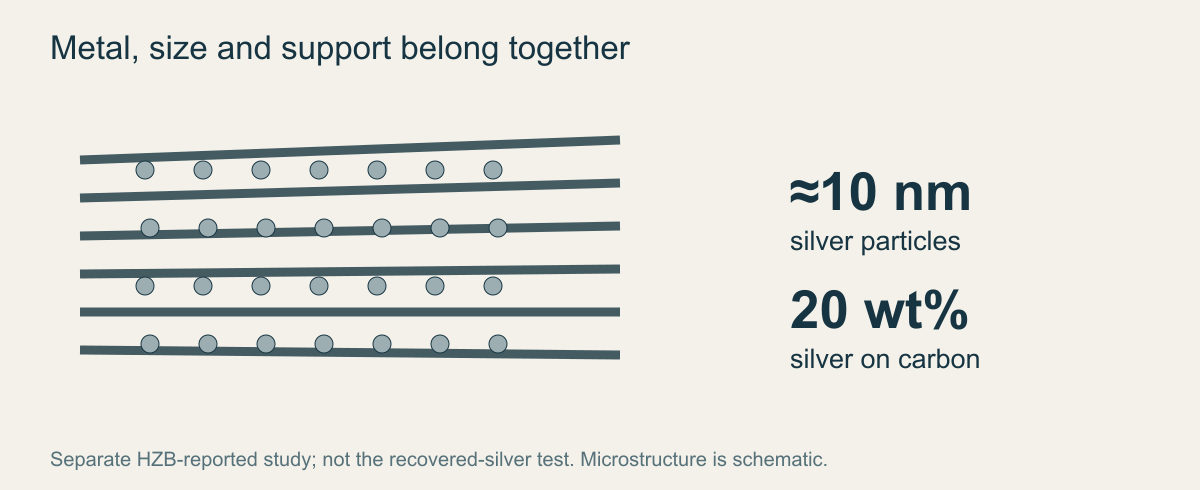
A separate Helmholtz-Zentrum Berlin research account illustrates how closely that function depends on form. In its study, silver nanoparticles were distributed on carbon, with the best reported combination using particles around 10 nanometers across and a silver content of 20% by weight. Those figures belong to that experiment, not the recycled-silver cell. They show why a catalyst specification includes particle structure and support as well as the name of the metal.
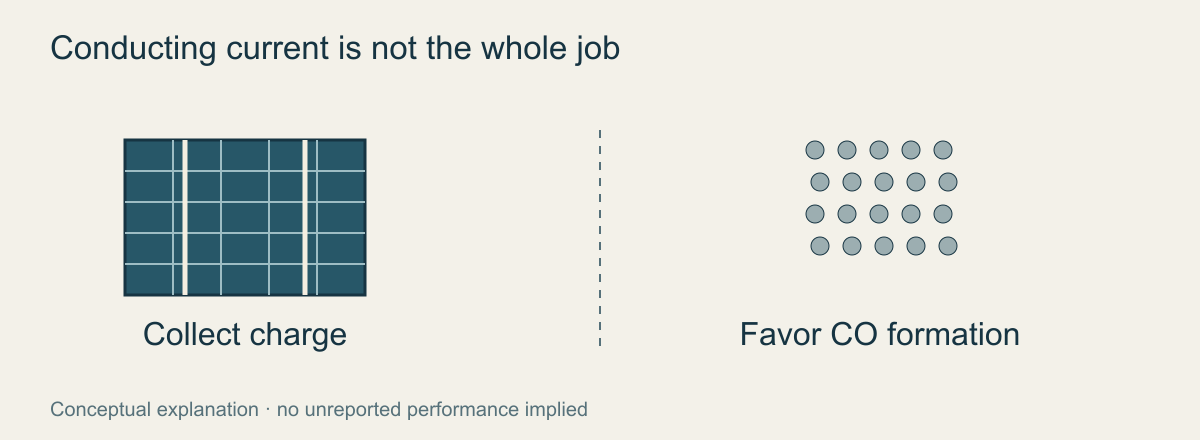
The change in application also changes the desired shape. A contact on a solar cell must collect and conduct charge through a manufactured pattern. In an electrolyzer, accessible catalytic surface is especially important: reactants need to meet the silver where charge transfer can occur. Breaking material into small particles can expose more surface for a given mass, but the particles still need an effective connection to the rest of the electrode. Simply dispersing more silver throughout an inaccessible layer would not make all of it productive.
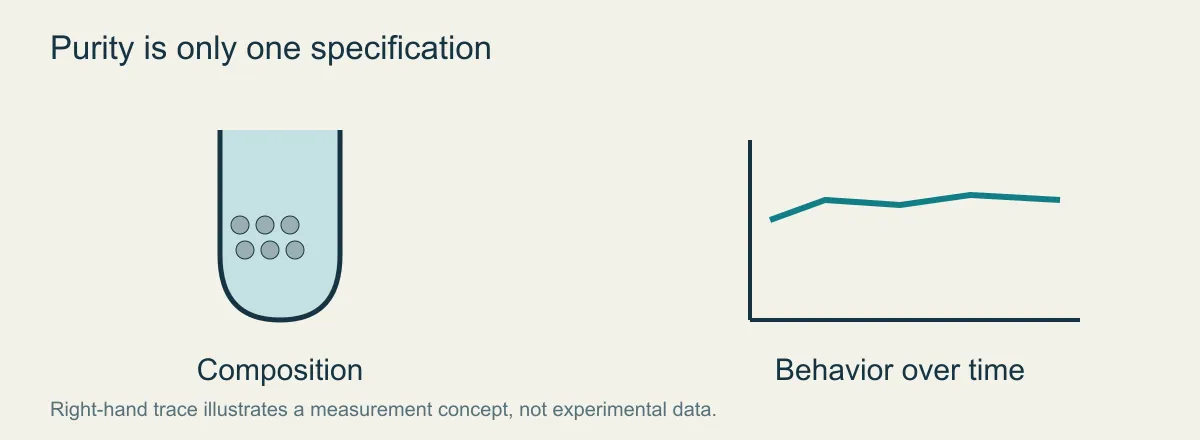
Successive recovered batches would need to reproduce that working surface. A purity measurement can identify what is in the material; it cannot, by itself, show how the material will behave after it is made into an electrode.
The reaction needs a way in
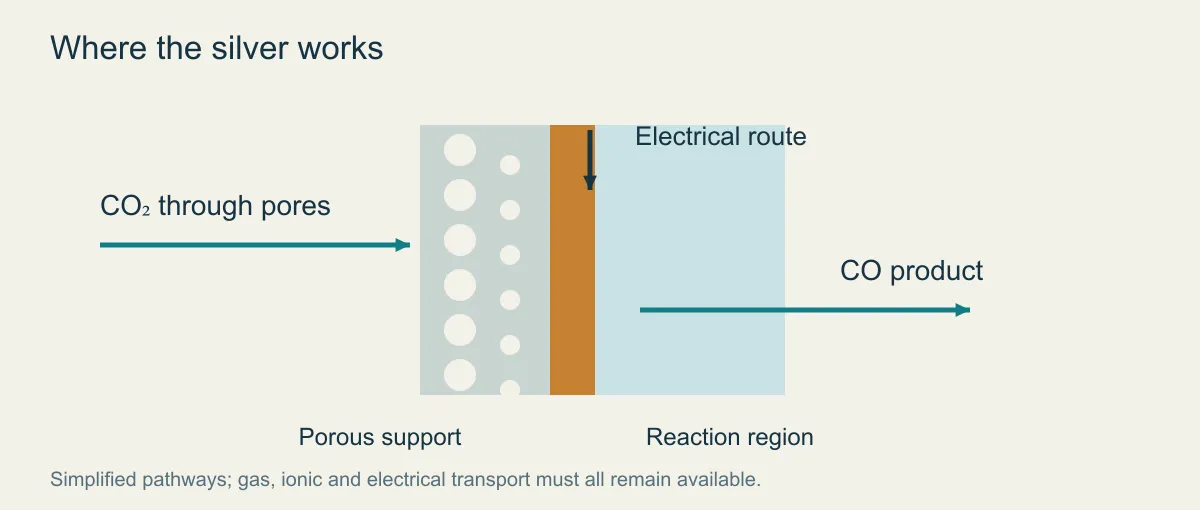
A gas-fed electrode gives CO₂ a short route toward the catalyst. Its porous structure allows gas to approach a thin reaction region instead of relying entirely on slow transport through a bulk liquid. Silver particles occupy that region, alongside other materials that help hold the layer together and carry charge.
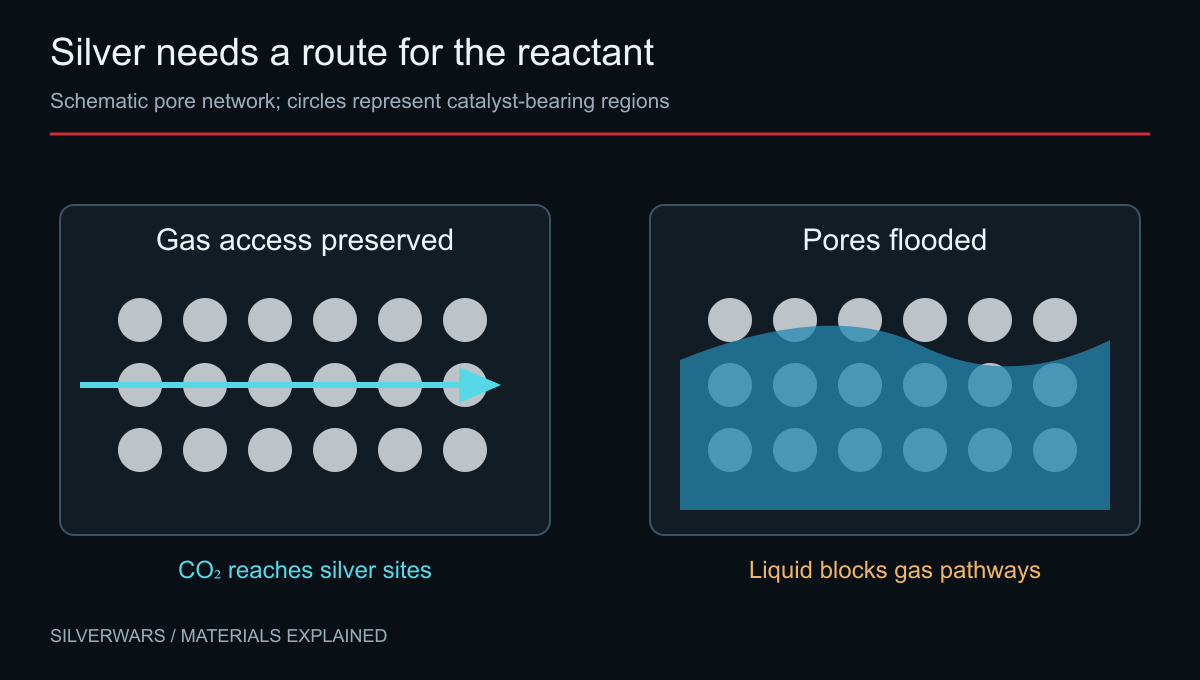
The difficulty is keeping the route open. Liquid entering too much of the pore network can obstruct gas access. The silver may still be present, but less CO₂ reaches the places where it can react. Adding more metal would not automatically clear a flooded pathway.
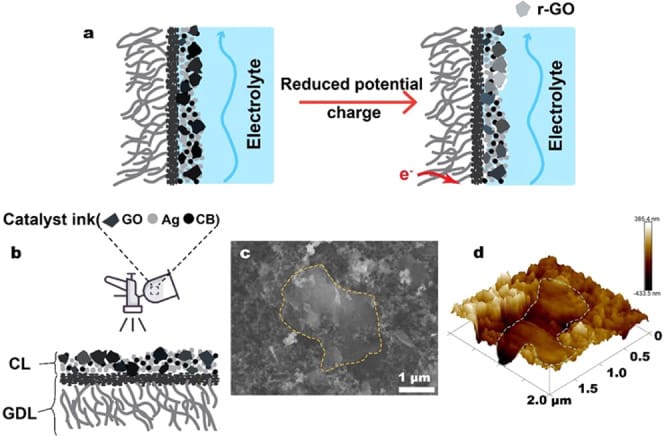
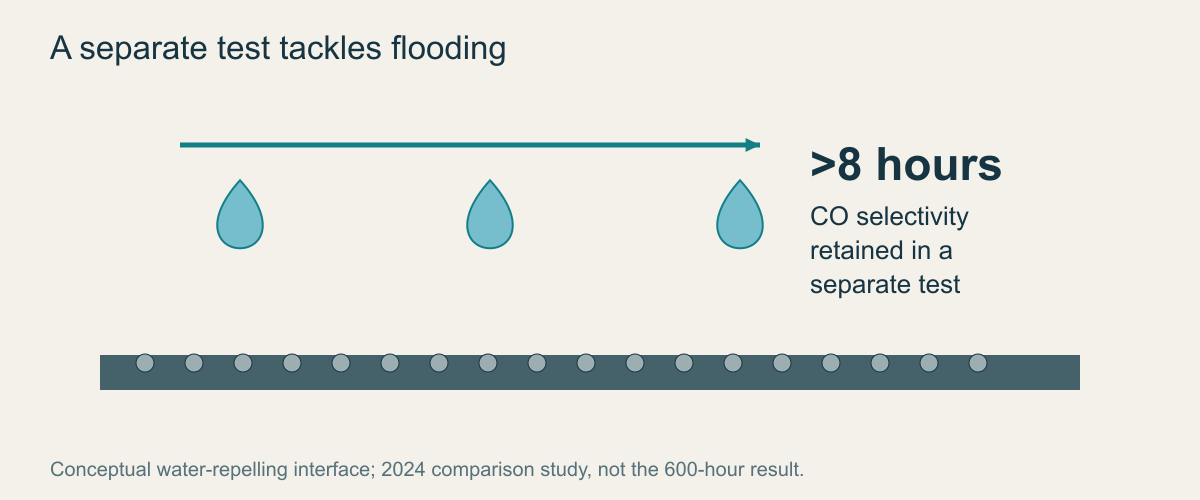
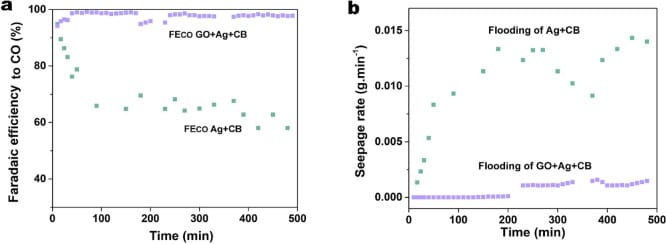
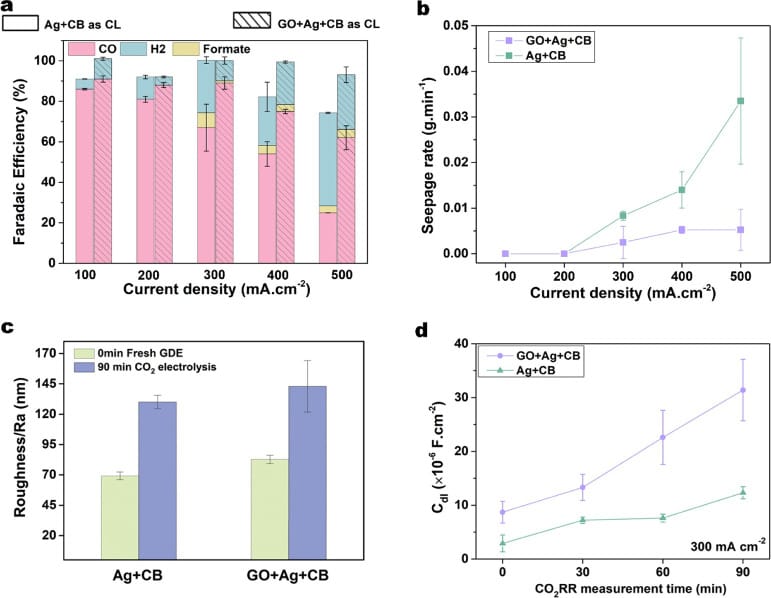
This is a well-established design problem beyond the new recycling study. A 2024 investigation of silver gas-diffusion electrodes introduced reduced graphene oxide into the catalyst layer to create water-repelling regions. It sustained a high share of current going toward CO for more than eight hours under its stated conditions, while the comparison electrode deteriorated. That is a different material treatment and test, but it makes the physical point visible: useful silver requires a surface that the reactant can continue to reach.
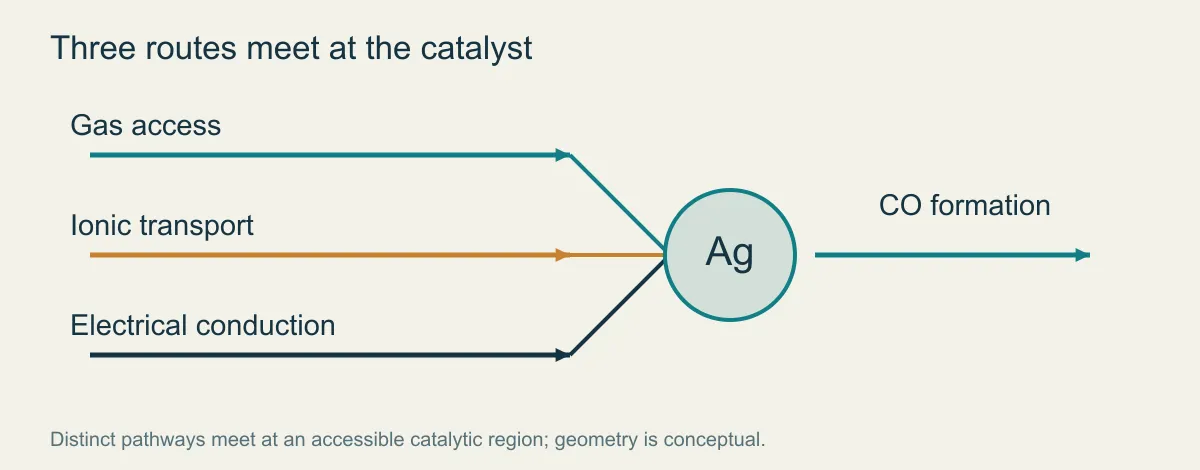
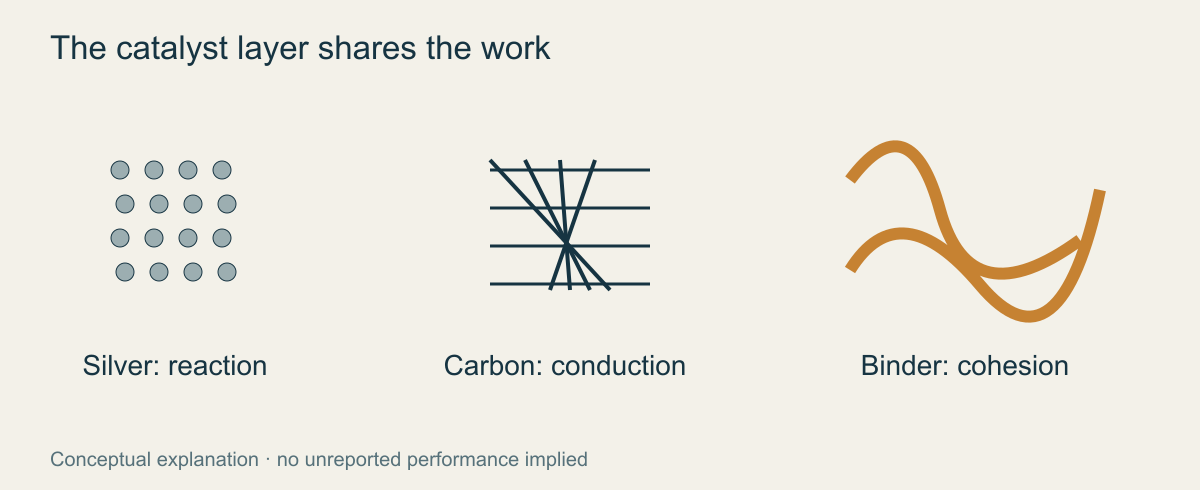
This creates a practical balance inside a very thin structure. The electrode needs paths for gas, ionic transport and electrical current at the same time. Making one part more water-repelling may help gas access, but the complete construction still has to support the electrochemical reaction. The 2024 paper describes catalyst particles, polymer binder and conductive carbon as parts of that working layer. Silver supplies the catalytic function within this assembly; the other materials help keep that function accessible.
The endurance measurements therefore test a coupled problem: the silver must favor CO production, and the porous electrode must keep delivering CO₂ to it. Losing gas access can interrupt useful production without exhausting the metal itself.
Read the endurance figures together
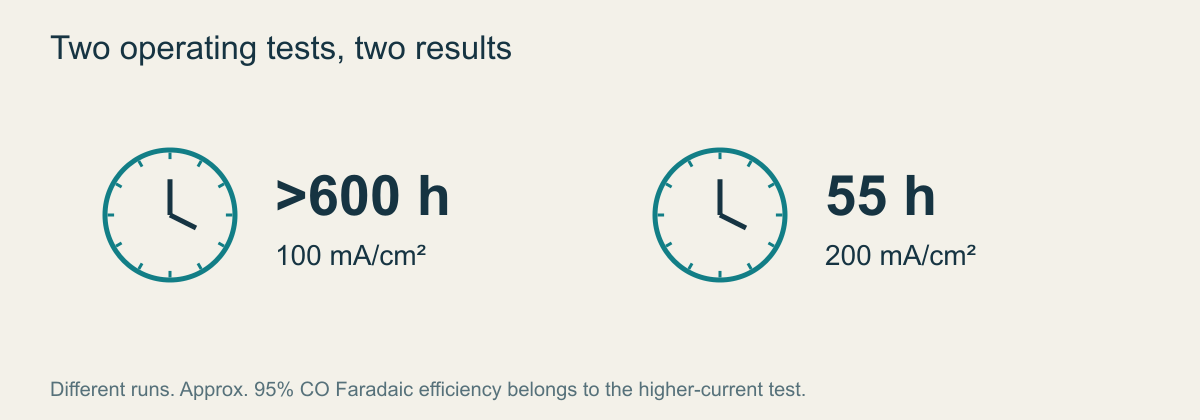
The recycled catalyst's longest reported run exceeded 600 hours at a current density of 100 milliamperes per square centimeter. A separate run at 200 milliamperes per square centimeter lasted 55 hours with approximately 95% Faradaic efficiency toward CO. The higher-current figure and the longer lifetime cannot be combined into one operating result.
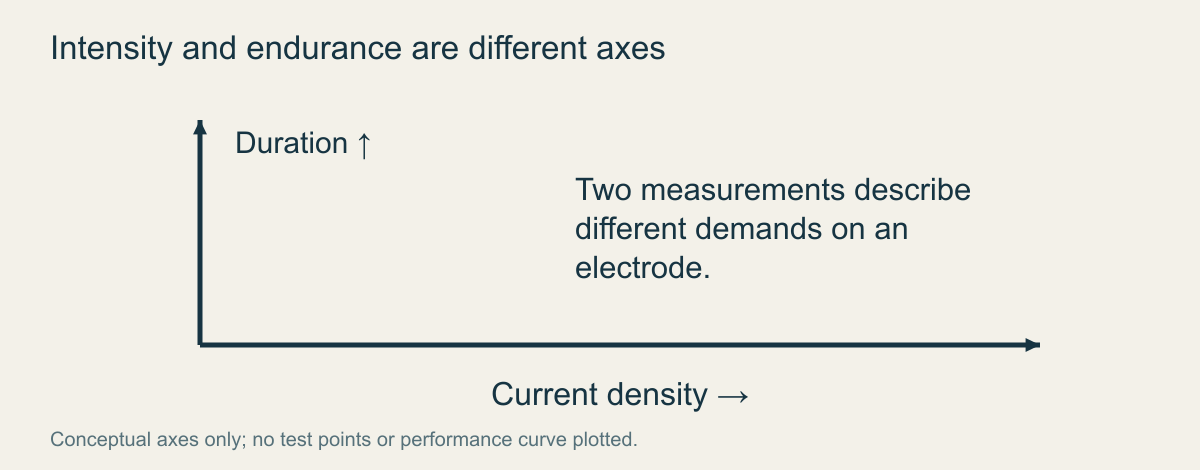
Current density expresses how hard a given electrode area is being driven. At the same area, a higher current sends more charge through the cell each second, creating the possibility of a higher production rate if selectivity and gas supply hold up. Duration answers a different question: how long the device sustains its reported behavior. A small cell running gently for a long time and one running harder for a shorter time provide different evidence for a future production design.
The 600-hour result is more than 25 days of laboratory operation. It is a substantial observation of endurance, but a larger electrode would also have to distribute gas, liquid and current across a larger working surface. Conditions that are reasonably uniform in a small cell can become harder to maintain as its dimensions increase. That engineering consequence is why active area belongs beside the lifetime figure, rather than disappearing once the headline number has caught attention.
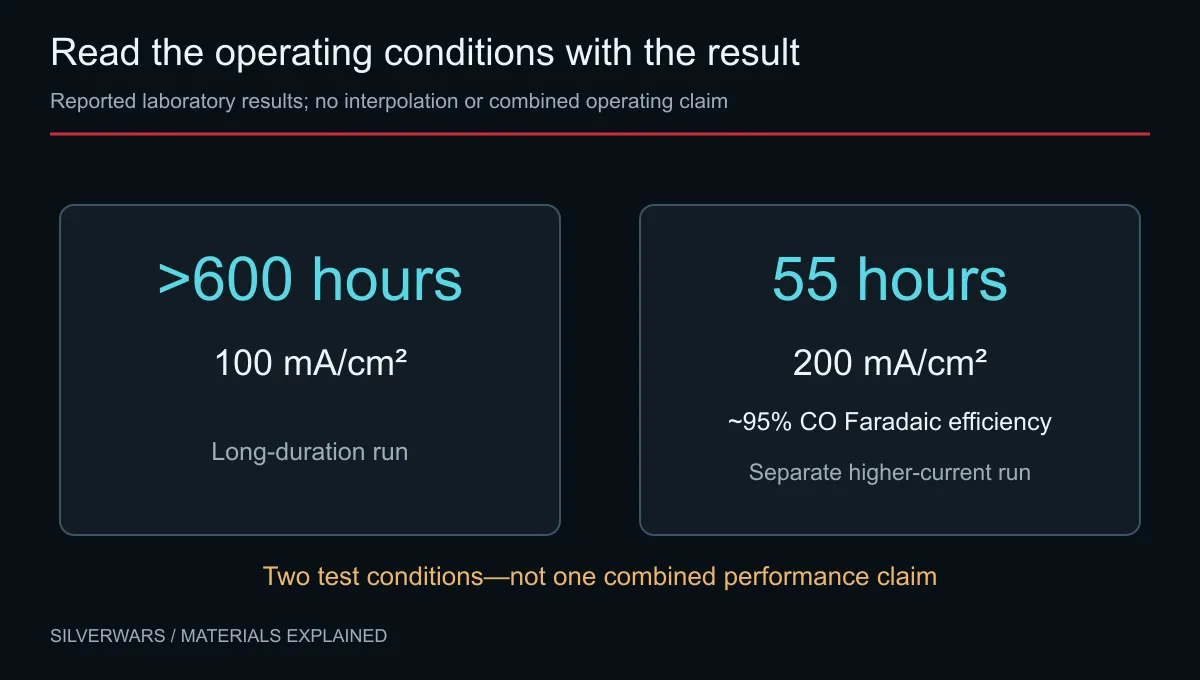
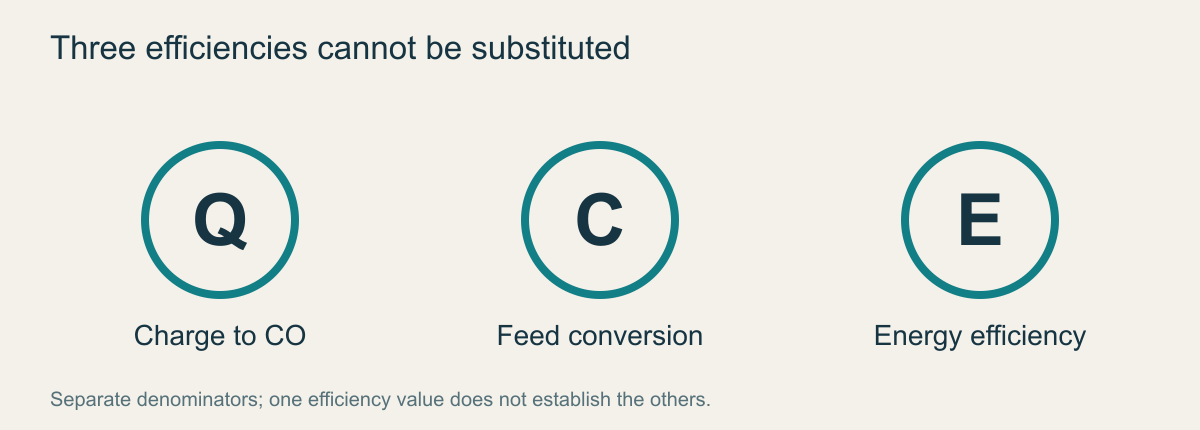
Faradaic efficiency describes the share of electrical charge accounted for by a particular product. It does not say that 95% of all incoming carbon dioxide became CO, or that the complete process converted electricity into product at 95% energy efficiency. A development team needs those distinctions to compare electrodes fairly.
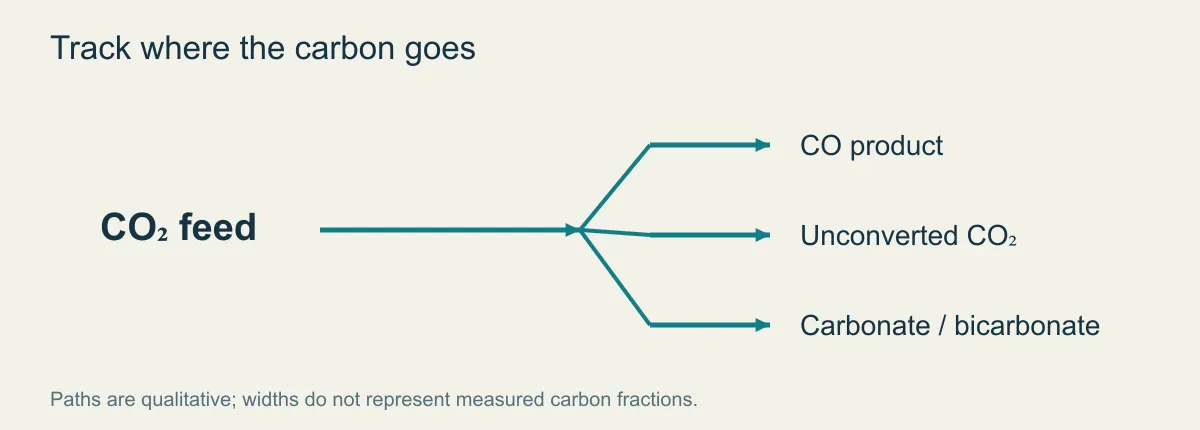
Carbon can also take a route that does not produce the intended gas. A separate membrane-electrode study tracked carbon dioxide entering bicarbonate and carbonate chemistry in the electrolyte. Its carbon balance shows why useful product, unconverted feed and carbon entering the liquid need to be distinguished. An electrode can look selective when judged by charge while the wider process still has carbon-management work to do.
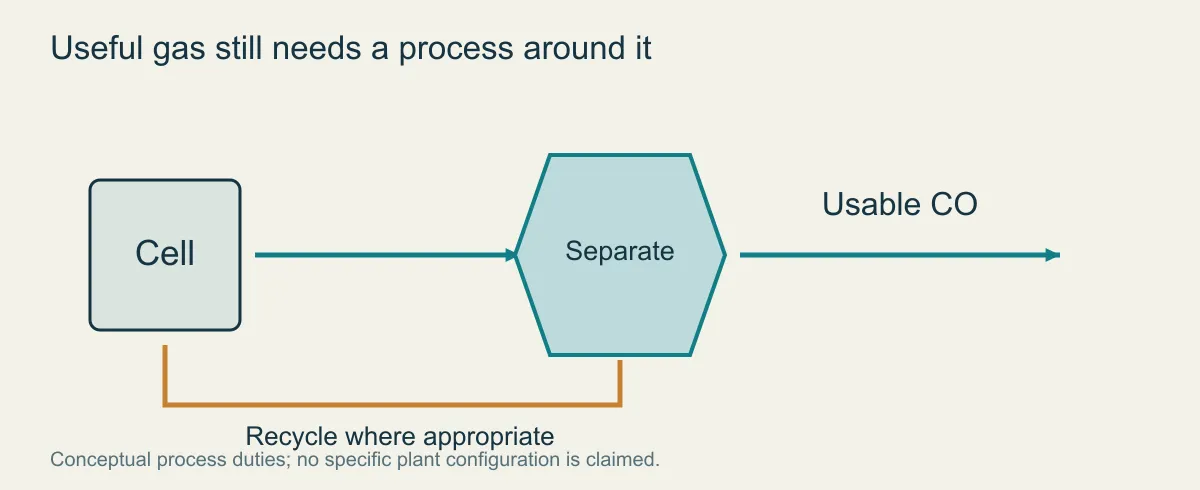
Carbon monoxide is useful here as an intermediate for chemical manufacturing, not as a finished product ready to replace every fuel. The equipment downstream must be designed around the composition of the gas actually leaving the cell. Unreacted CO₂ and other products can create separation and recycling duties. Improving the fraction of current that produces CO can help, while a low conversion of the incoming feed can still leave a large gas stream to handle. These measurements describe different parts of the same plant.
Measuring the second life
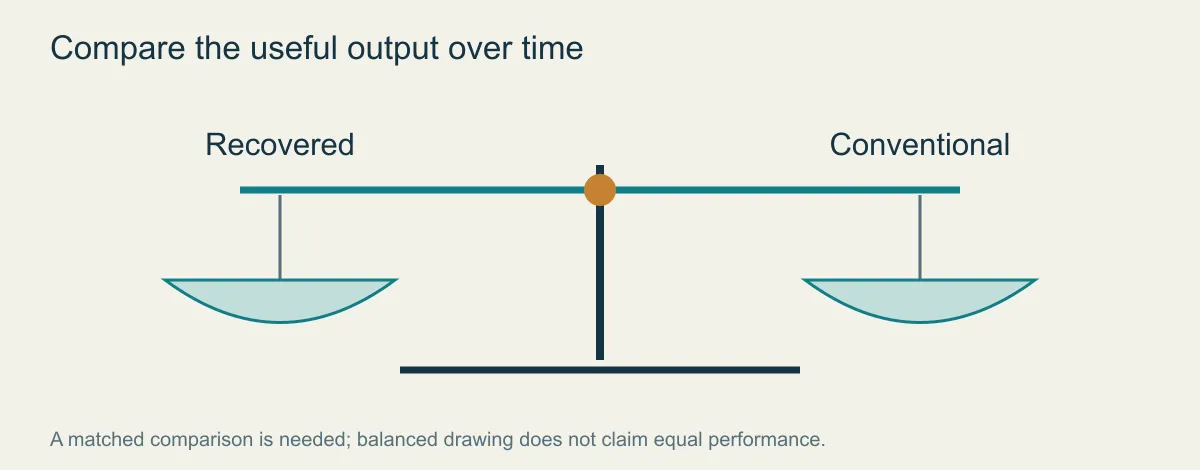
A useful comparison would put recovered and conventional catalyst material through the same operating conditions and follow their output over time. Purchase price per gram would be only the starting point. Catalyst loading, replacement frequency, electricity consumption and usable product would determine how that material contributes to production. A lower-cost powder that needs frequent replacement could lose its advantage; a durable recovered catalyst could earn value by maintaining the electrode's output for longer. Those are economic consequences to measure, not savings already demonstrated by the abstract.
Electricity use, product separation, feed handling and recovery inputs all remain part of the process. The endurance experiment has not established a complete plant's economics or lifecycle carbon balance. Its narrower achievement is valuable: recovered silver maintained a catalytic function over an extended laboratory run.
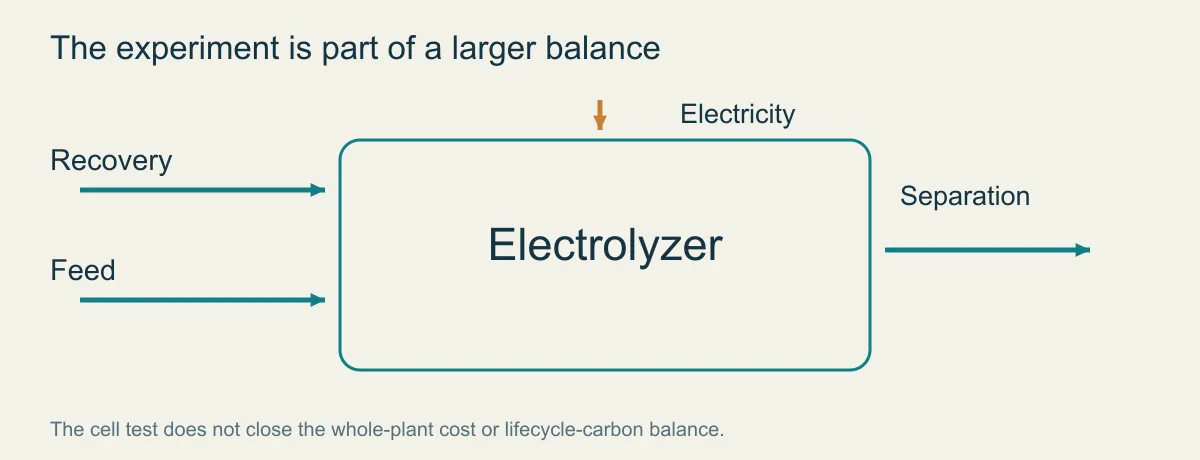
For a developer, the decisive comparison is the usable CO delivered under matched operating conditions, with the energy and carbon flows accounted for. That comparison gives silver's selectivity and the electrode's durability a common purpose. A longer-lived surface could keep more of the recovered metal doing productive work, but only a complete process balance can show what that second life is worth.