Strategic Resource Intelligence

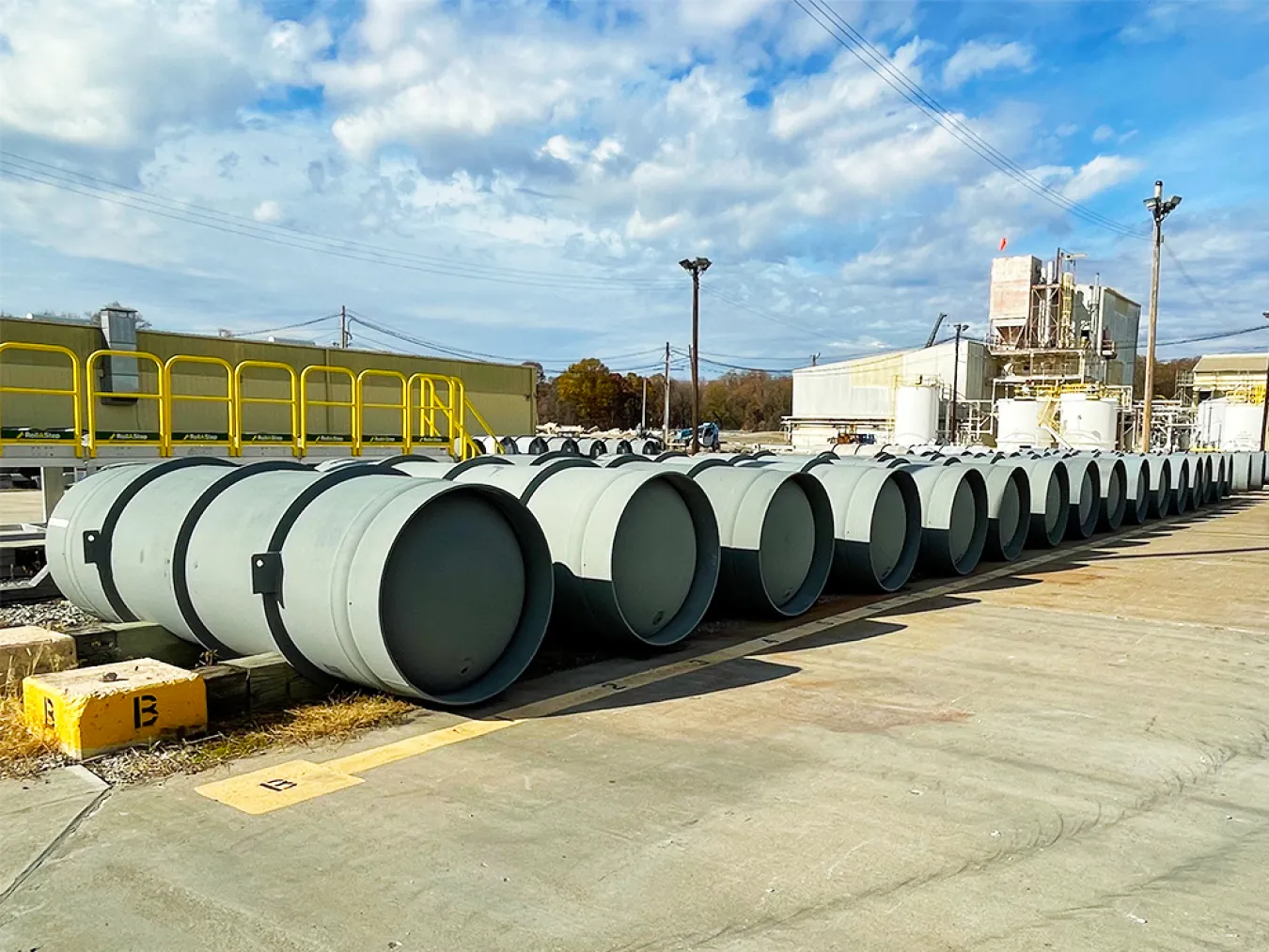
Urenco USA announced its first commercial cylinder of LEU+ on November 2, expanding the fuel options available to nuclear reactors designed to use more highly enriched uranium. The company's announcement brings an important part of the nuclear fuel chain closer to a practical operating benefit: longer runs between refueling outages.
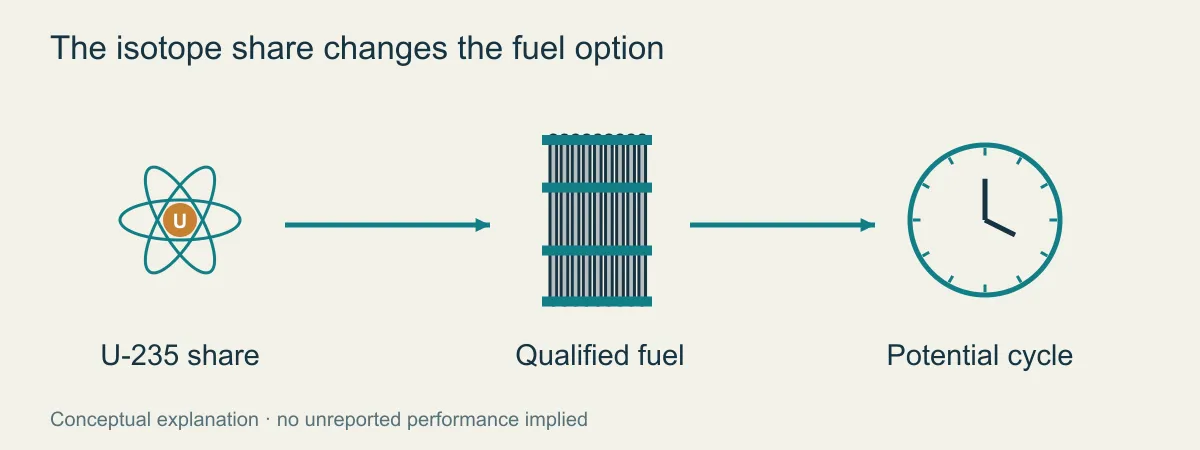
The opportunity comes from increasing the proportion of uranium-235, the isotope that readily supports the fission chain reaction used in these reactors. A fuel design with more usable fissile content can support a different operating cycle, provided the assembly and the reactor's approved operating plan are built around it.
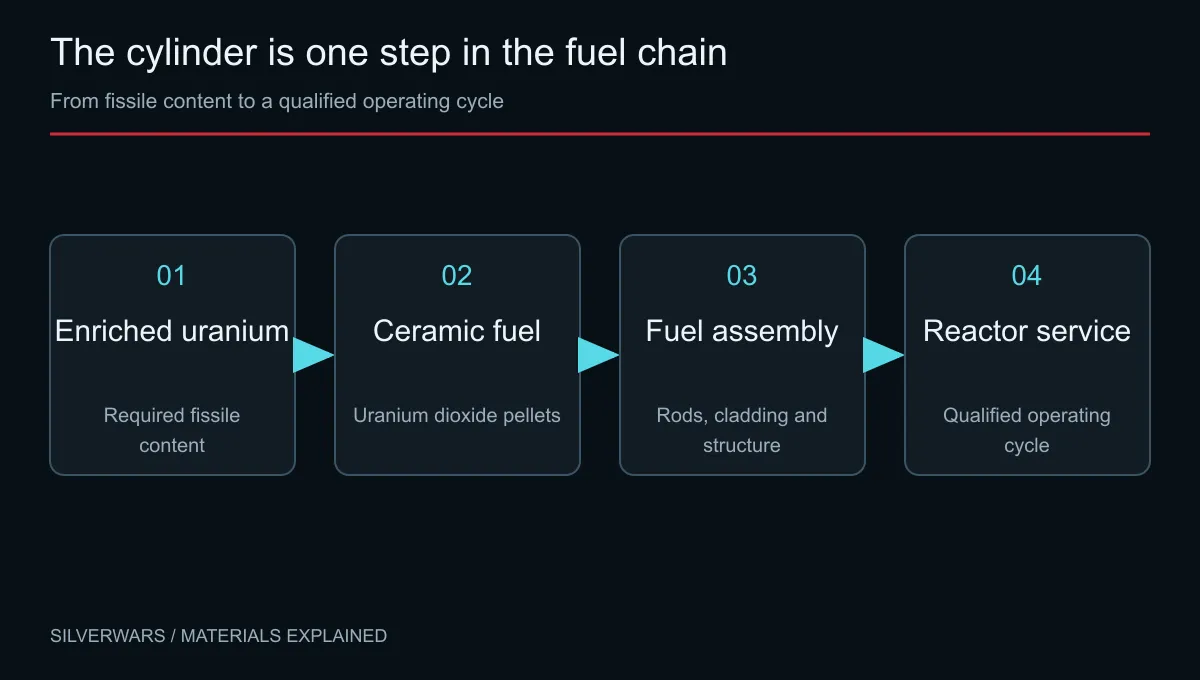
For a utility, the attraction is more electricity between planned shutdowns. Reaching that outcome requires a particular uranium composition, a durable fuel assembly and a reactor operating cycle that uses them effectively. The cylinder is one important step in that physical chain.

More useful content in the fuel
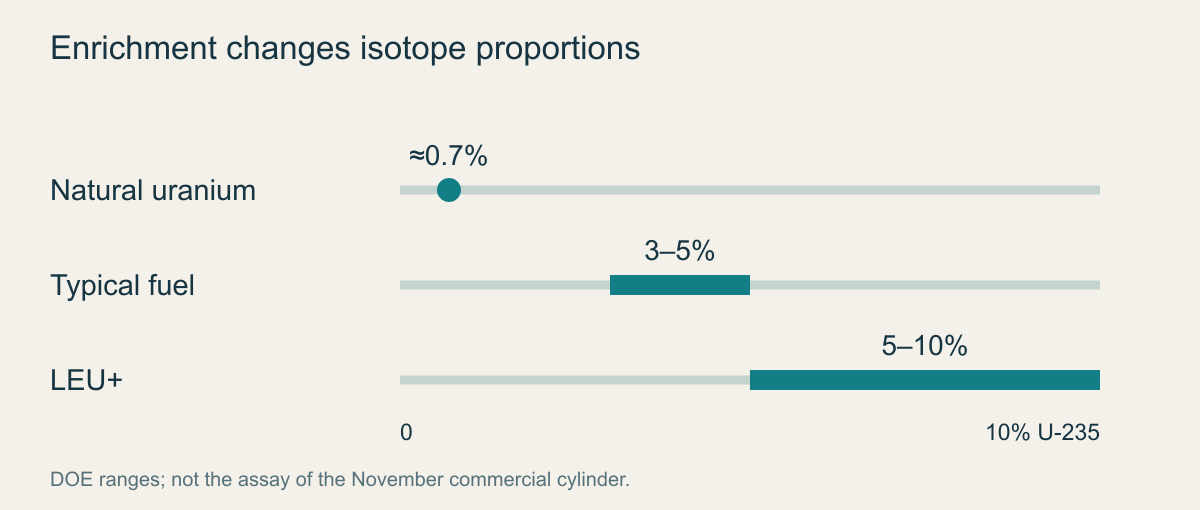
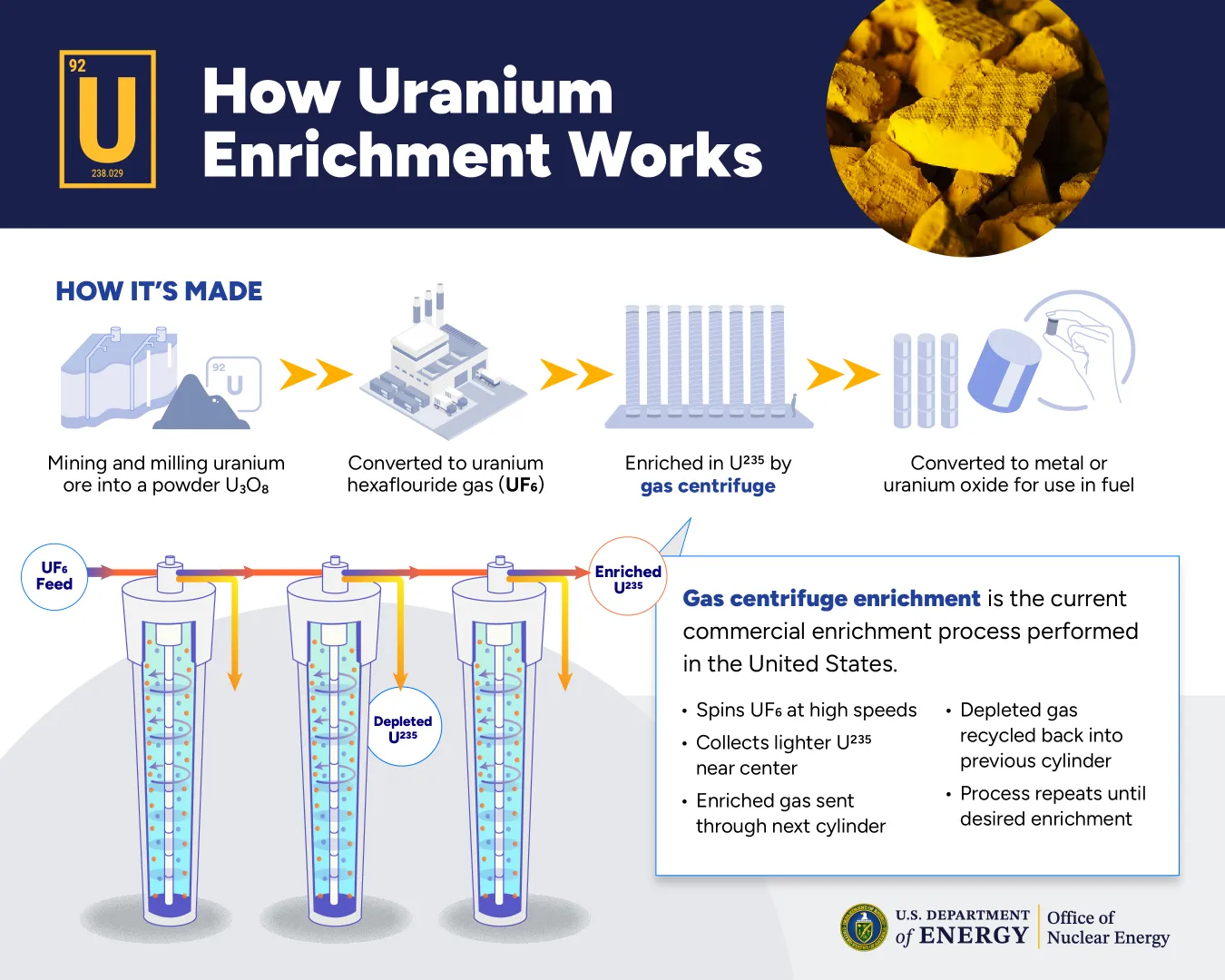
Natural uranium contains roughly 0.7% uranium-235. The Department of Energy's explanation of enrichment places most current reactor fuel around 3–5% and LEU+ in the 5–10% range. Enrichment changes the relative abundance of uranium isotopes; it does not create a new element.
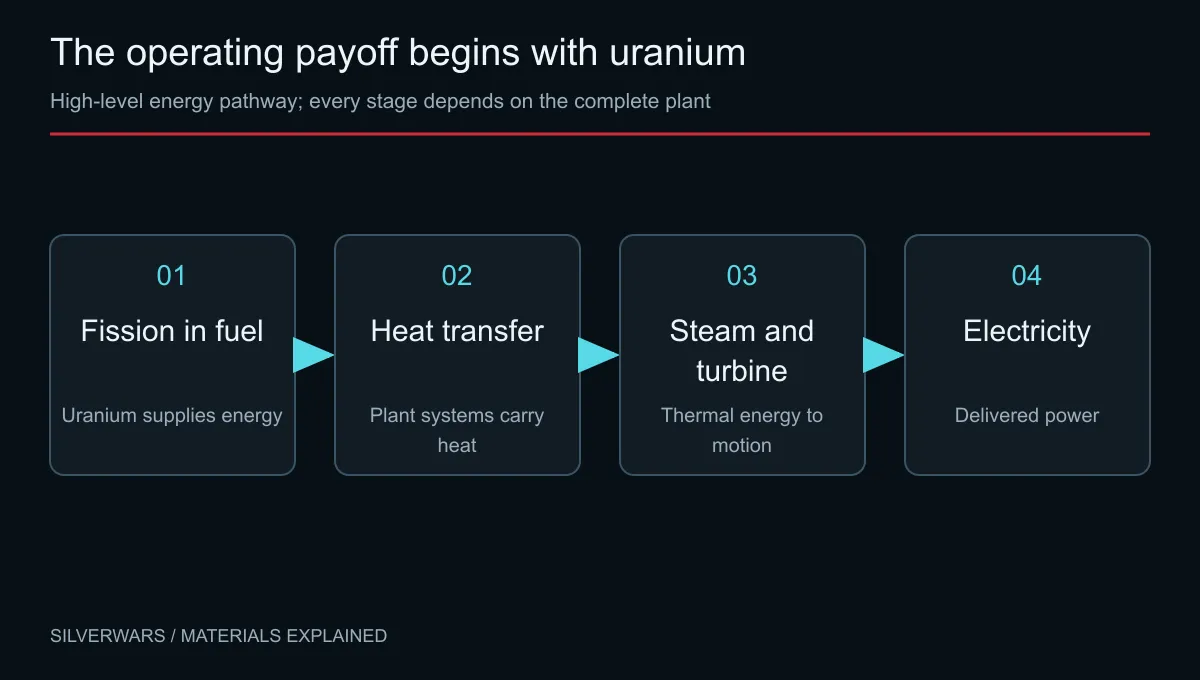
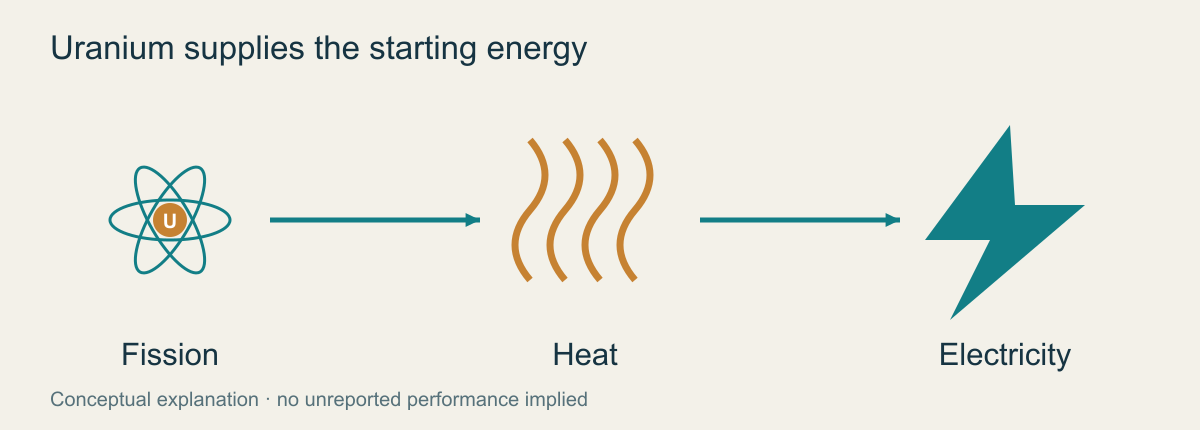
Inside the reactor, fission releases energy as heat. The plant uses that heat in its electricity-generating system. Uranium therefore occupies a different position from a metal used in structural steel, wiring or shielding. Its nuclear properties supply the energy that the rest of the plant converts and manages.
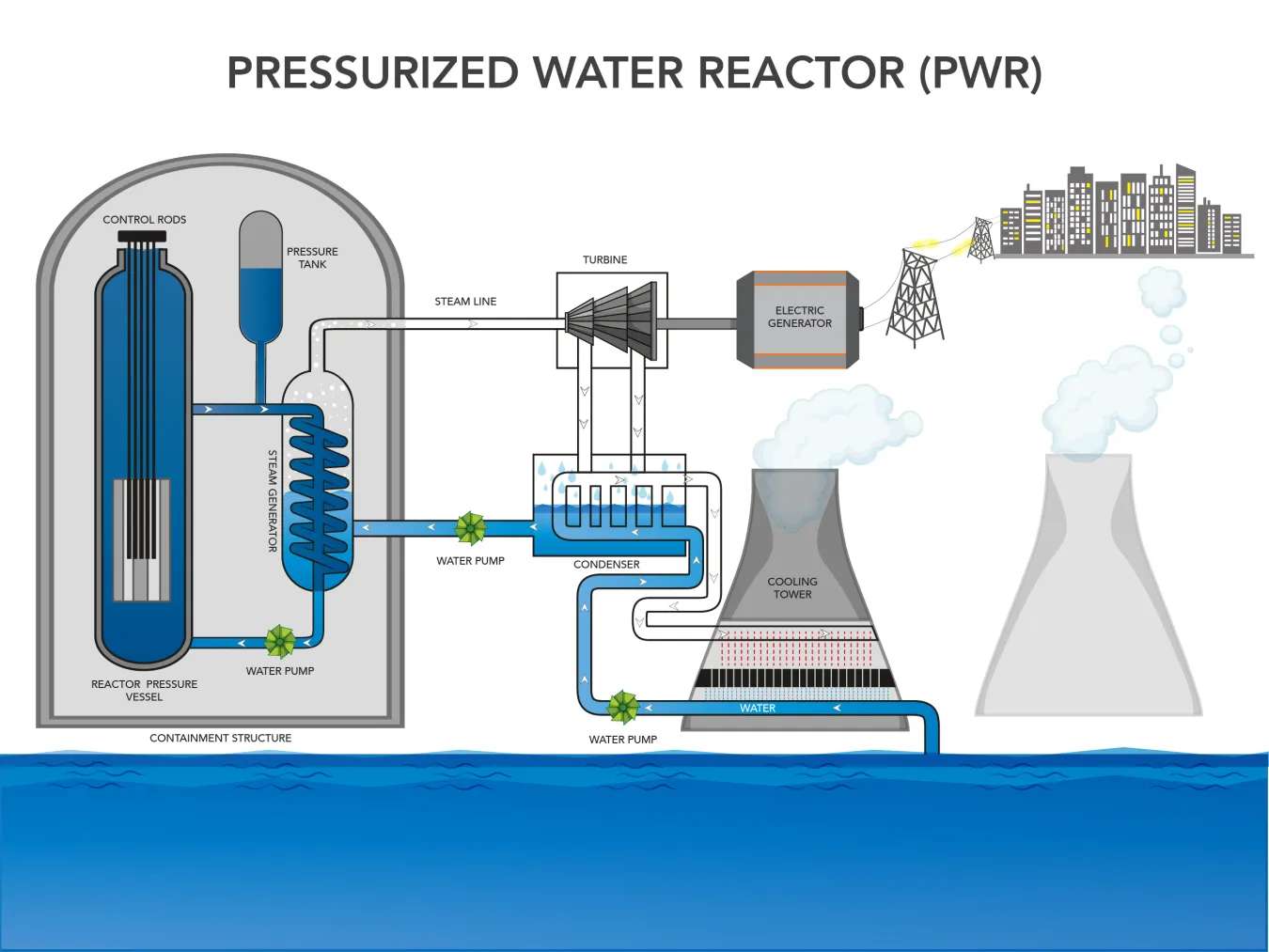
In a pressurized-water reactor, heat moves from the fuel into water circulating through the core. That water remains under pressure and transfers energy through a steam generator into a separate water circuit. Steam then drives the turbine connected to the electrical generator. The DOE reactor explanation shows the connection from nuclear heat to electrical output. A change in the uranium fuel can affect how long the heat source remains useful without changing the basic job of the turbine.
The isotope percentage describes a different property from chemical purity. Uranium-235 and uranium-238 are both uranium, but their nuclear behavior differs. Enrichment increases the share of U-235 within that uranium. It is also different from increasing the amount of uranium loaded into a pellet. This is why an enrichment figure must be read as part of a fuel specification, rather than as a general measure of how pure, dense or powerful the complete assembly is.
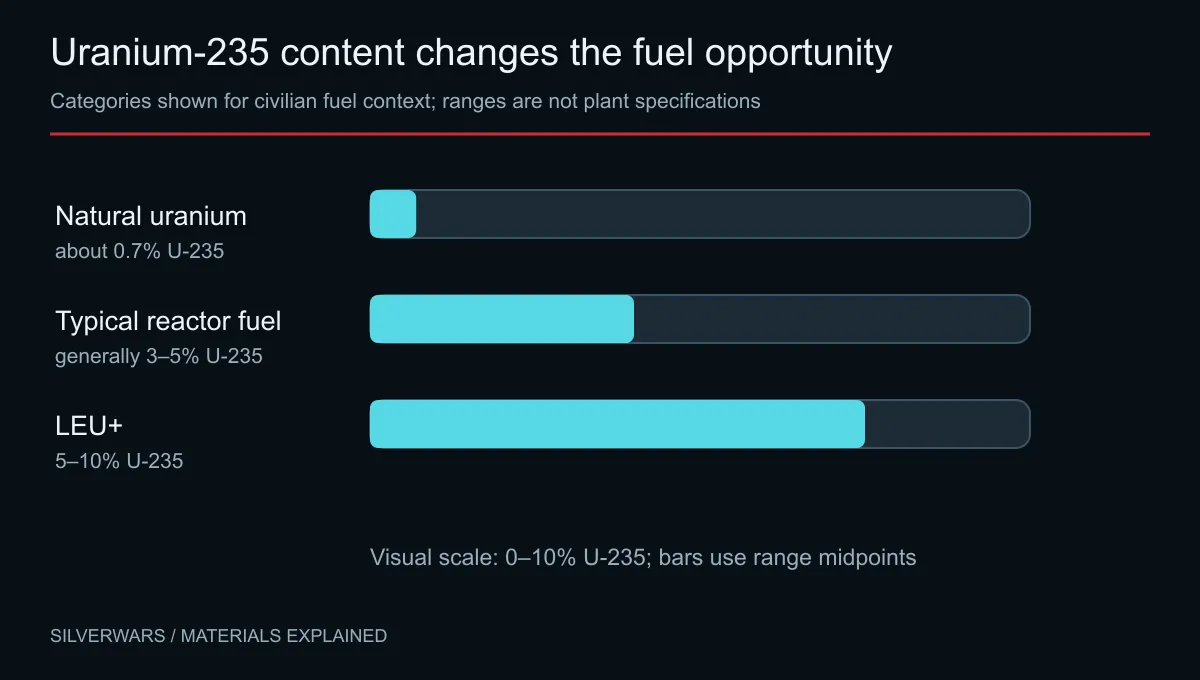
Increasing the fissile share gives fuel designers more room to support longer cycles or other operating objectives. The eventual benefit depends on how the fuel behaves through irradiation and how the core is managed. Enrichment percentage alone cannot determine the extension in operating time.
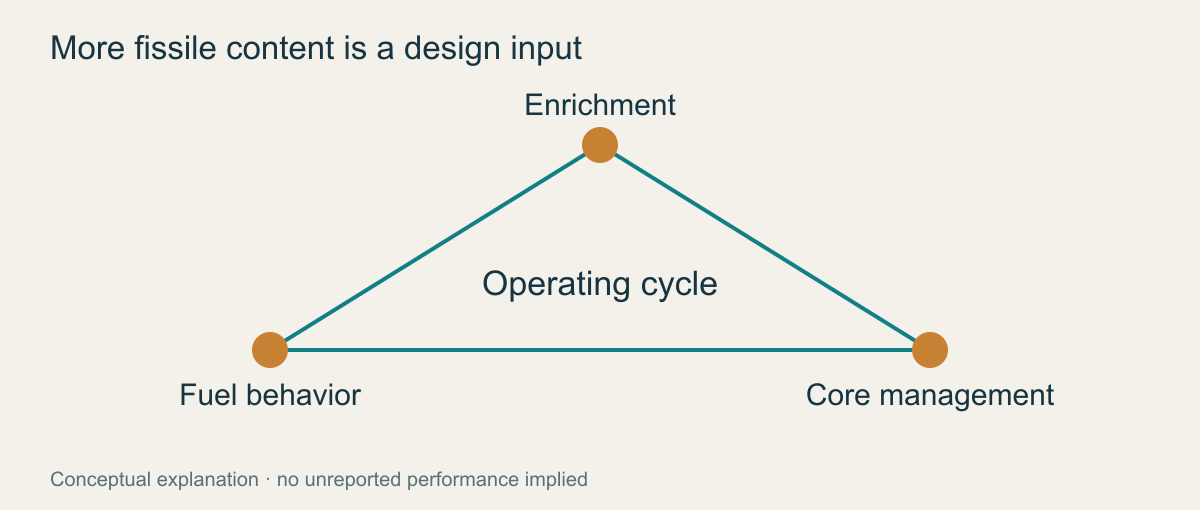
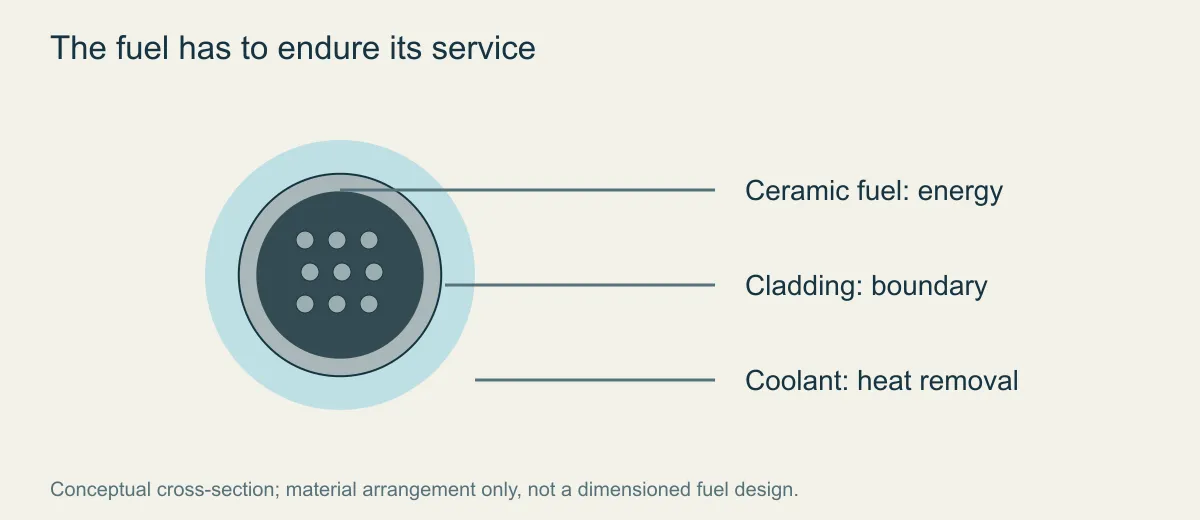
The extra fissile content also has to remain useful throughout the proposed cycle. The ceramic carrying the uranium and the metal surrounding it must tolerate the fuel's intended service, which is why the development extends beyond enrichment.
From a product cylinder to a working assembly
The cylinder leaves an enrichment operation, not a fuel-loading machine. The Energy Information Administration's fuel-cycle account follows uranium through mining, milling, conversion, enrichment and fabrication. Each stage changes the material or prepares it for the next operation. A stock of mined uranium and a stock of finished reactor fuel therefore represent very different kinds of readiness, even though the same element connects them.
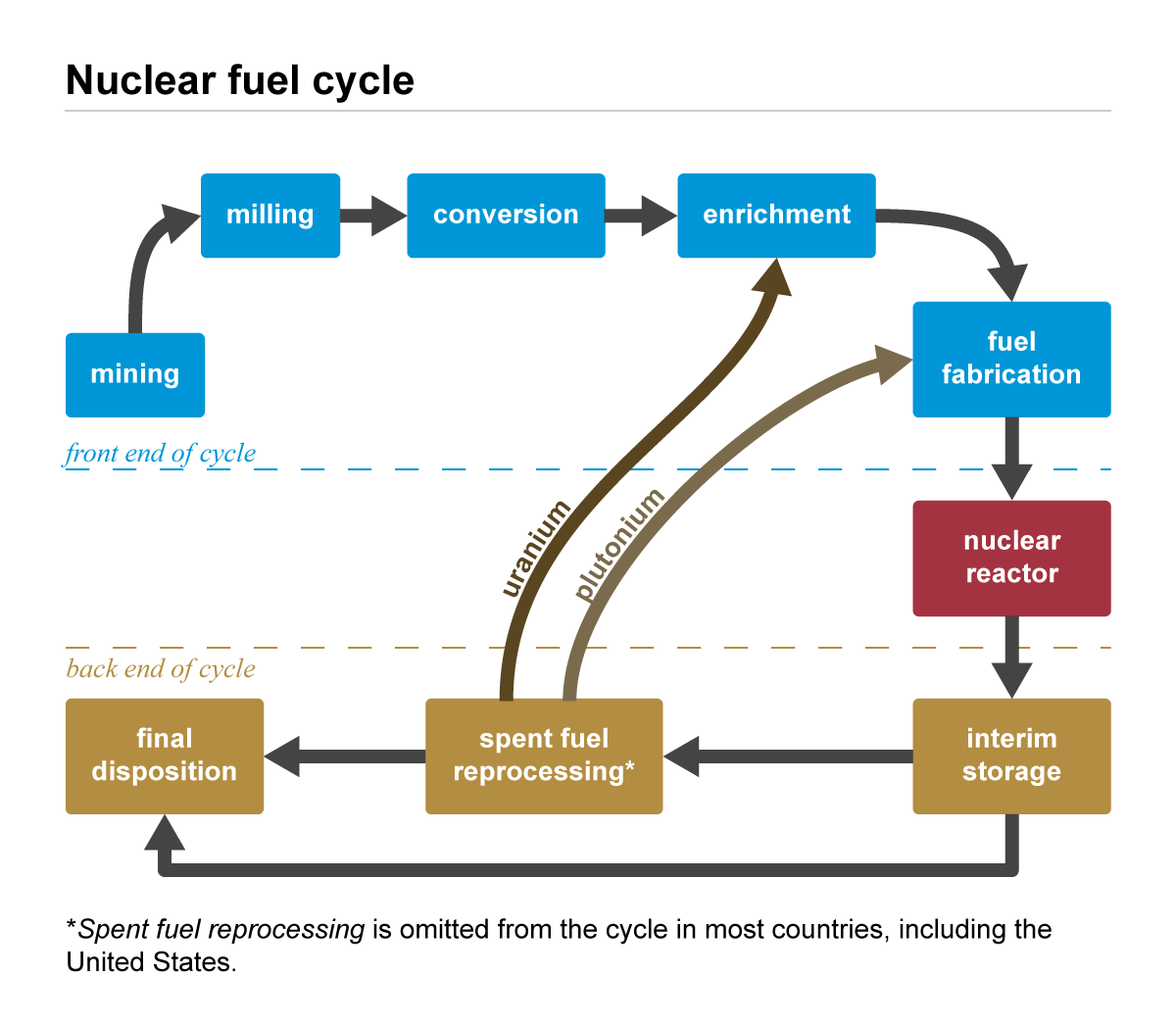
For the gas-centrifuge route, uranium is first converted into uranium hexafluoride. Centrifuges separate streams with different isotope proportions; the enriched material subsequently goes to fabrication, where it is converted into uranium dioxide for pellets. The DOE enrichment guide describes that progression. The chemical form used to process the uranium is not the form placed in the reactor core. The supply achievement becomes an operating asset only after that further manufacturing work.
The ceramic and the metal around it
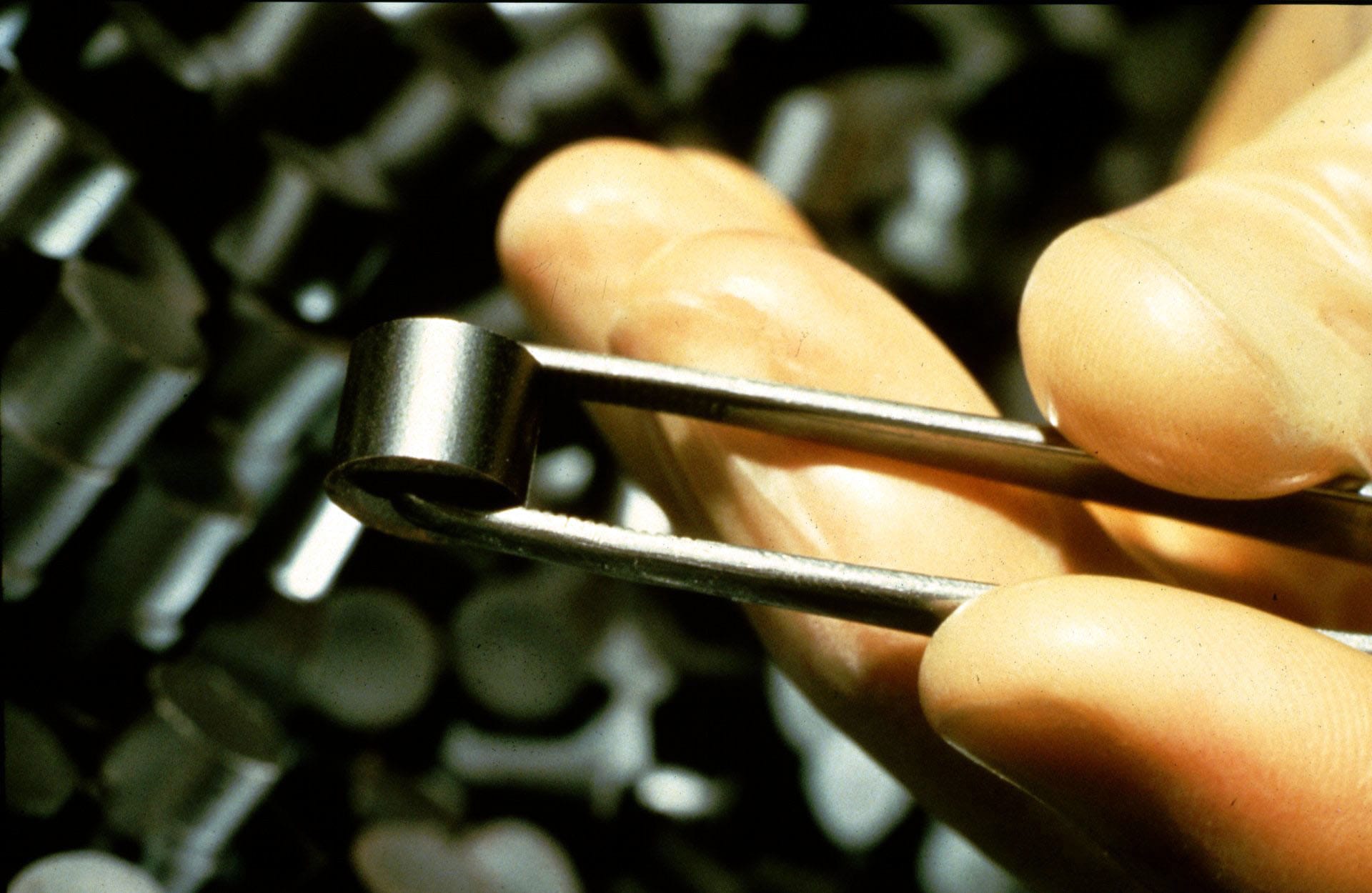
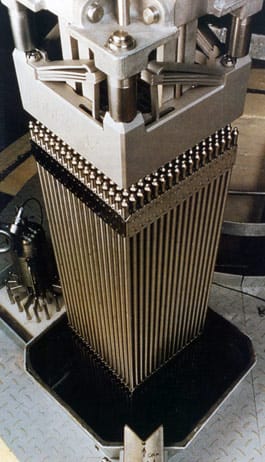
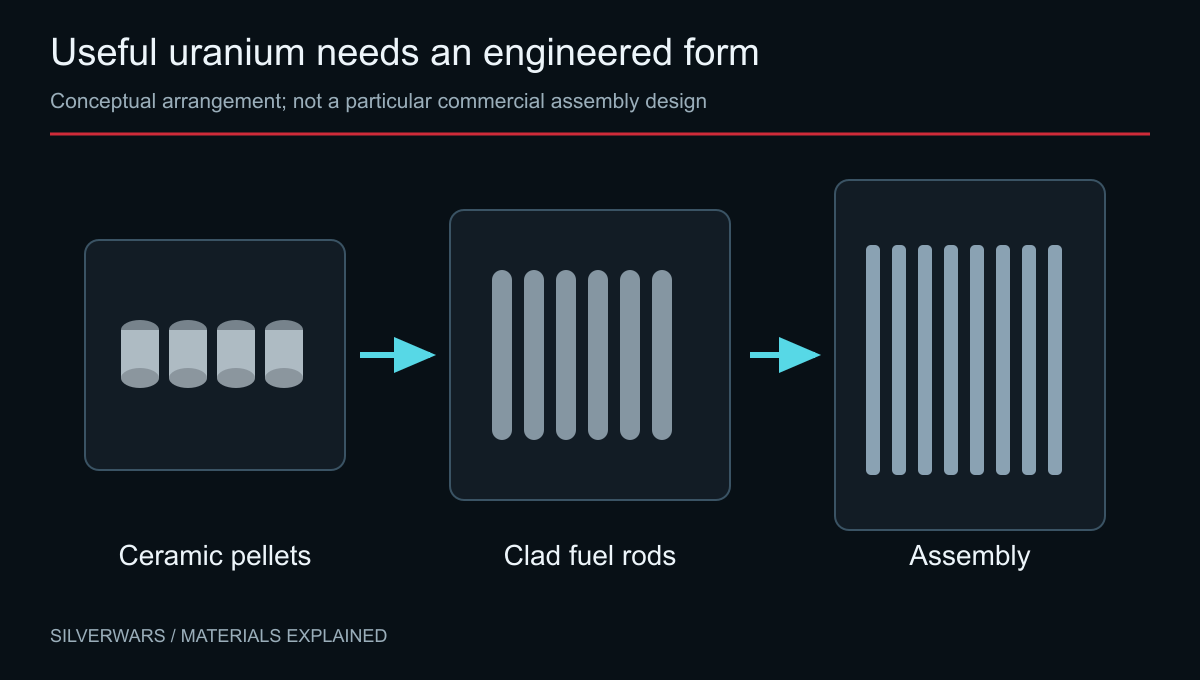
Commercial reactor fuel takes a highly engineered physical form. Uranium dioxide is made into ceramic pellets, which are contained within metal fuel rods and assembled into the structures loaded into a reactor. The fuel must release heat while the surrounding system maintains its required integrity.
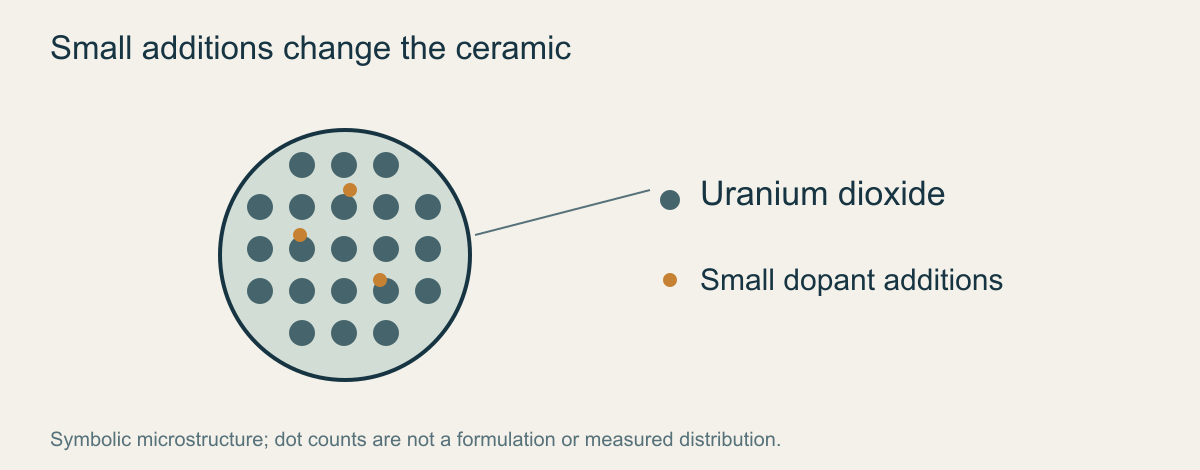
The Nuclear Regulatory Commission's account of doped fuel pellets describes adding small quantities of other materials to uranium dioxide to improve fuel properties. Such changes address how the ceramic performs while the uranium releases heat. They complement the increase in fissile content.
The metal tube around a pellet is called cladding. It separates the fuel from the coolant while allowing heat to pass outward, and its behavior becomes especially important as the fuel spends more time in service. Changes to the pellet and cladding can therefore support different parts of the same objective. More fissile content provides additional nuclear potential; material improvements help the assembly retain the properties needed to use it.
A DOE account of Westinghouse's earlier fuel-development work describes chromium- and aluminum-oxide additions to pellets, alongside chromium-coated zirconium cladding. These are material changes with distinct jobs, not extra sources of the fuel's fission energy. Uranium remains the central energy-bearing material, while the ceramic microstructure and surrounding metal influence how reliably that energy can be extracted.
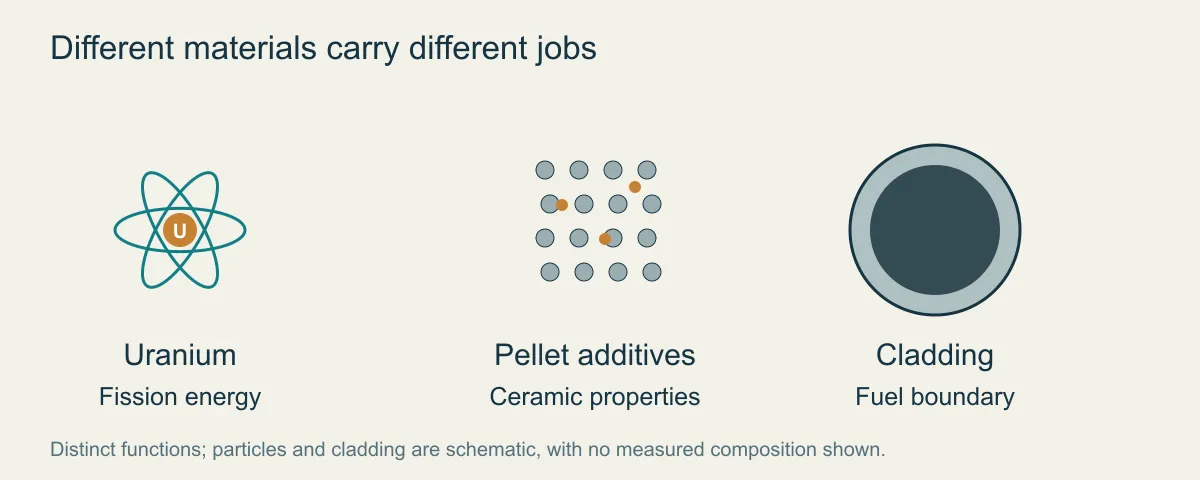
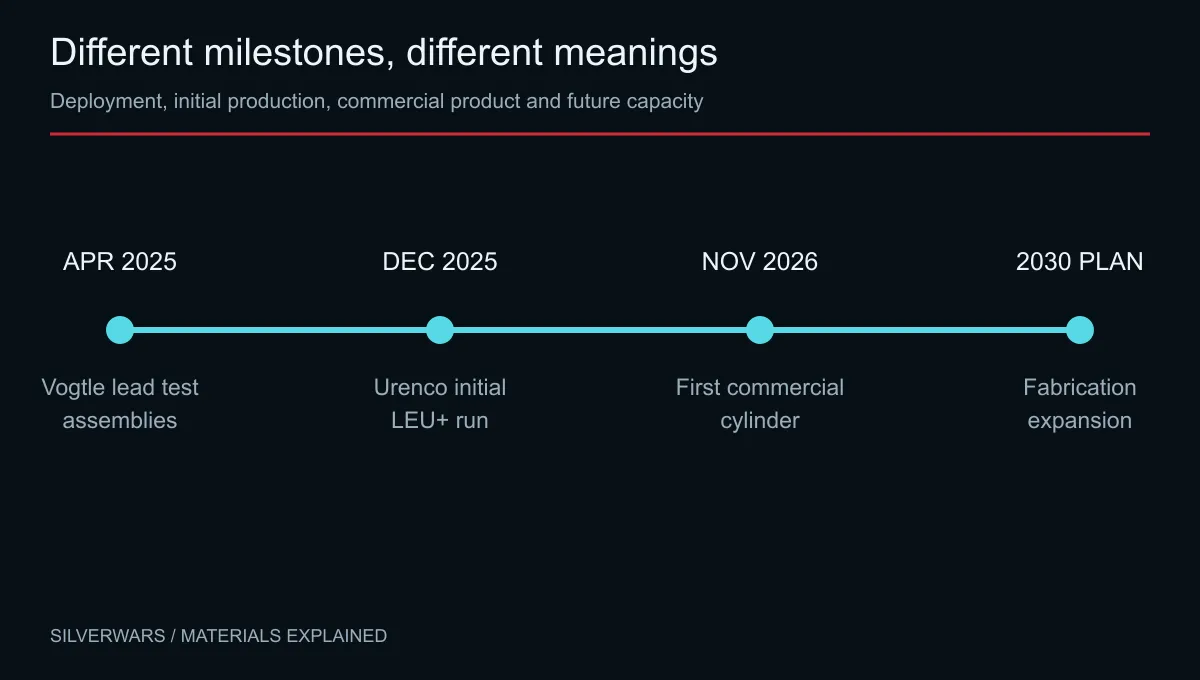
Westinghouse's April 2025 deployment at Vogtle Unit 2 makes that distinction concrete. Its lead test assemblies combined LEU+ ADOPT fuel with advanced cladding technologies. The deployment put a specific fuel package into an operating reactor; it was not a conversion of the entire U.S. reactor fleet.
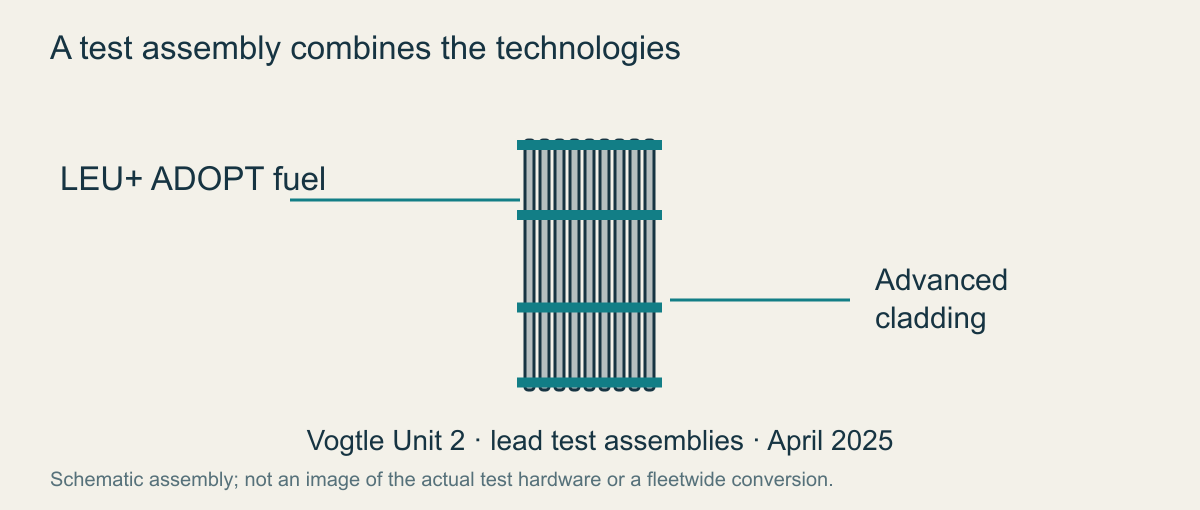
Westinghouse identifies longer fuel cycles and fewer refueling outages among the aims of the package. The lead assemblies provide operating experience with the combined fuel and cladding technologies. That experience is a more direct test of a proposed fuel design than enrichment capability on its own.
Longer cycles require more than a richer starting point
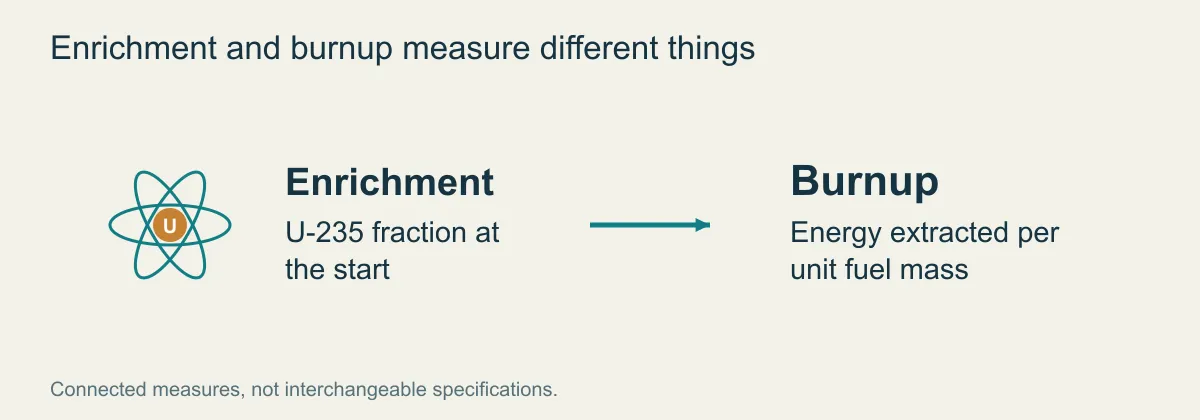
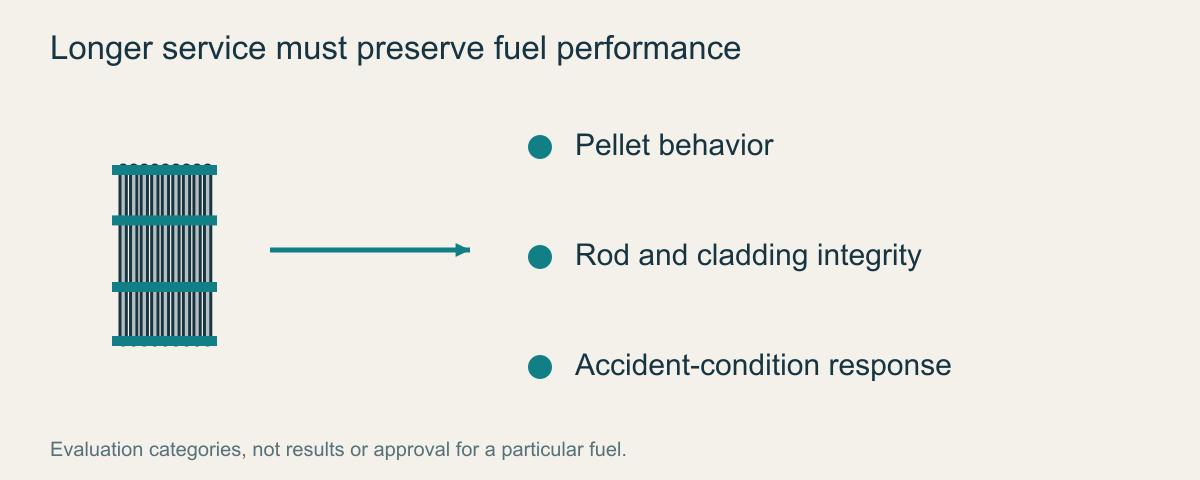
Enrichment tells a designer about the fuel at the beginning. Burnup measures energy obtained per unit mass of fuel as it operates. The two are connected, but they are not interchangeable: a higher starting U-235 fraction creates opportunities that the fuel's permitted exposure and the reactor's core design must be able to use. The NRC's higher-burnup work addresses the material behavior needed to support that longer service.
As fuel operates, its composition and physical condition change. Extending service involves the behavior of irradiated pellets and rods as well as the availability of fresh enriched material. The regulator's work includes how higher-burnup fuel behaves under accident conditions. That explains why the industry is developing enrichment, pellet and cladding changes together. Increasing the starting inventory of fissile material is useful only within a fuel system whose performance has been demonstrated for the proposed exposure.
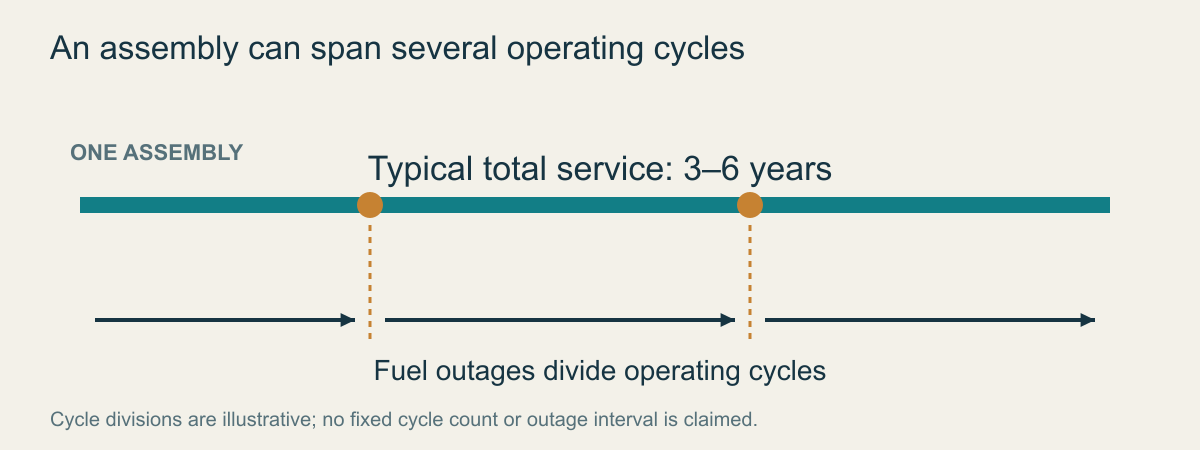
A refueling interval is also different from the total time one assembly stays in the reactor. The DOE's account of used-fuel handling describes assemblies typically producing energy for three to six years. They can serve across more than one operating cycle. A longer interval between outages therefore does not mean every assembly is new at each restart, or that all of the uranium is exhausted when fuel is finally removed.
Capacity has to follow the fuel design
The November cylinder also sits in a longer chronology. Urenco had already reported an initial LEU+ production run in December 2025. That earlier run reached 8.5% enrichment. The November 2026 milestone is the first commercial cylinder, and its announcement does not specify that cylinder's exact enrichment.
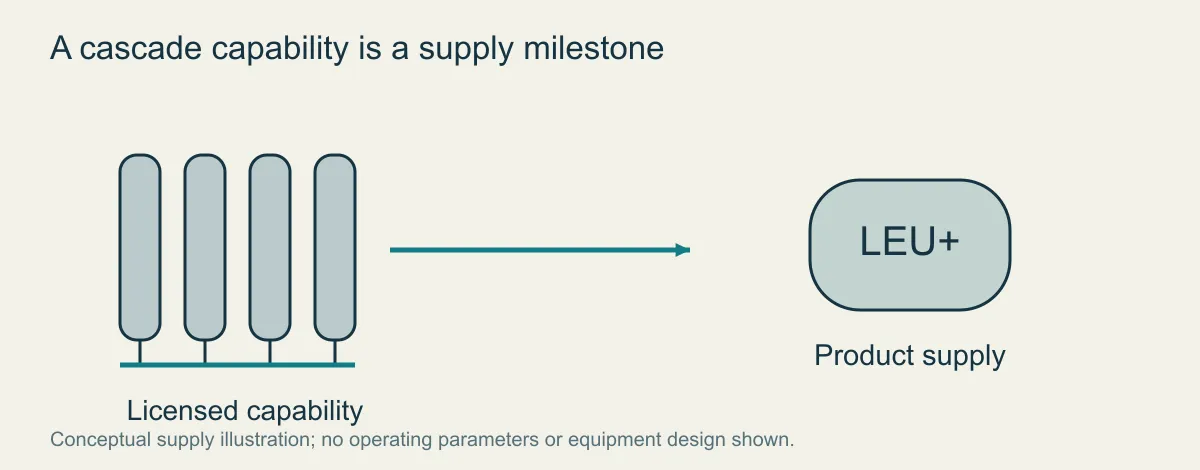
The sequence matters because the two announcements describe different milestones. The initial run established a production capability; a commercial product cylinder moves that capability into a customer-facing supply offering. The current release also says the site's gas-centrifuge cascades are licensed to produce LEU+, giving the operator flexibility to meet different enrichment requirements.
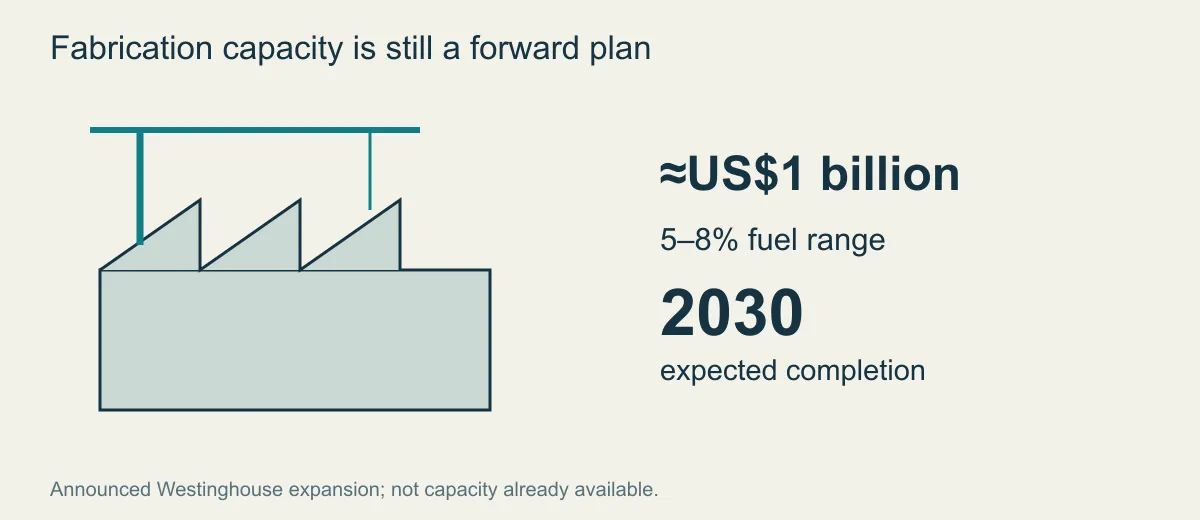
Fabrication capacity is developing separately. On October 21, Westinghouse announced an approximately US$1 billion expansion of its Columbia fuel operation, with a new facility expected to be completed in 2030. The plan includes fuel enriched to 5–8%. That is a planned expansion, rather than capacity already available today.
Taken together, the announcements show work at different points in the fuel chain: enrichment, assembly experience and future fabrication. They do not establish a supply contract between the two companies. For a utility evaluating a fuel transition, the useful question is whether the required material and qualified assembly can arrive on the timetable its operating plan needs.
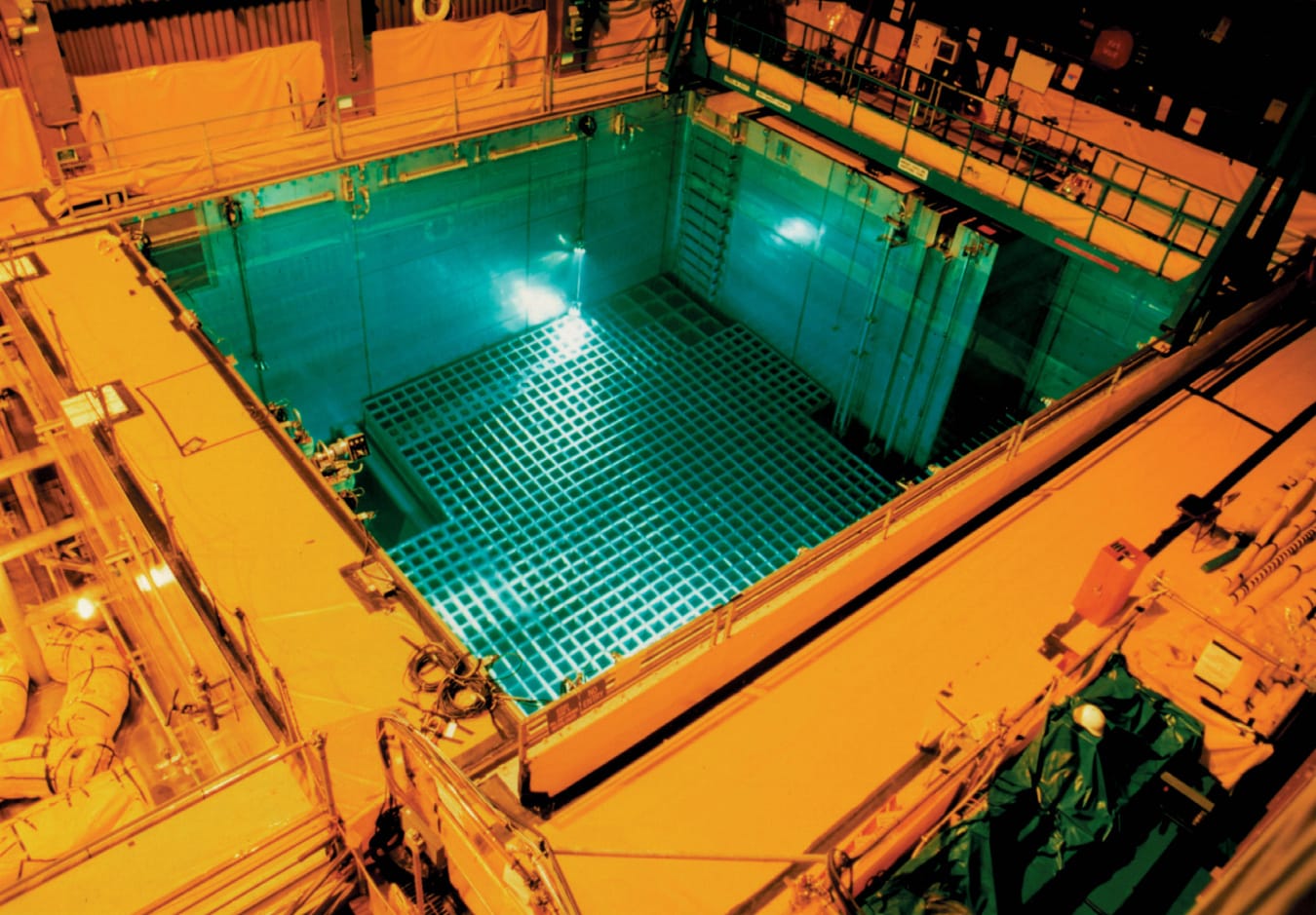
There is a downstream consequence as well. Removed fuel still produces heat from radioactive decay and must be cooled and shielded. At first, that is the job of the spent-fuel pool. The DOE wet-storage explanation follows assemblies from the reactor through water-filled handling routes into storage. A fuel strategy that extracts more energy before discharge still needs a compatible plan for the material after its generating service ends.
What a longer cycle is worth
A refueling outage is a period in which the reactor is not supplying power in its normal operating role. Extending the interval between those stops can improve operating flexibility, but the plant still has maintenance and inspection obligations. More fissile content does not remove those responsibilities or guarantee a particular electricity cost.
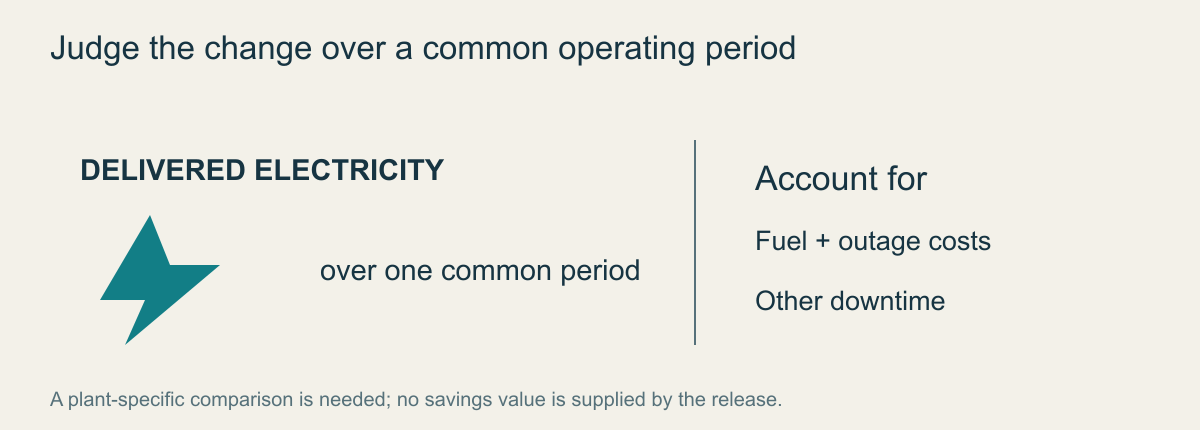
The practical comparison is electricity delivered over a common operating period, after allowing for the cost of fuel and the work that still requires a shutdown. An avoided refueling stop can be valuable, but a longer cycle cannot recover days lost to unrelated equipment problems. The November release supplies no plant-specific cycle extension or cost comparison, so the saving remains a utility-level calculation rather than a number that can be assigned to every reactor.
Uranium provides the energy at the center of that choice. LEU+ can give a qualified assembly more fissile content to work with, but the commercial payoff will be measured in additional electricity delivered between necessary stops. Urenco's milestone strengthens the supply side of the case. Demonstrating the operating gain in a specific reactor remains the step that turns a richer fuel into a better utility outcome.