 Strategic Resource Intelligence

SpaceX Wants to Make 100 Gigawatts of Solar a Year. That Takes a lot of Copper.
PAID PROMOTION | Disseminated on behalf of Gunnison Copper Corp. Gunnison Copper Corp. has paid SilverWars LLC total cash compensation of US$[90,000] under a [August 2026-August 2027] investor-relations agreement that includes creating and distributing this post. SilverWars receives no securities compensation and does not hold or trade Gunnison securities. [Full compensation details].
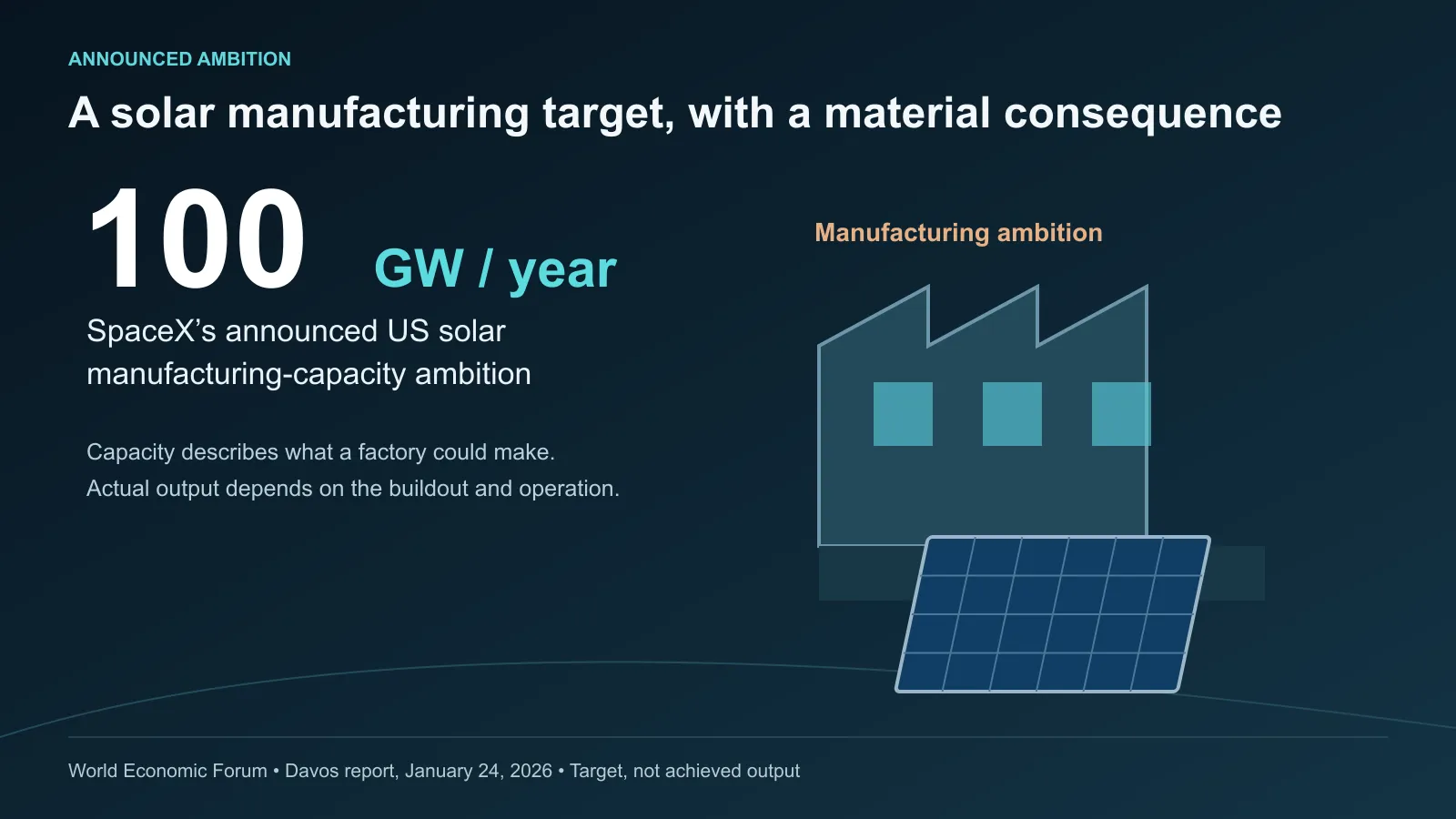
At Davos in January 2026, Elon Musk said SpaceX was working toward as much as 100 gigawatts a year of solar manufacturing capacity in the United States. That ambition creates a material question well beyond the factory buildings: how does the electricity generated across a solar cell reach the rest of the circuit? Copper supplies one established answer, in connections fine enough to measure in fractions of a millimeter.
Gunnison produces the refined copper cathode from which manufacturers can make electrical materials. Its Johnson Camp operation produces finished copper on-site from Arizona mineralized material at the mine, keeping the route through refined metal in the United States. This is a practical upstream capability for a solar supply chain. The connection to SpaceX is the material requirement; no supply agreement between the companies is being announced here.
SpaceX is going all-in on solar panel production (100 GW/year).
A small connection with a large electrical job
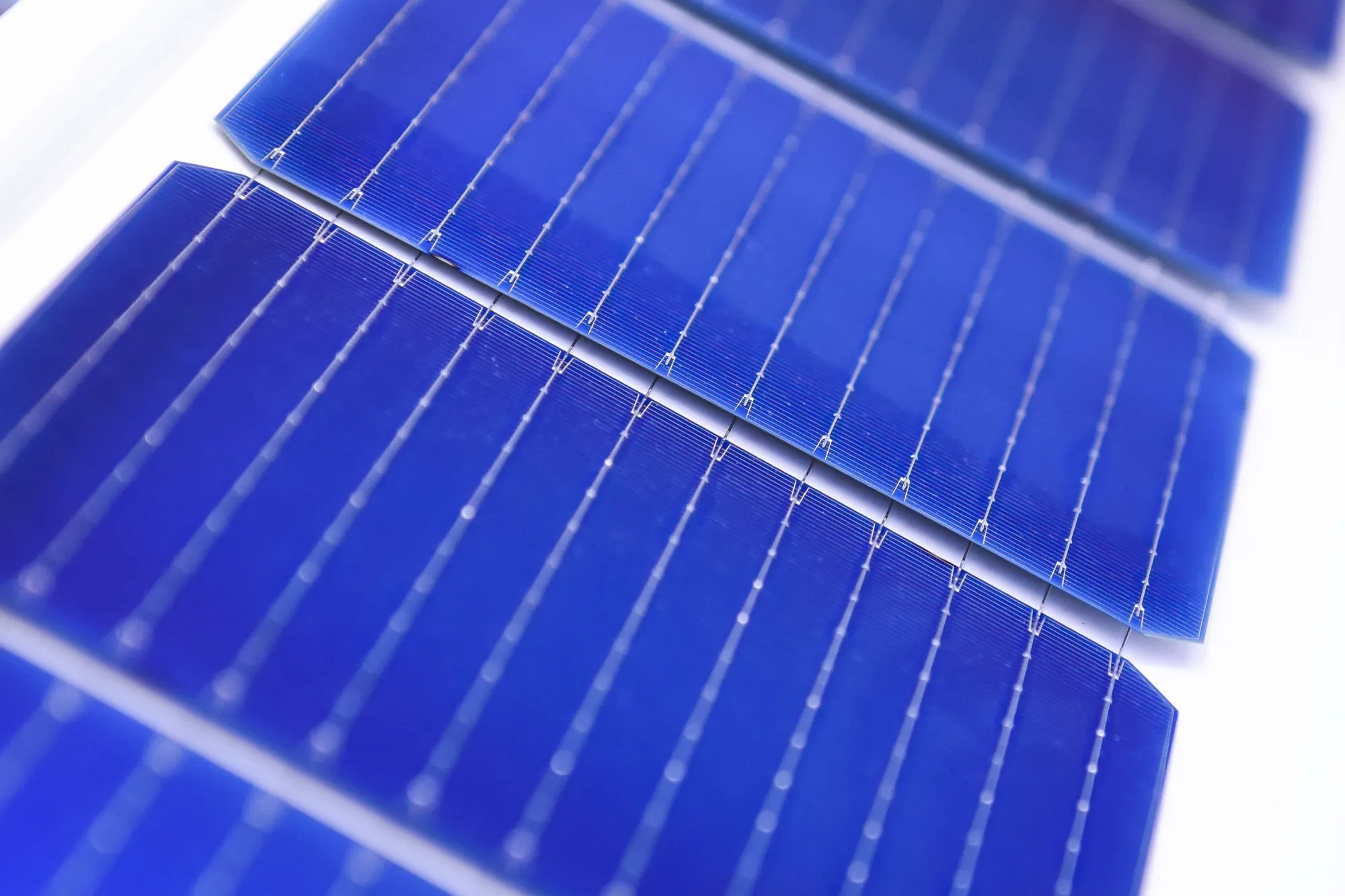
In the multiwire process described by Fraunhofer ISE, solder-coated wires with copper cores about 200 to 400 micrometers across connect the solar cells. The copper carries current into the module circuit. Using more parallel wires can lower the circuit’s series resistance, helping preserve useful electrical output. Their round shape also affects how light is redirected onto the cell. The quantity of metal is only one part of the design: its position and geometry influence the power the module delivers.
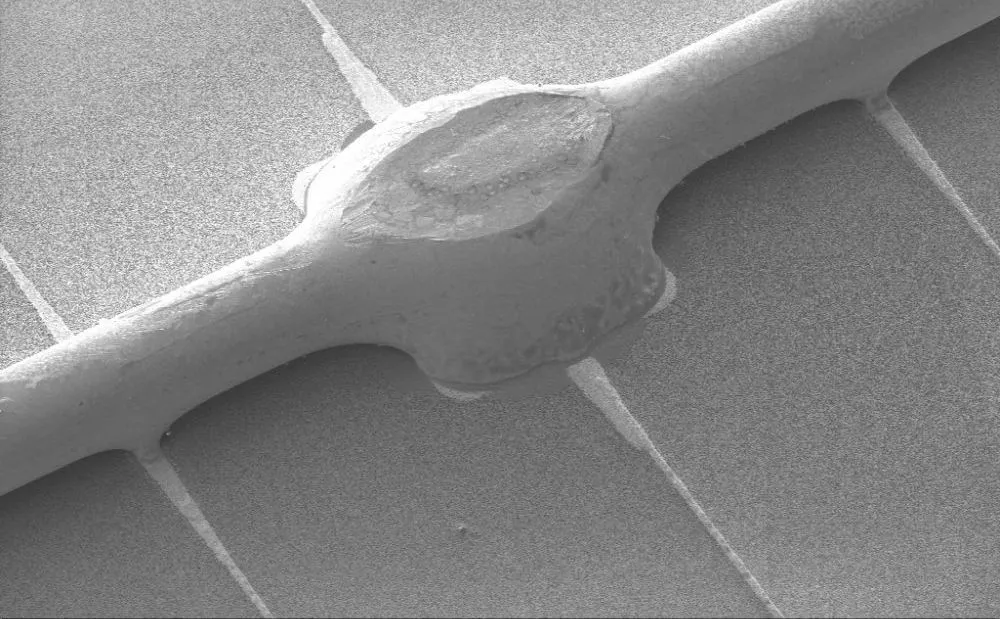
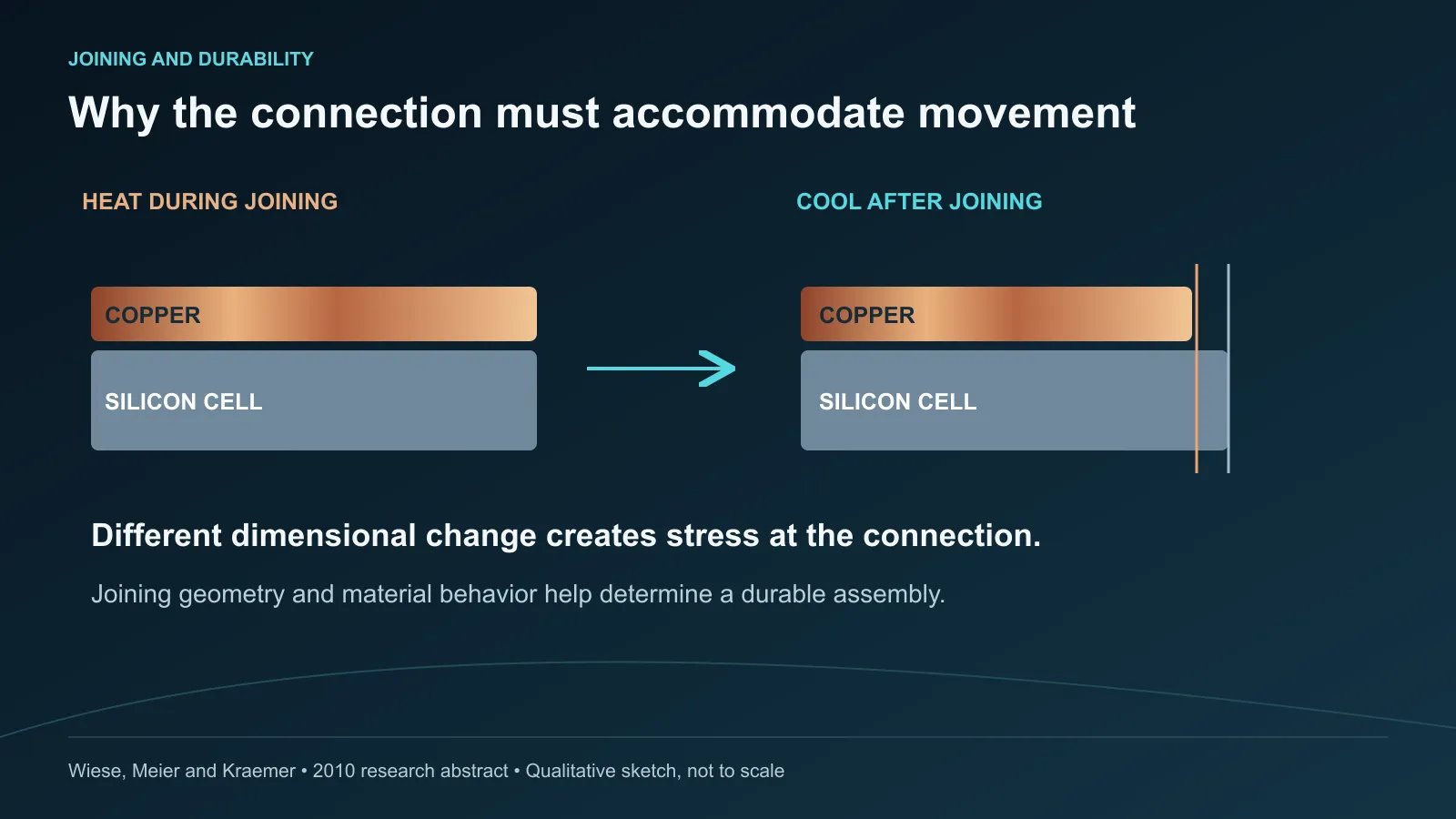
The joint also has to accommodate movement. Research by Wiese, Meier and Kraemer describes how copper and silicon expand during soldering and contract differently as the assembly cools. That mismatch creates mechanical stress. Temperature changes during operation can continue loading the interconnects, making fatigue and handling consequential to module life. A good electrical connection therefore depends on more than copper purity: the manufactured conductor and the way it joins the cell have to work together.
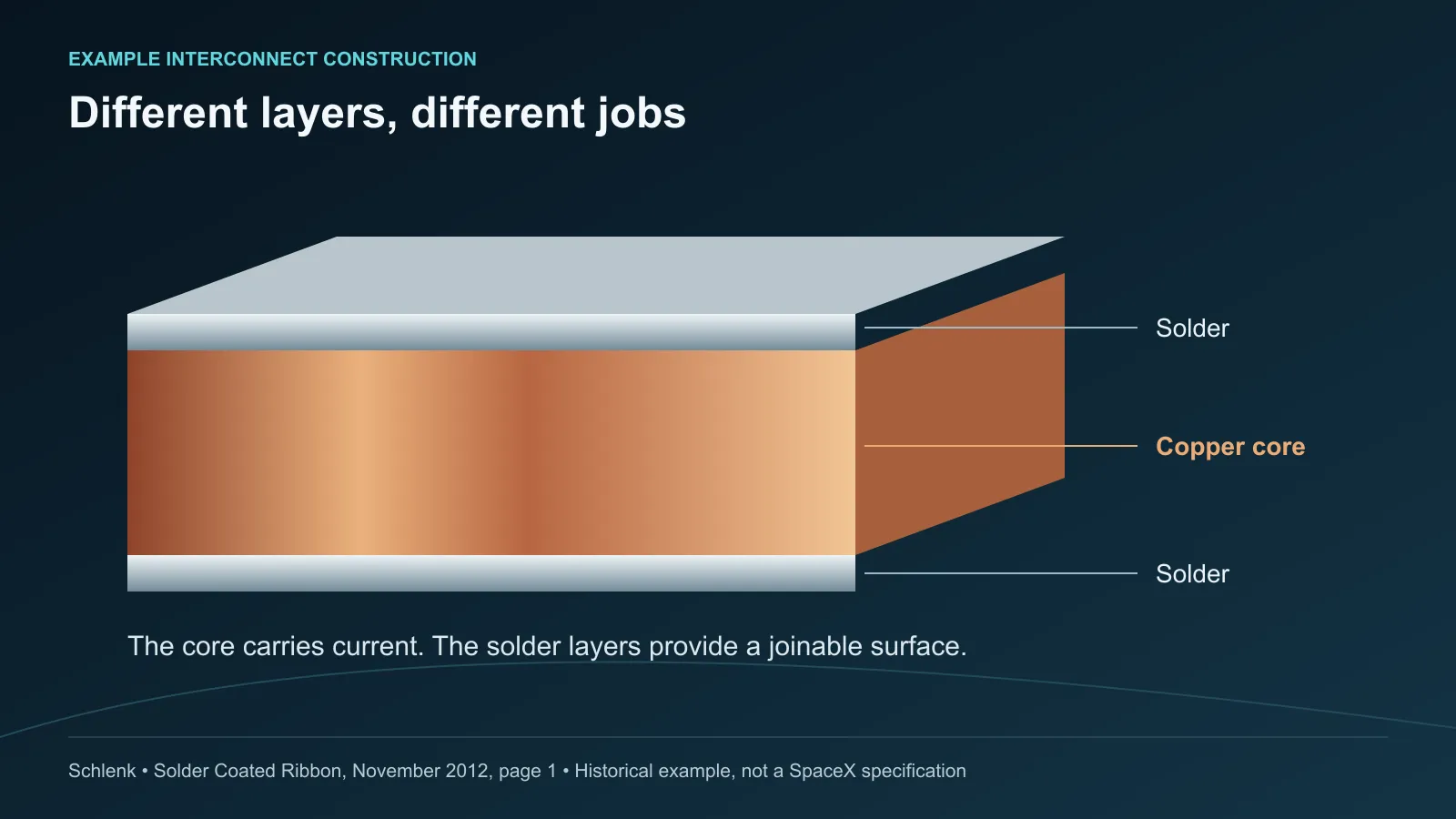
There are several ways to make that connection. A Schlenk technical sheet illustrates flat ribbon with a copper conductor between solder layers, rather than a round wire. The conductor and coating have different jobs. Copper provides the electrical path; solder on the broad faces allows the connection to be joined. These are documented examples of solar manufacturing, not a description of the module design SpaceX will select.

Where Gunnison’s copper enters the chain
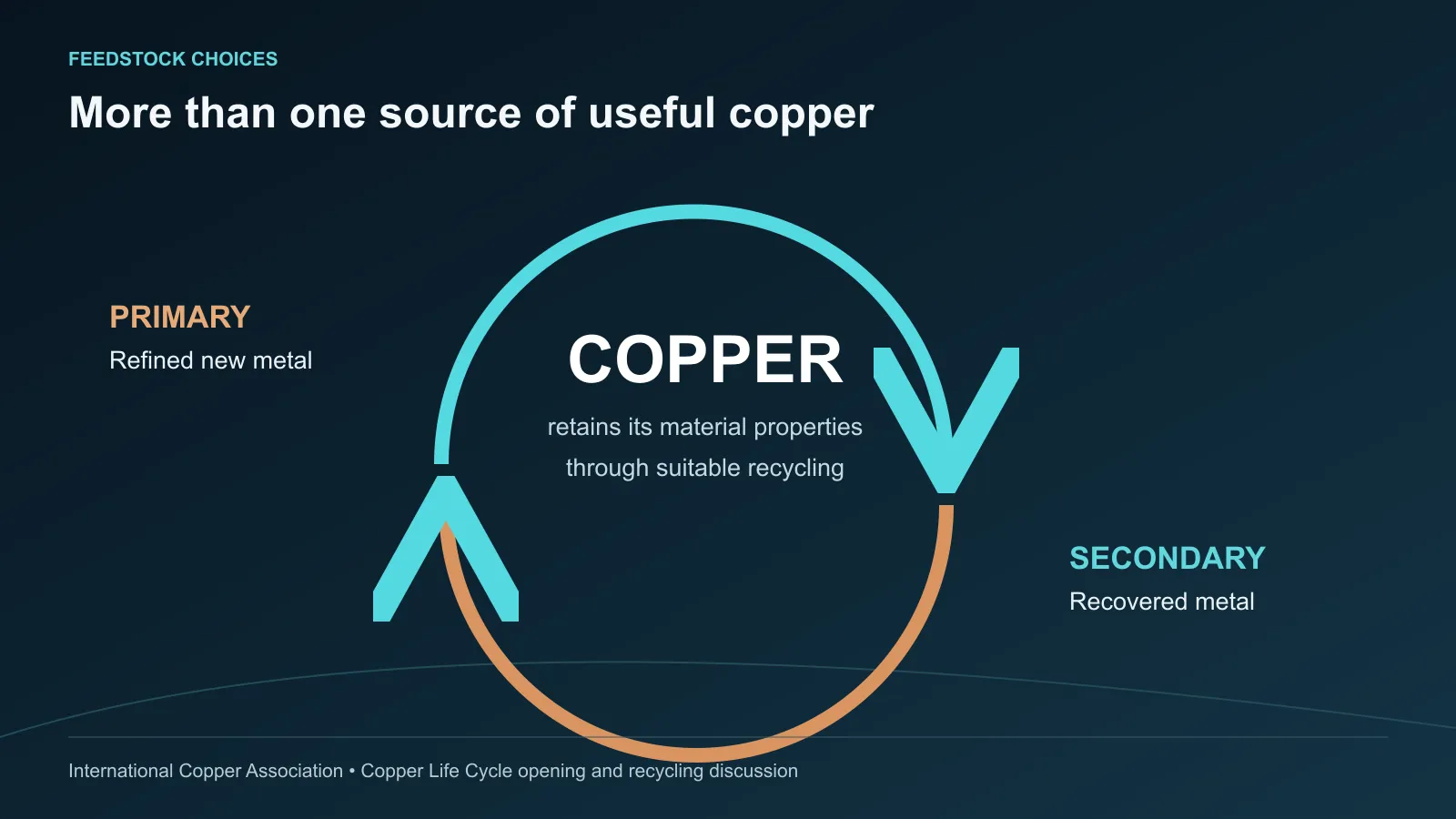
Cathode is a useful starting material because it places the copper beyond extraction and refining. The International Copper Association describes the next stage as semi-fabrication: refined copper and clean scrap become wire and rod, sheet, strip and other forms that manufacturers turn into finished products. For solar interconnects, the relevant output is a small, consistent conductor that can be coated and joined. A cathode producer supplies the metal; downstream manufacturing gives it the shape and surface the cell assembly requires.
Johnson Camp provides a current American example of that refined-metal capability. Gunnison’s September 22 announcement reported commercial production, and its project description explains the on-site route to finished cathode without offshore smelting or refining. That matters to a manufacturer considering domestic inputs: the American production claim extends through a usable refined product, rather than ending at mined material that still needs processing elsewhere.
The strength of the opportunity lies in connecting those capabilities. Gunnison’s cathode belongs at the upstream end; an accepted converter and interconnect manufacturer would carry the material into a solar production line. Qualified recycled copper can also contribute to the metal supply. The technical task is to produce the specified conductor and joint reliably, whether the feed is newly refined copper, suitable recycled material or a combination. Domestic production adds a sourcing option while the finished component earns its place through performance.
 View Profile
What 100 gigawatts would mean for the metal
The scale becomes substantial when manufacturing turns into installed equipment. S&P Global’s January 2026 study uses approximately 2.2 metric tons of copper per megawatt for terrestrial solar photovoltaic installations, covering modules, inverters, cables and transformers. If 100 gigawatts were actually built and deployed using that reference intensity, the complete installations would contain about 220,000 metric tons of copper. The calculation is 100,000 megawatts multiplied by 2.2 tons per megawatt.
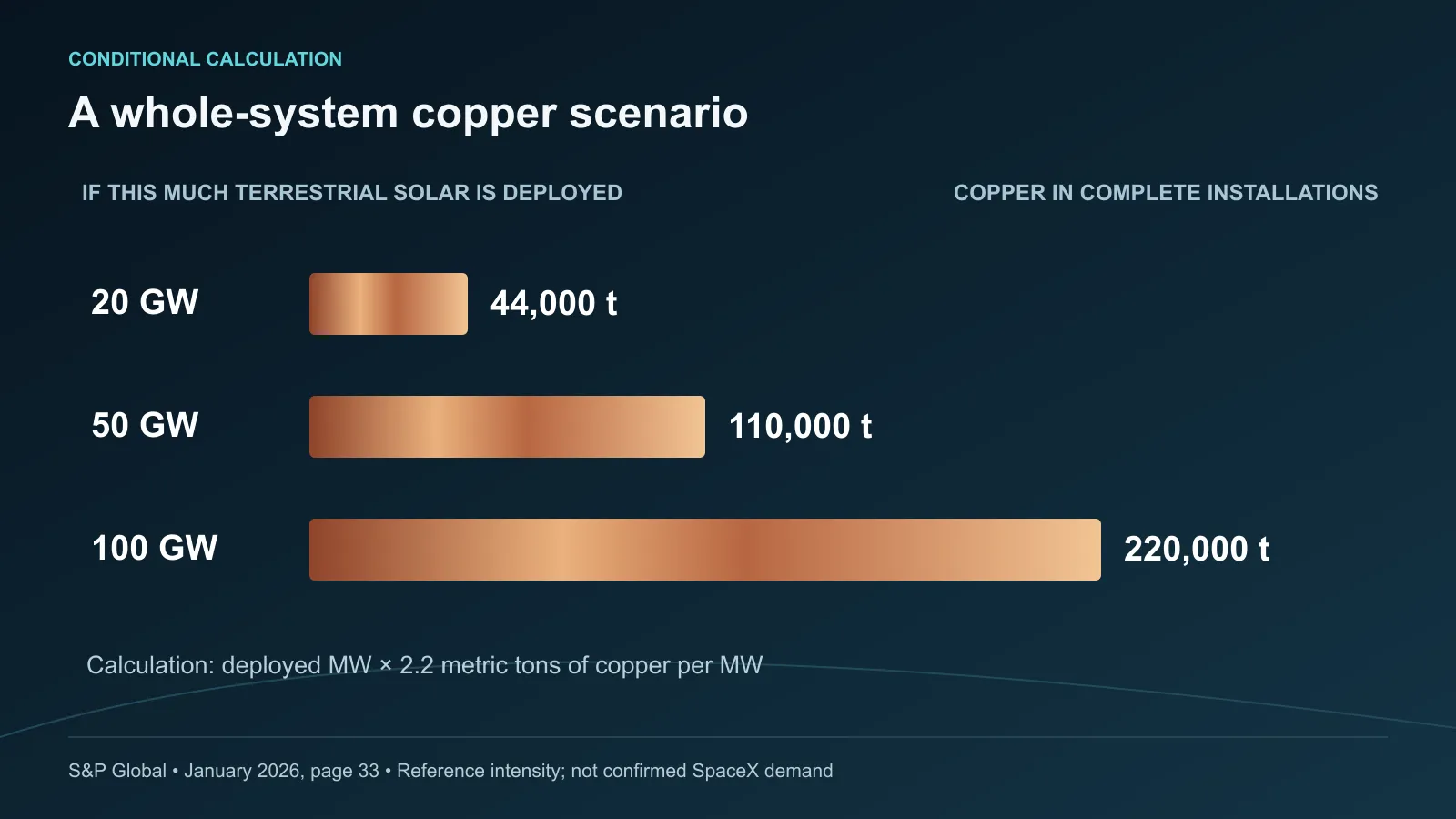
That is a whole-system scenario, not SpaceX’s confirmed copper demand. The announced figure concerns annual manufacturing capacity. Actual output, module design and deployment determine the material requirement, and equipment makers would buy copper for different parts of the installation. The terrestrial benchmark cannot be carried over to orbital solar arrays. It gives the ambition an industrial scale without pretending that a factory target is already a material order.
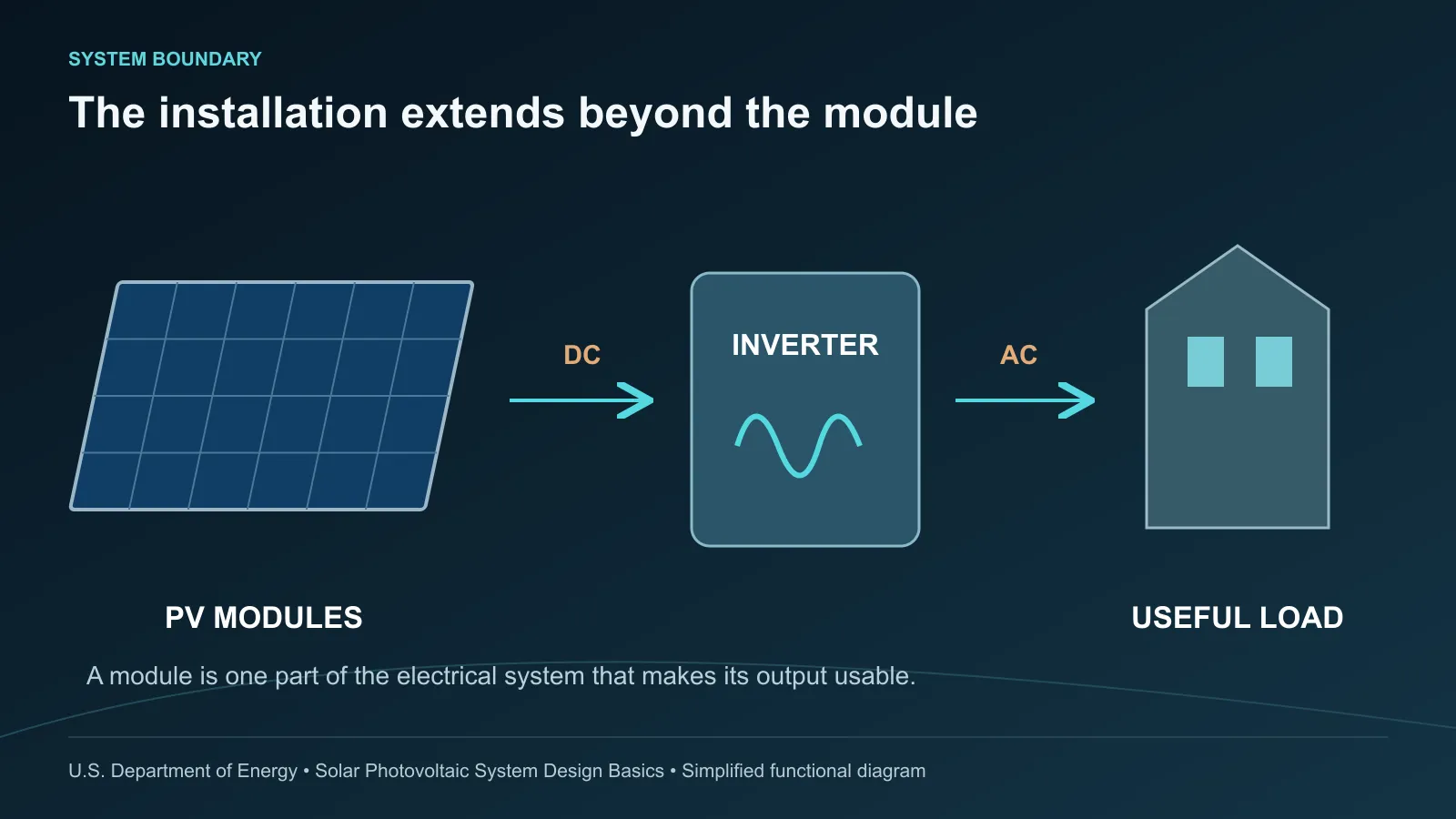
For solar manufacturers, the immediate opportunity is more tangible than that large total. Refined copper can become a conductor that carries current efficiently; good fabrication and joining allow it to keep doing so through the module’s working life. SpaceX’s solar ambition gives that chain a potential scale, and Gunnison supplies an operating example of its American starting point. A fraction-of-a-millimeter connection is where the metal’s conductivity becomes useful solar power.
Qualified Person
Dr. Roland Goodgame, Senior VP of Project Development of the Company is a Qualified Person as defined by NI 43-101. Dr. Goodgame has reviewed and approved the technical information contained in this report.
Forward-looking information
This report contains "forward-looking information" concerning anticipated developments and events that may occur in the future. Forward looking information contained in this report includes, but is not limited to, statements with respect to: (i) the intention to deploy the Nuton® technology at the Johnson Camp mine and future production therefrom; (ii) the continued funding of the stage 2 work program by Nuton; (iii) the details and expected results of the stage two work program; (iv) future production and production capacity from the Company's mineral projects; (v) the results of the preliminary economic assessment on the Gunnison Project; (vi) the exploration and development of the Company's mineral projects; (vii) the details and timelines associated with the Company’s PFS work program; (viii) the expected results of the Company’s PFS work program; and (ix) eligibility for future tax credits.
In certain cases, forward-looking information can be identified by the use of words such as "plans", "expects" or "does not expect", "budget", "scheduled", "estimates", "forecasts", "intends", "anticipates" or "does not anticipate", or "believes", or variations of such words and phrases or state that certain actions, events or results "may", "could", "would", "might", "occur" or "be achieved" suggesting future outcomes, or other expectations, beliefs, plans, objectives, assumptions, intentions or statements about future events or performance. Forward-looking information contained in this report is based on certain factors and assumptions regarding, among other things, Nuton will continue to fund the stage 2 work program, the availability of financing to continue as a going concern and implement the Company's operational plans, , the estimation of mineral resources, the realization of resource estimates, copper and other metal prices, the timing and amount of future development expenditures, the estimation of initial and sustaining capital requirements, the estimation of labour and operating costs (including the price of acid), the availability of labour, material and acid supply, receipt of and compliance with necessary regulatory approvals and permits, the estimation of insurance coverage, and assumptions with respect to currency fluctuations, environmental risks, title disputes or claims, and other similar matters. While the Company considers these assumptions to be reasonable based on information currently available to it, they may prove to be incorrect.
Forward looking information involves known and unknown risks, uncertainties and other factors which may cause the actual results, performance or achievements of the Company to be materially different from any future results, performance or achievements expressed or implied by the forward-looking information. Such factors include risks related to the Company not obtaining adequate financing to continue operations, Nuton failing to continue to fund the stage 2 work program, the breach of debt covenants, risks inherent in the construction and operation of mineral deposits, including risks relating to changes in project parameters as plans continue to be redefined including the possibility that mining operations may not be sustained at the Gunnison Copper Project, risks related to the delay in approval of work plans, variations in mineral resources and reserves, grade or recovery rates, risks relating to the ability to access infrastructure, risks relating to changes in copper and other commodity prices and the worldwide demand for and supply of copper and related products, risks related to increased competition in the market for copper and related products, risks related to current global financial conditions, risks related to current global financial conditions on the Company's business, uncertainties inherent in the estimation of mineral resources, access and supply risks, risks related to the ability to access acid supply on commercially reasonable terms, reliance on key personnel, operational risks inherent in the conduct of mining activities, including the risk of accidents, labour disputes, increases in capital and operating costs and the risk of delays or increased costs that might be encountered during the construction or mining process, regulatory risks including the risk that permits may not be obtained in a timely fashion or at all, financing, capitalization and liquidity risks, risks related to disputes concerning property titles and interests, environmental risks and the additional risks identified in the "Risk Factors" section of the Company's reports and filings with applicable Canadian securities regulators.
Although the Company has attempted to identify important factors that could cause actual results to differ materially from those contained in forward-looking information, there may be other factors that cause results not to be as anticipated, estimated or intended. There can be no assurance that such information will prove to be accurate, as actual results and future events could differ materially from those anticipated in such information. Accordingly, readers should not place undue reliance on forward-looking information. The Company does not undertake to update any forward-looking information, except in accordance with applicable securities laws.
25 Reps. 25 Grand. Show Us Your GUNNs!
The GUNN 25 Challenge invites eligible participants to complete 25 repetitions of any safe physical activity, whether push-ups, squats, bicep curls, jumping jacks or another activity of their choice. Participants enter at their own risk and should consult a physician before engaging in any physical activity.
Participants can enter the sweepstakes through two methods:
Show Us Your GUNNs: Record a video completing 25 repetitions, share it publicly on Instagram, TikTok or X, include #Gunnison25Contest at the beginning of the caption and tag Gunnison Copper on the applicable platform.
Enter Online: Participants can also enter directly through the online entry form without recording or posting a video. Both entry methods offer equal odds of winning.
One eligible winner will be selected through a random drawing to receive the US$25,000 grand prize.
The sweepstakes opens on November 5, 2026 at 12:00 p.m. ET and is scheduled to close on December 13, 2026, with the winner selected on or about December 16 , 2026. No purchase or investment is necessary to enter or win. The sweepstakes is open to legal residents of the 50 United States and DC, excluding New York, Florida and Rhode Island, 18 or older (19 in AL and NE, 21 in MS)
For complete details, entry instructions and Official Rules, visit: