 Strategic Resource Intelligence
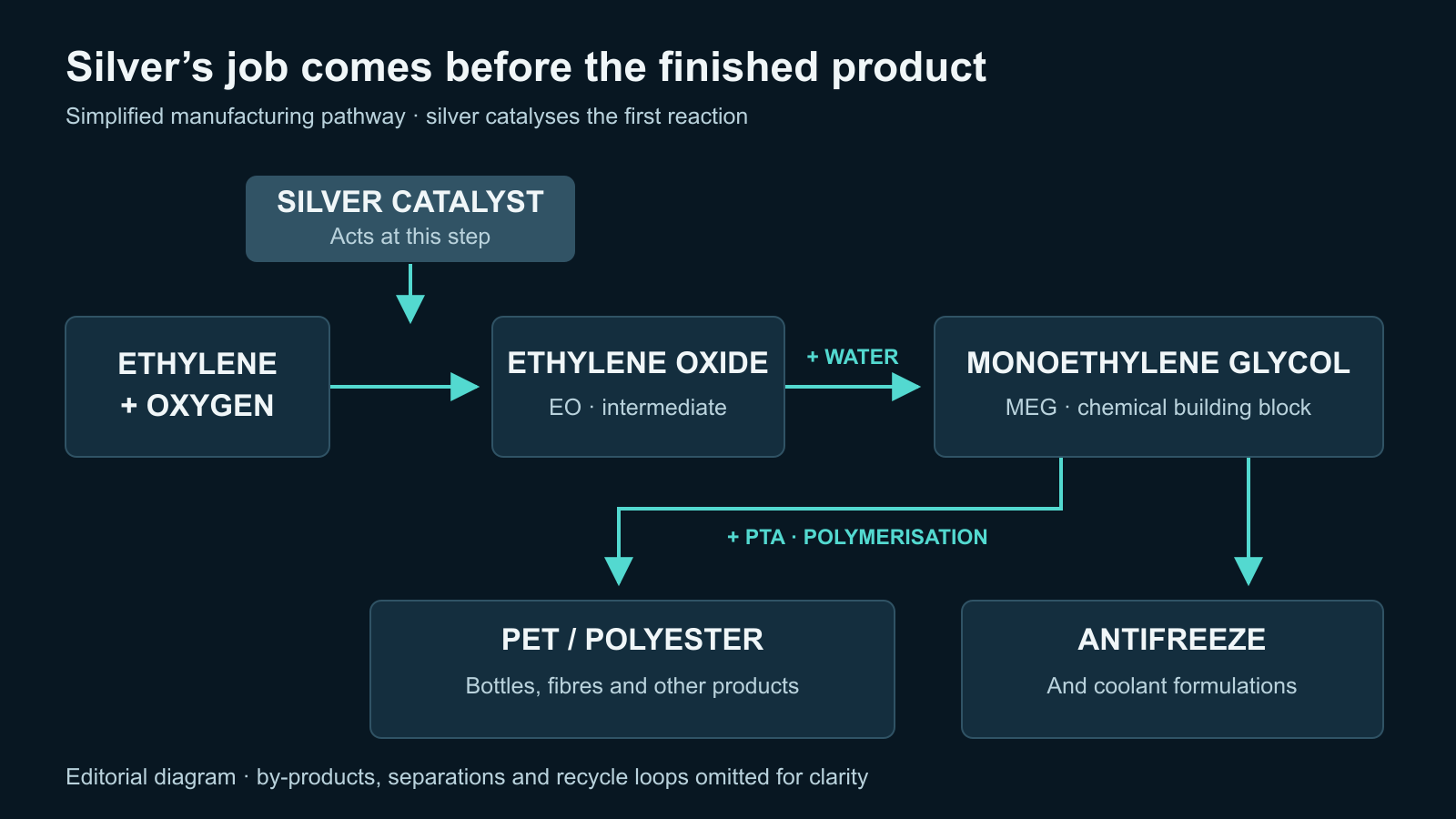
Silver can help make a polyester shirt or a PET bottle long before either product takes shape. Shell identifies a silver-based catalyst in the production of ethylene oxide, an intermediate used primarily to make ethylene glycol. From that glycol come familiar products whose appearance gives little indication of the metal involved in their manufacture. Shell’s catalyst description puts silver at the beginning of this chain.

For the producer, the value of that silver lies in how much useful chemical the reactor makes from its ethylene feed, and how well it keeps doing that as the catalyst ages. An integrated polyester business owns the consequences on both sides: the upstream plant pays for feedstock, and the downstream operation needs a reliable supply of its chemical building blocks.
Shell’s history of catalyst development contains a useful investment lesson. Early gains in selectivity reduced wasted ethylene, but accommodating the catalysts’ lower activity could require larger reactors and more capital. Better chemistry created a plant-design tradeoff. The purchase price of the silver captured only part of it.
The first transformation brings ethylene and oxygen into contact with the catalyst. Scientific Design’s process description identifies silver at that point of contact. On the surface supplied by the catalyst, the chemistry takes place to form ethylene oxide, usually shortened to EO. Silver serves the manufacturing equipment and process; it is not a building block deliberately incorporated into the resulting polyester.
EO then reacts with water to produce ethylene glycol. The product important to this chain is monoethylene glycol, or MEG. Indorama Ventures, which produces both feedstocks and downstream materials, identifies polyester fibres and PET resins as its principal uses. MEG also goes into antifreeze and coolant formulations, where its ability to lower the freezing point of a solution serves a different purpose from polymer manufacture.
PET is itself a polyester. To make it, manufacturers react MEG with another building block, commonly purified terephthalic acid, or PTA, and build long molecular chains. NAPCOR’s technical definition identifies those starting materials. The association’s resin life-cycle study, on printed page 90, describes water leaving during the initial reaction and further polymer growth. By this stage, the material is chemically different from the EO made upstream. A bottle is not a container shaped out of ethylene oxide, and the silver catalyst’s role does not imply an intentional silver ingredient in its plastic.
The reaction that earns the feedstock bill
Inside the EO reactor, ethylene can follow competing paths. Partial oxidation makes the intended EO; full oxidation produces carbon dioxide and water. In Shell’s process description, EO is recovered from the reactor gas, while a recycle loop returns unreacted material after separation and the addition of fresh feed. Ethylene lost to the combustion reaction cannot return through that loop as ethylene. The plant has paid for material that did not become its intended chemical product.
Selectivity measures that distinction. Shell defines it as the amount of EO produced relative to the ethylene that reacted, on a molecular basis. Conversion asks a different question: how much of the ethylene reacts during a pass through the reactor? A gas can pass through without reacting and circulate again; a molecule that takes the unwanted reaction path has already been spent.
A simple illustration shows why a small selectivity difference attracts attention. At 90% selectivity, producing 90 molecular units of EO requires 100 units of reacted ethylene. At 91%, the same output requires about 98.9 units. That is roughly 1.1% less reacted ethylene for the same EO output, calculated as 1 minus 90 divided by 91. This is arithmetic with everything else held constant, not a reported plant improvement or a 1.1% reduction in total manufacturing cost. It isolates the feedstock consequence before energy, capital and operating conditions complicate the comparison.
Keeping that advantage matters. Shell’s technical white paper compares selectivity as cumulative production increases, showing different rates of decline. The company’s earlier high-selectivity catalysts also operated at lower work rates. Producing the same output required more reactor volume. Later high-performance catalysts addressed both ageing and work rate, changing the equipment tradeoff again. Initial selectivity, sustained output and installed capital therefore have to be considered together; improving one measure can change the value of the others.
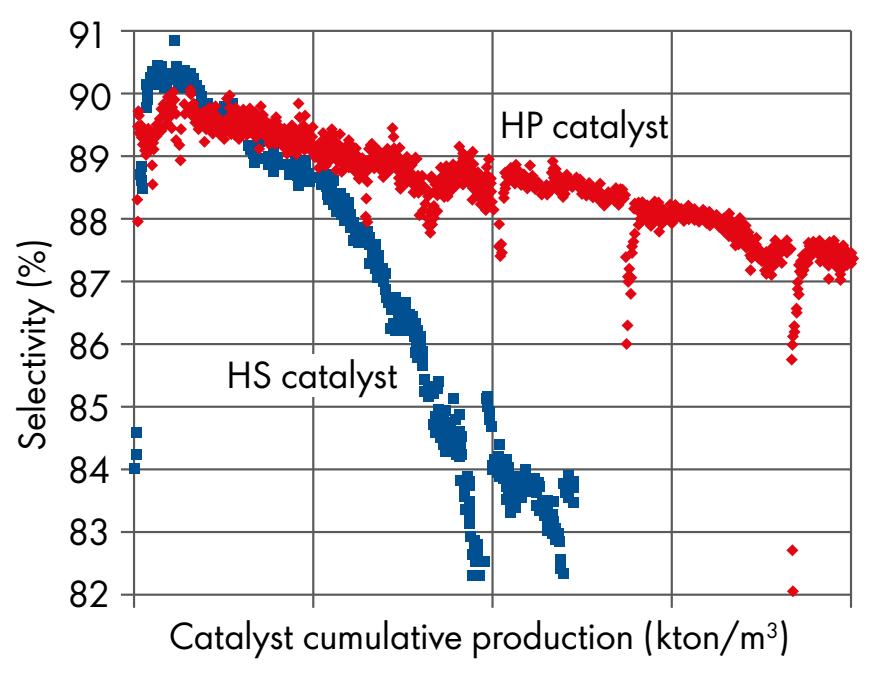
Activity adds another dimension: Shell describes it through the temperature needed to achieve the desired EO output. Scientific Design likewise offers catalyst families suited to different process generations and inlet carbon-dioxide conditions. A catalyst is bought for a particular reactor and operating environment. A favorable comparison at one set of conditions cannot simply be transferred to another plant.

The silver has a return journey
Silver remains working inventory during a catalyst run. Shell reports that many operators using its EO/EG technologies have achieved at least three years between catalyst changes at average selectivity around 90%. That is attributed operating experience, not a replacement calendar for every installation. It illustrates the time over which the initial catalyst choice continues to affect production.
Spent catalyst enters the refining business. Heraeus Precious Metals’ recycling brochure identifies silver-containing EO catalysts among the materials handled by the refining industry. It describes sampling and analysis to establish metal content, as well as recovery and metal accounts. After its useful catalytic service ends, the retired charge therefore retains a potential metal value.
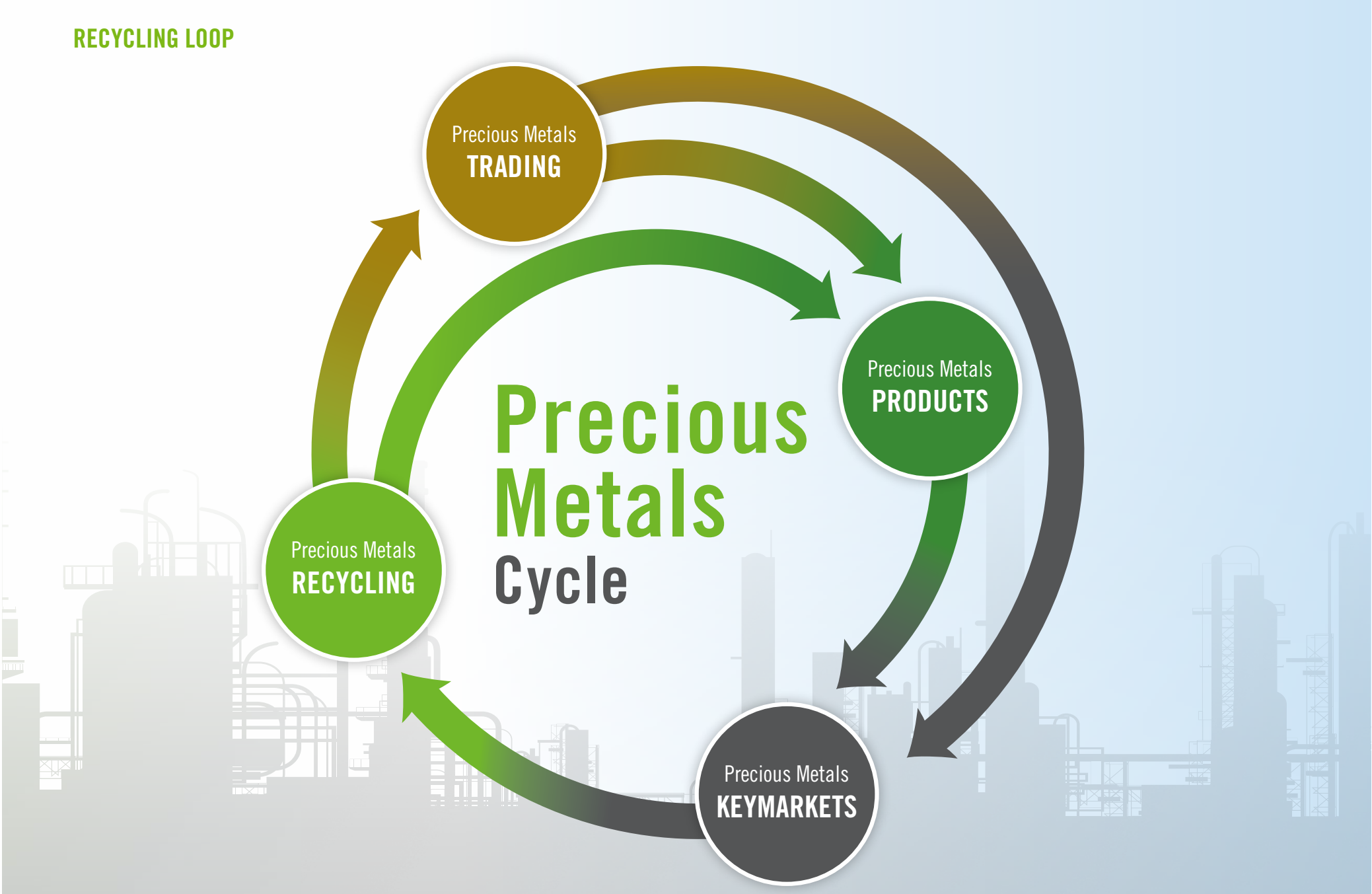
Recovery takes time. Heraeus offers bridge leases that allow replacement catalyst to be manufactured before the old catalyst is removed and processed. The service addresses a practical mismatch: the next charge may need silver while the previous charge still holds it. Refining charges, recoverable metal and the cost of carrying replacement inventory belong alongside operating performance in the comparison. Recycling supports reuse; it does not make the timing or financing disappear.
For an integrated producer choosing its next catalyst, the useful comparison follows the full run: ethylene spent for saleable EO, performance as the charge ages, the cost and interruption of replacement, and the metal value returned afterward. A higher purchase price can be justified by better operating results, but only if those gains survive the plant’s actual conditions and recovery terms. The silver quotation alone answers too little of the decision.
This also explains why counting bottles cannot establish fresh silver demand. The metal works through many production cycles and can be recovered; output, catalyst inventory and replacement purchases follow different clocks. Silver’s industrial importance here rests on the chemical conversion it enables. Long before a fibre is spun or a bottle is formed, the economics have already been influenced by how effectively that upstream silver kept ethylene on the useful reaction path.