 Strategic Resource Intelligence
Advertising Disclosure: Gunnison Copper Corp. is an advertising client of SilverWars. SilverWars has received US$90,000 from Gunnison Copper Corp. under an advertising, sponsored content, and distribution agreement that includes this article. This article was prepared by SilverWars using public market sources, Gunnison Copper public disclosure, and SilverWars’ own market analysis. It is for informational and educational purposes only. It is not investment advice, not a recommendation to buy or sell any security, and not an offer or solicitation.
Last month, Amazon’s sustainability report confirmed its agreement to become the first customer for copper produced with Rio Tinto’s Nuton technology.

Under the two-year collaboration announced in January, Nuton copper from Gunnison Copper’s Johnson Camp mine in Arizona is intended for components in AWS’s U.S. data centers. The announcement names cables, busbars, transformer windings and other copper applications. These are places where the material goes to work inside a facility.
A data-center buyer already purchases copper whenever the selected component uses it. The equipment order carries a material requirement, whether the buyer ever deals with a mine or not. AWS is reaching farther into that purchase: it has identified a source for some of the copper and connected that source to an intended use in its own infrastructure.
Johnson Camp gains a named end customer for copper produced with Nuton. AWS gains a route for addressing the production history of a material its equipment needs. The commercial relationship rests on a durable fact: the servers can change, but the electrical equipment still has to carry current.

Copper earns its place in the equipment
Copper’s electrical conductivity is the starting point. A conductor resists the current passing through it, and that resistance turns some electrical energy into heat. The Copper Development Association’s technical guide describes the relationship: resistive heating rises with resistance and with the square of current. Conductivity therefore affects both power loss and the heat a component has to tolerate.
The consequence reaches beyond the metal’s purchase price. A power component has to carry its design load within its temperature and dimensional limits. Material, cross-section and construction work together to do that. When a design calls for copper, its upstream supply supports an electrical function the equipment maker has already chosen. The material purchase carries an operating obligation with it.
The product record makes that less abstract. Prysmian’s environmental-product list includes copper medium-voltage power cables in its data-center category and copper datacom cables under digital solutions. It also lists aluminum products. Copper belongs in particular designs for particular jobs; the list does not justify treating every data-center conductor as copper.
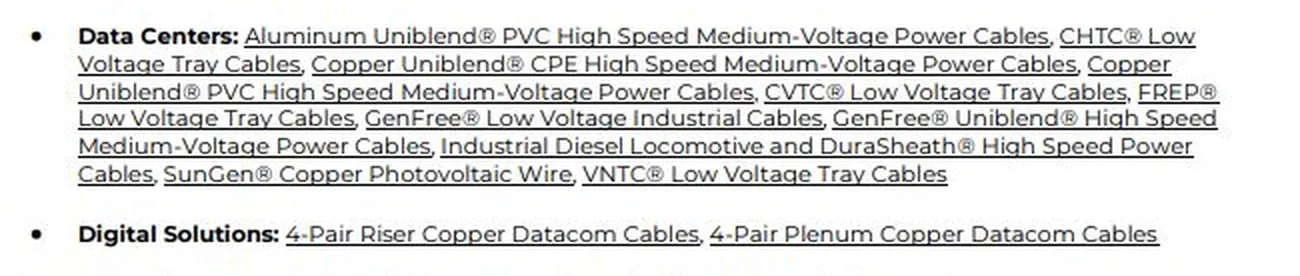
Prysmian is a product example, not an identified participant in the AWS agreement. Its listed copper and aluminum designs make clear why the material choice belongs to a particular product.
From a cathode sheet to a busbar
A busbar makes the manufacturing work easier to see. It distributes power between a supply point and outgoing circuits. The Copper Development Association and European Copper Institute’s busbar guide describes tough-pitch copper made by remelting electrolytic cathode, and conductor forms including bar, rod and tube. Cathode supplies the metal from which a useful conductor can be made.
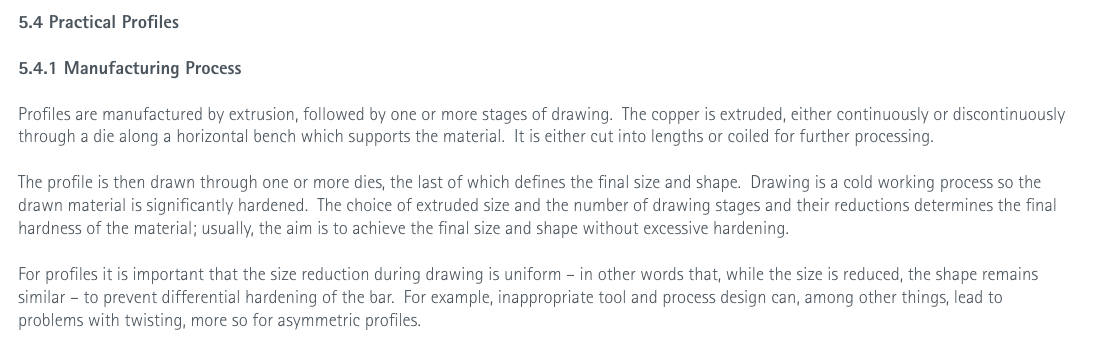
For a profiled conductor, the guide describes extrusion followed by drawing through dies. The final die defines size and shape; drawing also hardens the material. Uniform reduction matters because uneven working can produce twisting. By the time that conductor enters a switchgear assembly, the converter has supplied geometry and mechanical properties as well as copper. This is an established manufacturing example, not a disclosure of AWS’s unnamed conversion route.
That work changes what the equipment supplier can offer. A cathode sheet cannot be bolted into the space assigned to a finished conductor. The right profile can. Mine production, conversion and assembly are separate businesses, but the electrical design connects their outputs: the finished shape still needs the conductive metal that began farther upstream.

Contact
Johnson Camp supplies an operating starting point
Gunnison’s August 13 results reported 4,112,898 pounds of copper cathode produced at Johnson Camp in the first half of 2026. That is total mine production, rather than an AWS allocation or a Nuton-only volume. It is achieved output from the operation named in the agreement.
The production route has a physical distinction of its own. In its December first-production announcement, Rio Tinto describes microorganisms grown on site that accelerate oxidation in a heap of crushed primary-sulfide ore. Copper dissolves into a leach solution and is subsequently recovered as cathode. The biological work helps release the copper before electrical-equipment manufacturing begins.
Rio says the route produces 99.99% pure cathode at the mine gate, avoiding the conventional concentration, smelting and refining sequence. Those processing differences are relevant to the production-footprint proposition. They also explain why the agreement names a technology as well as a mine: AWS is connecting its intended copper use to a particular way of recovering the metal.

There is also a second direction to the collaboration. AWS provides cloud-based data and analytics support. Rio says Nuton uses those platforms to simulate heap performance, inform acid and water use, and improve predictions of copper recovery. The customer’s computing capability is being applied to the process that makes its intended copper supply. This gives the relationship an operating subject beyond the purchase itself: how the heap performs.


Project list page
Comparing the material inside the equipment offer
Rio Tinto reports a third-party lifecycle assessment under which Johnson Camp’s Nuton copper is expected to have a full-scope footprint of 2.82 kilograms of carbon-dioxide equivalent per kilogram of copper. Further fabrication and transport contribute to the footprint of the equipment containing that metal. The figure belongs to the copper production route described in the release, before those additional activities are counted.

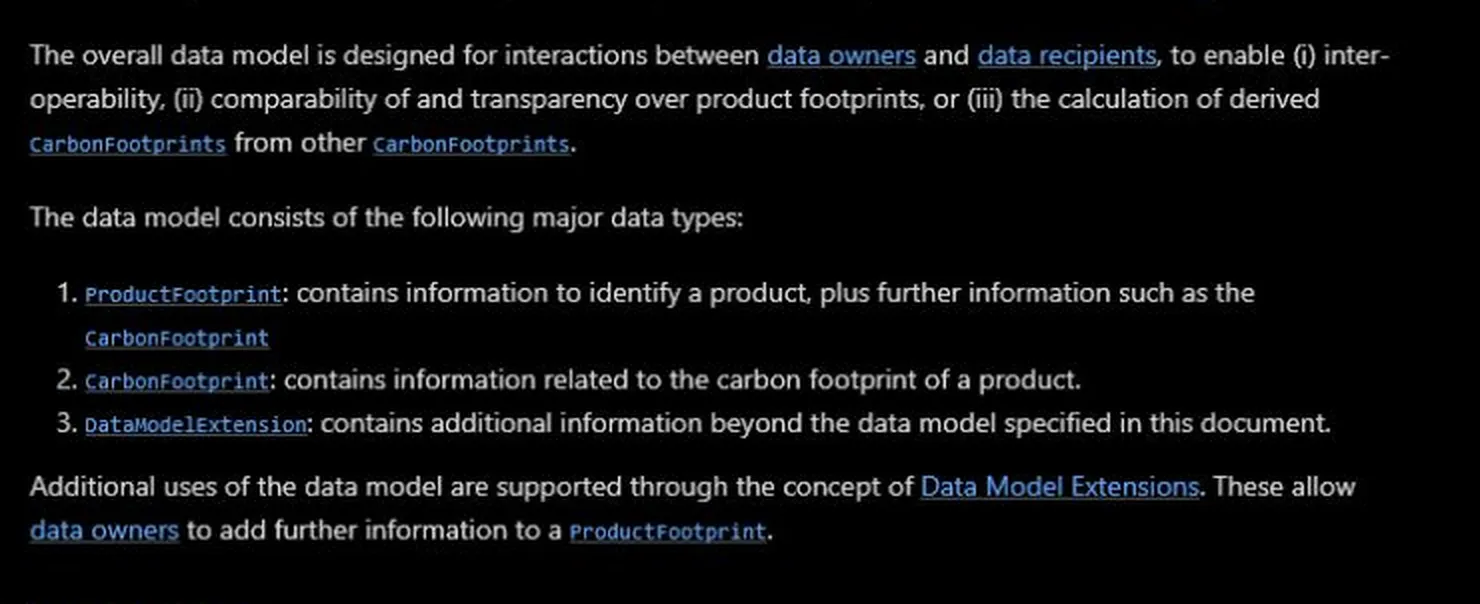
An equipment manufacturer can use suitable upstream information in its own calculation. The Partnership for Carbon Transparency’s technical specification describes upstream product footprints becoming inputs to downstream footprints. For an equipment buyer, that creates a way to compare the production consequences of the material in a particular offer.
Consider two assemblies that meet the same electrical requirement. One offer might use generic copper-production data; the other might use data for its documented supply. Comparable boundaries would allow the buyer to examine whether the second offer establishes a different production footprint. The metal’s mass and the emissions from conversion and assembly still count. A favorable mine-level figure cannot stand in for the complete product calculation.
This is an illustrative purchasing comparison, not a reported AWS component result. More specific data makes a comparison possible; it does not by itself establish a reduction. If comparable information shows a lower footprint for the supplied copper, that difference can be reflected in the material’s contribution to the equipment calculation.

Johnson Camp Gallery
Operating performance remains a separate part of that purchase. A lower production footprint does not establish lower electrical losses in service. Those depend on the component’s material properties and design. If an offer changes the conductor’s geometry or amount of copper, the engineering comparison changes too. Keeping those questions distinct lets the buyer evaluate a possible production benefit while retaining a separate engineering judgment.
Schneider Electric’s Environmental Data Program shows that product-specific environmental information already has a commercial home alongside electrical equipment. It covers lifecycle and material information for identifiable products. Schneider is another example of that practice, not an identified participant in this agreement.
The first converter and component remain unnamed in the announcement. Those suppliers will connect the metal with a manufactured offer; a physical mine-origin claim also requires origin records. Neither detail changes the agreement’s stated industrial destination. It defines the manufacturing work between the named source and that destination.
AWS’s contribution now runs in both directions: computing services assist Nuton’s recovery process, while its equipment demand provides an intended use for the resulting copper. Johnson Camp sits where those two activities meet. For a producing mine, a customer relationship tied to the metal’s eventual use is a concrete commercial development.