 Strategic Resource Intelligence

PAID PROMOTION | Disseminated on behalf of Gunnison Copper Corp. Gunnison Copper Corp. has paid SilverWars LLC total cash compensation of US$[90,000] under a [August 2026-August 2027] investor-relations agreement that includes creating and distributing this post. SilverWars receives no securities compensation and does not hold or trade Gunnison securities. [Full compensation details].
Copper bases and fins carry concentrated chip heat into liquid. In one two-phase model, a 15 percent improvement in fluid-side resistance delivered only 2 percent overall because heat still had to cross the base and chip interface.
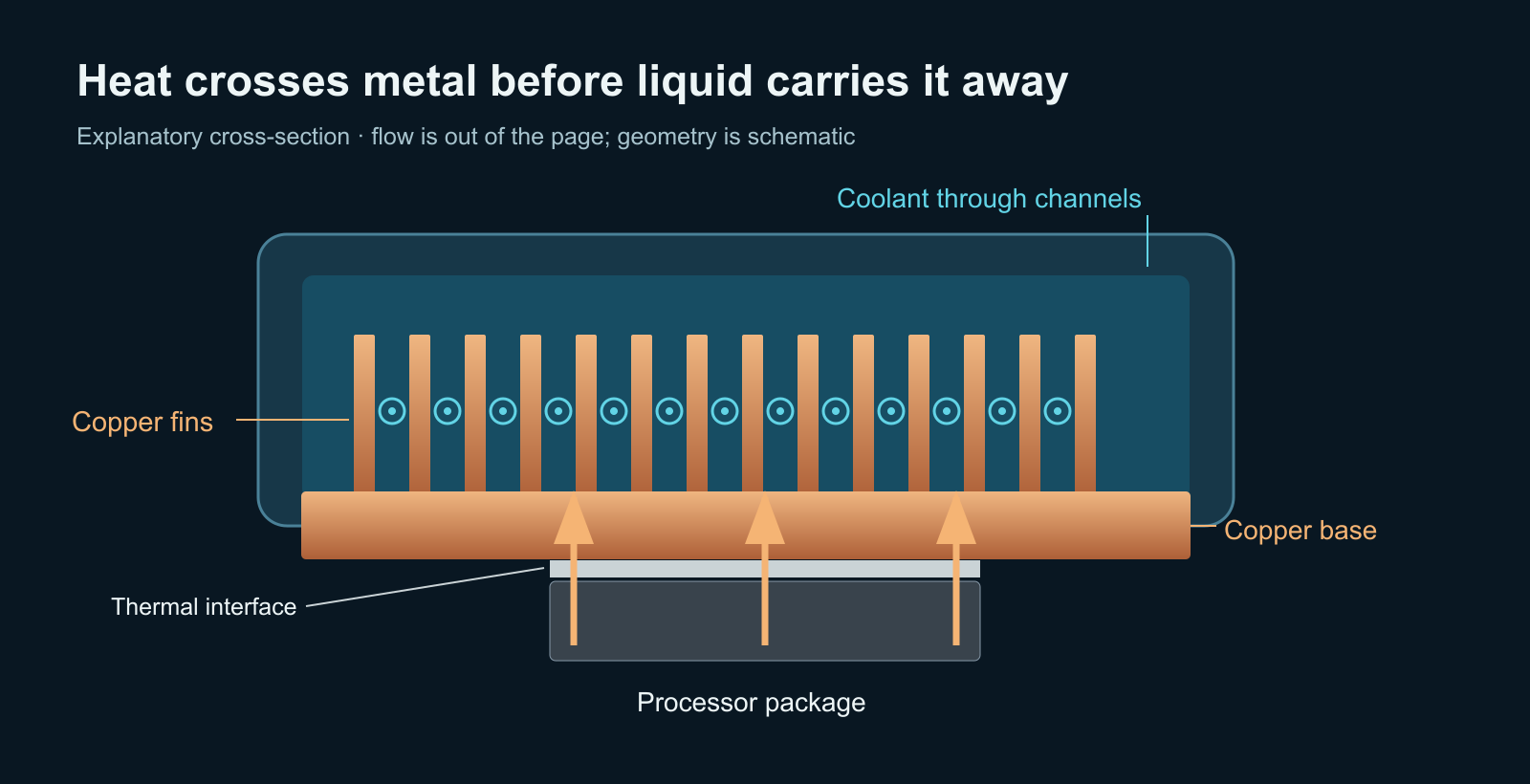
Before coolant can carry heat away from an AI processor, that heat has to cross a solid surface. In a copper cold plate, a metal base spreads heat from the device toward internal fins and channels. Moving liquid then carries it away. Copper's thermal conductivity makes the short solid part of that journey useful: heat can spread into a larger wetted surface instead of leaving the fluid to collect it from the processor's small footprint. The material, added to the final 2025 U.S. critical-minerals list, earns its place here through that physical work.
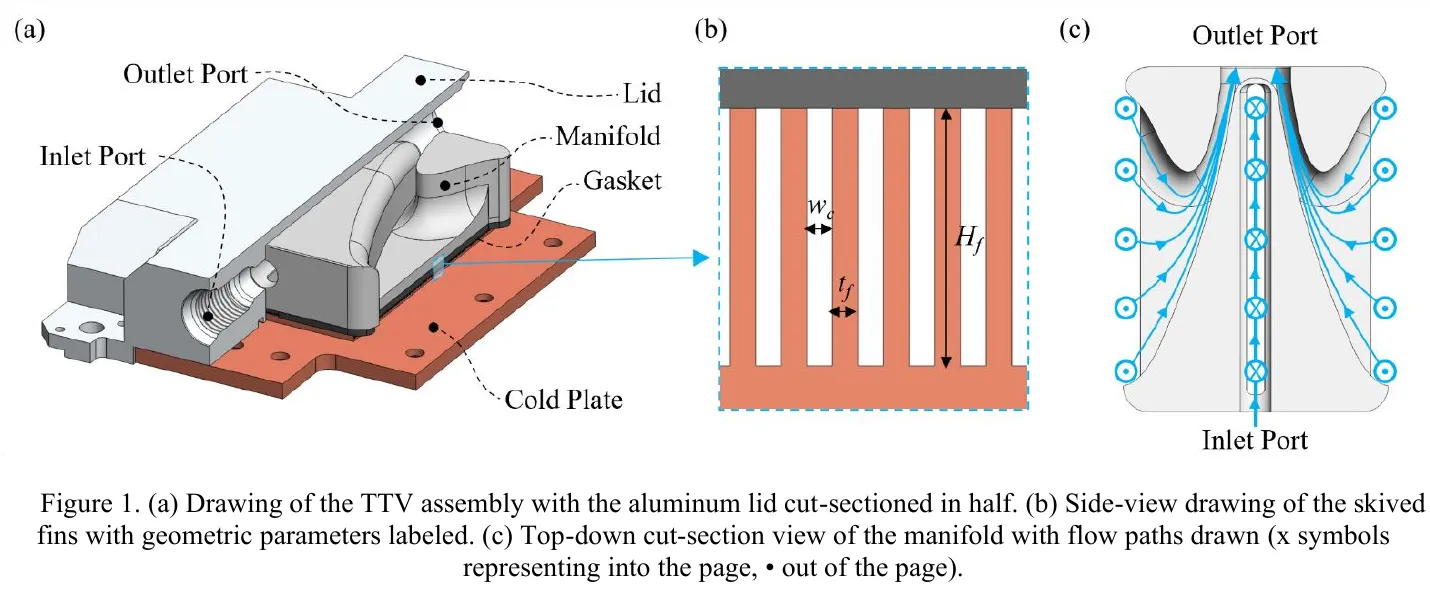
The finished shape matters as much as the starting metal. Eaton’s thermal-management guidance describes skiving as slicing into a base and folding the cut metal upward to form successive fins. Each fin remains part of the base, giving heat a continuous metal path without a separate base-to-fin joint. The process turns a compact block into many closely spaced surfaces that coolant can reach. That is a manufacturing answer to a thermal problem: put more of the conducting material in useful contact with the fluid while keeping the assembly small enough to sit on the device.
Where a better fin stops helping
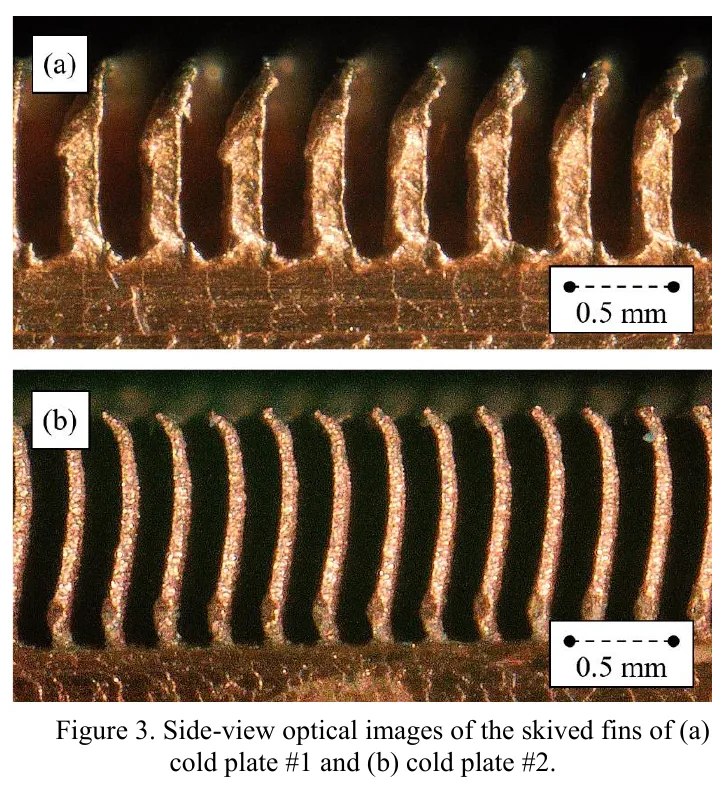
Accelsius researchers put two skived copper plates under the microscope in a 2025 SEMI-THERM study. Their curved, tapered fins differed from ideal rectangles. Tests with boiling R515B refrigerant supplied measurements for calibrating a model of other geometries. The paper identifies copper without an alloy grade.
One modeled comparison used 100- and 50-micrometer fins with reoptimized channels. The authors had achieved 100-micrometer fins; the 50-micrometer option remained modeled. Both designs had 1-millimeter fin heights, a 4-millimeter base and the same chip interface. The model distributed 1 kilowatt uniformly over 60.2 by 41 millimeters. R515B boiled at 30°C, with 9.02 grams per second of flow and a target exit vapor quality of 0.7. Flow-boiling resistance fell 15 percent; the combined interface, base and fin/boiling resistance fell only 2 percent. These were case-specific model results, not measured gains from built plates. The base and interface dominated what remained.
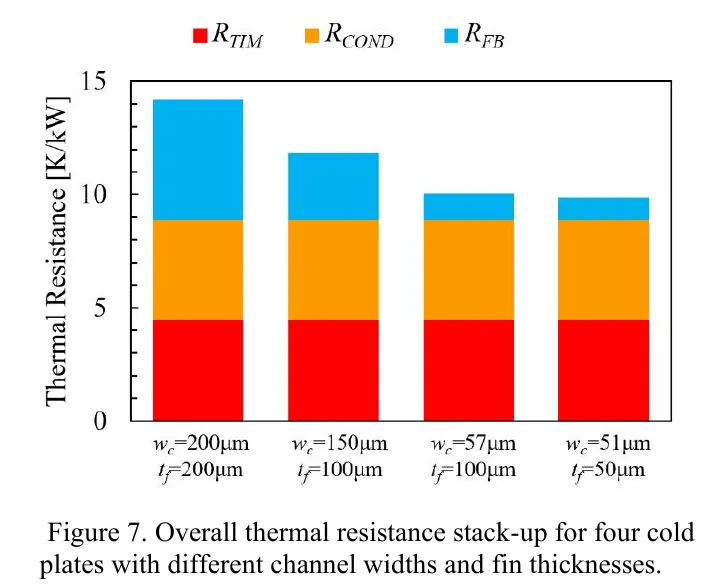
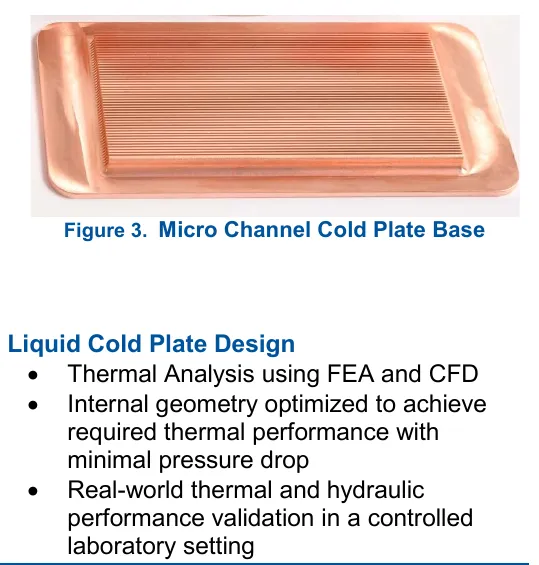
A cooling specification therefore has to cover the whole path from device to liquid. The material between the processor package and plate, the copper base, the internal surface and the moving fluid all affect the temperature rise. A dense fin structure can provide more heat-transfer area while making flow harder to drive. Boyd's cold-plate design guidance pairs thermal performance with pressure drop and calls for validation of both. The useful comparison is between complete designs carrying the same heat load under stated fluid conditions. A more elaborate internal surface earns its complexity when it improves that complete result.
The liquid has its own operating conditions
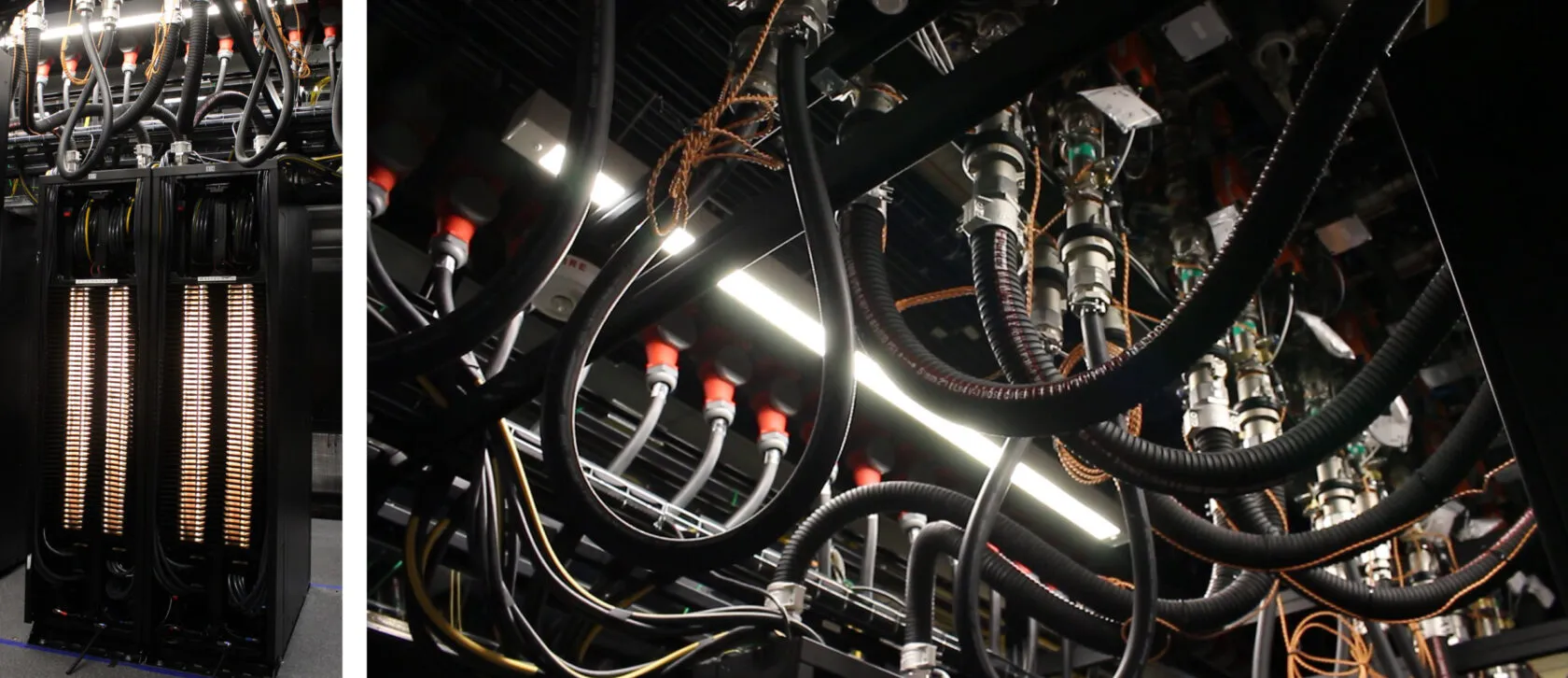
Single-phase cooling carries heat away as the liquid warms; two-phase cooling also uses the heat absorbed during boiling. NVIDIA's June 2026 description of its Vera Rubin cooling design specifies a 75 percent water, 25 percent propylene-glycol mixture and a 45°C inlet. Its account describes liquid warming as it passes the chips, rather than the refrigerant boiling examined in the paper. They show why a cold plate must work within an operating envelope: heat still needs a temperature difference to move into already-warm coolant. NVIDIA's account does not identify the plate metal, so it cannot verify copper use in that particular assembly.
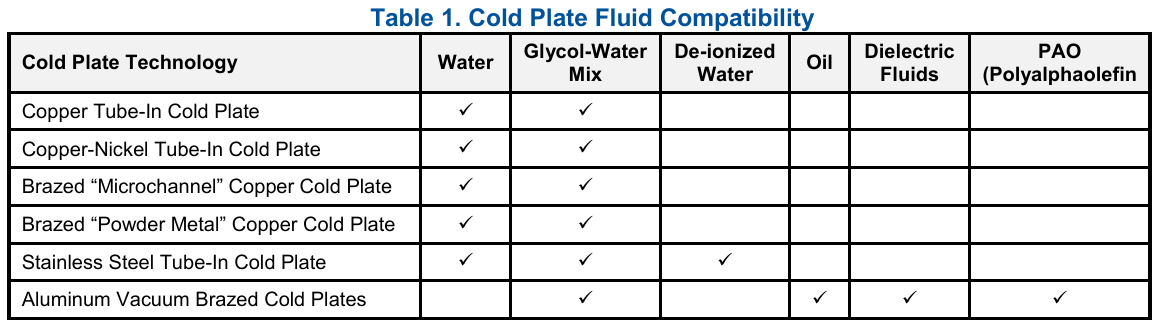
Coolant chemistry also helps determine which construction belongs in the loop. Boyd's legacy datasheet lists copper, copper-nickel, stainless-steel and aluminum options, with different fluid-compatibility entries. Its microchannel designs may use copper or aluminum. Those alternatives matter because a conductive base is only useful in an assembly that can operate with its intended fluid and connections. Material choice, joining method and fluid compatibility belong in the same comparison, rather than being settled independently and reconciled after hardware has been selected.
The copper starts upstream
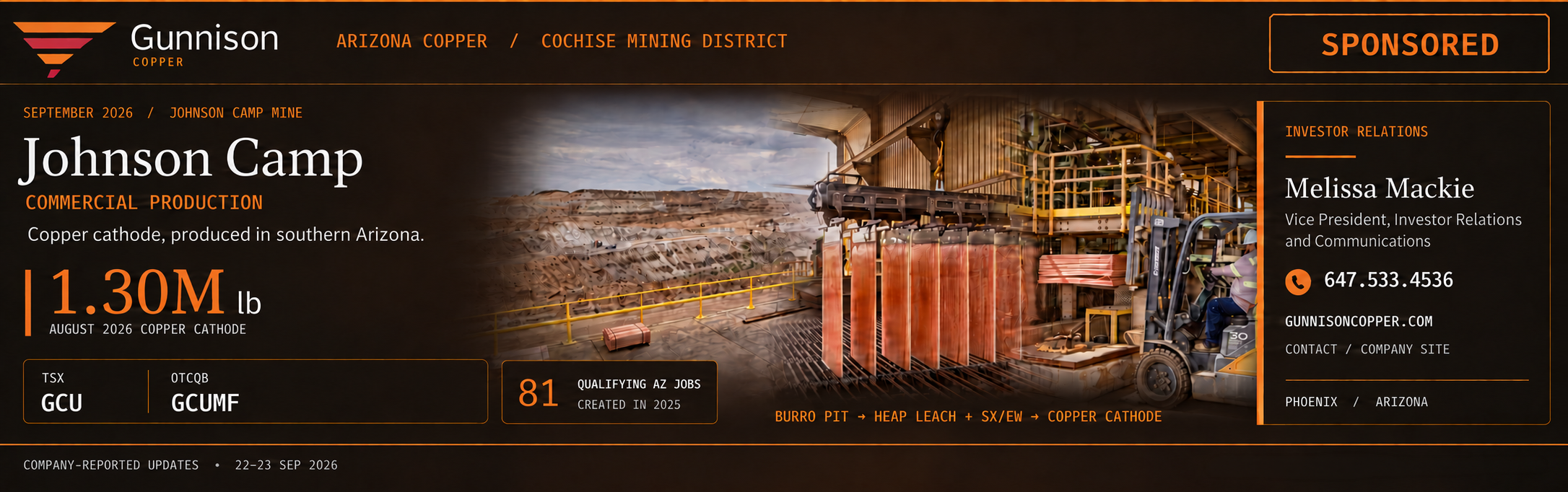
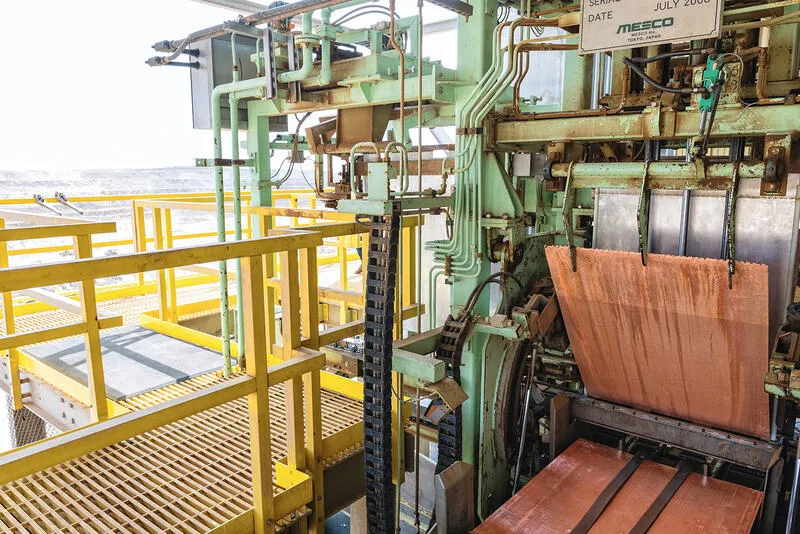
For Gunnison, this is an industrial use of copper that sits downstream from its own product. On September 22, the company reported commercial production at Johnson Camp, where copper is finished onsite as cathode. The announcement does not identify a cold plate. The relevant connection is a producing domestic source of refined copper; forming and qualifying a particular cooling component remain downstream work.
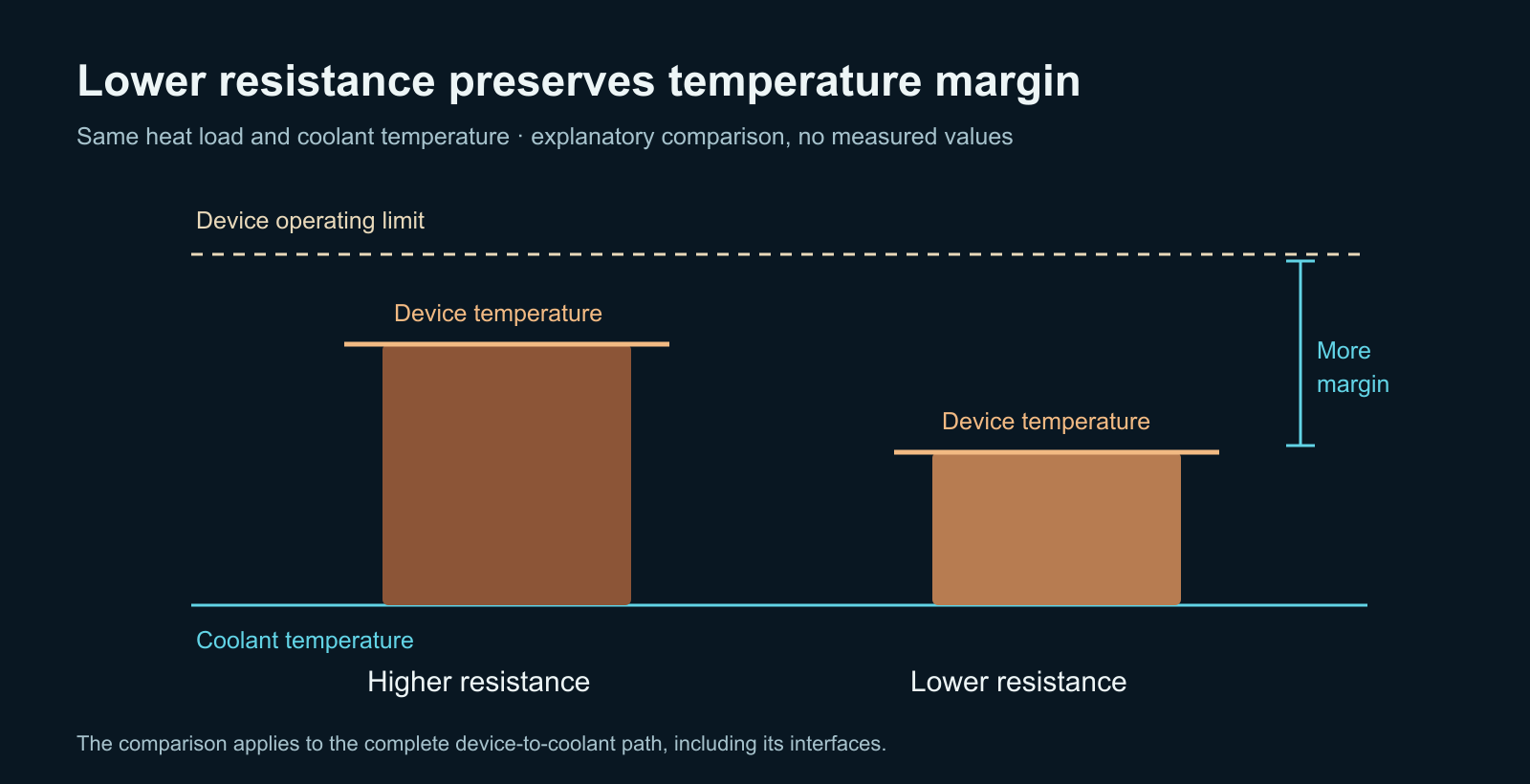
At the server, the outcome is temperature margin. A copper base and its fins give concentrated heat a route into flowing coolant; good design makes more of that route effective. Lower resistance can carry the same heat with a smaller temperature difference, leaving room within the device's operating limit. That room is what the metal helps buy. For the engineer comparing cooling assemblies, the decisive improvement is the one that reaches the processor after interfaces, geometry and fluid conditions have taken their share—not simply the most intricate copper surface.
Qualified Person — company source
Gunnison's September 22, 2026 commercial-production announcement identifies its Senior VP of Project Development, Dr. Roland Goodgame, as a Qualified Person under NI 43-101 and attributes approval of that announcement's technical content to him. This statement concerns that company news release; it does not claim that Dr. Goodgame reviewed or approved this SilverWars article.
Cautionary Note Regarding Forward-Looking Information
Where this article discusses future events, those statements are forward-looking information rather than established results. Depending on the matters discussed, they include anticipated production and capacity; Nuton technology, Stage 2 funding and work programs; expected payments or tax-credit receipts; exploration, engineering, permitting and project development; preliminary economic assessment or pre-feasibility outcomes and schedules; anticipated contributions from personnel; and a proposed NYSE American listing or ADR program. Such expectations depend on the assumptions in the cited company disclosures, including continued partner funding, adequate financing, resource estimates and recoveries, metal prices, project and operating costs, access to labour and supplies, and receipt of required permits and regulatory or exchange approvals. Actual outcomes and timing may differ materially because of funding or liquidity constraints, operational or construction difficulties, cost changes, commodity-market conditions, estimation uncertainty, environmental or title issues, personnel changes, or delayed or refused approvals. Capacity, development plans and study estimates are not guaranteed production; expected receipts are not cash already received; and listing pre-clearance is not final listing approval. Readers should consider the assumptions, conditions and risk discussions in the linked company announcements and current filings alongside the relevant statements. A future event is not assured merely because it appears in this article.