


The New World screwworm is back in the United States for the first time in roughly 60 years, and yes, it is exactly as disgusting as the name sounds.
This is not a normal worm. It is the larval stage of a parasitic fly. The female lays eggs in open wounds or body openings on warm-blooded animals. The larvae hatch, burrow into living tissue, and start eating. Cattle, goats, pets, wildlife, and in rare cases humans can be affected.
So when officials say this is not a food safety issue, that is technically comforting. The parasite does not spread through meat or milk. Great. Wonderful. Put that on a bumper sticker.
The real problem is food production. If this gets established in cattle country, it can turn into a ranching nightmare very fast.
USDA confirmed the first case in a Texas calf on June 3. More cases followed, including additional animals in Texas and a dog in New Mexico. Reuters reported this week that federal officials were dealing with confirmed cases across Texas and New Mexico while warning that more could be coming.
That is the part everyone should care about. Screwworm was not defeated in the U.S. because nature got bored. It was defeated because the government ran a massive, annoying, unsexy prevention system for decades.
DOGE cuts are the main reason screw worms are back. 60 years of program funding kept them away, then DOGE cuts funding and 6 months later a new outbreak is back.
The system was basically this: breed huge numbers of sterile male flies, release them by air, let them mate with wild females, and collapse the next generation before it exists. It sounds like something a senator would mock during a budget hearing. “Why are taxpayers funding fly sex?” Very funny. Big laugh. Then the flesh-eating parasite returns and suddenly the weird fly-sex program looks like civilization.
This is the entire lesson.
Some government programs sound stupid because the disaster they prevent is invisible.
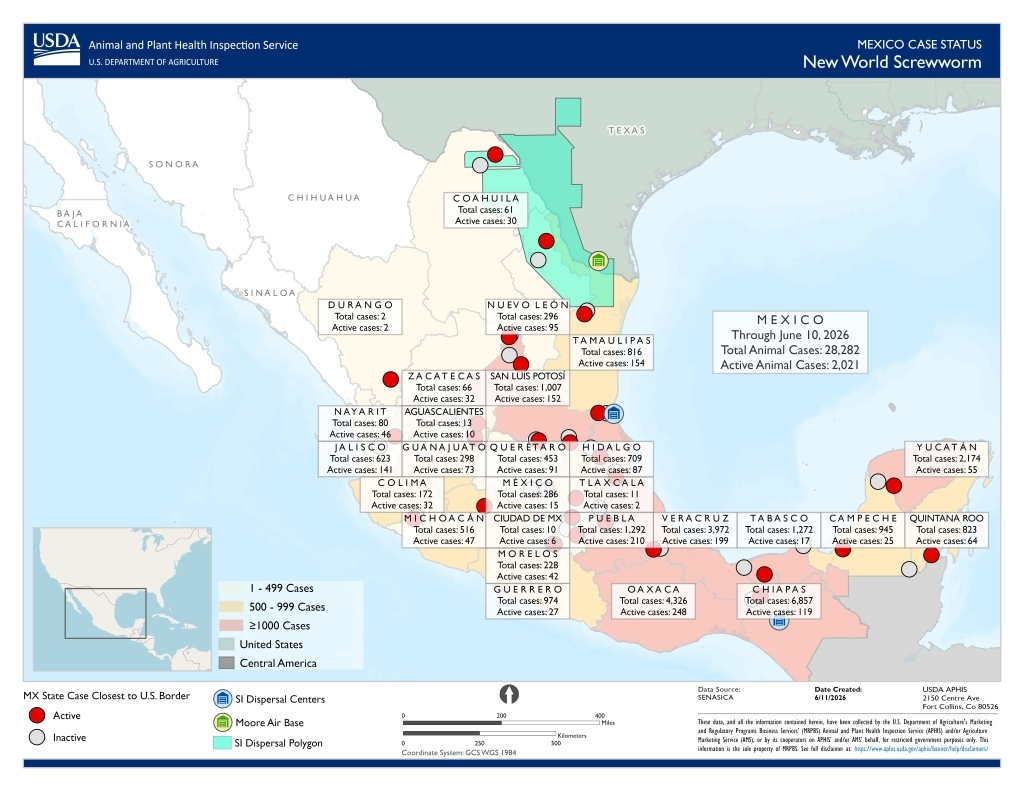
For decades, sterile fly releases helped create a biological firewall south of the U.S. border. USDA was still dispersing about 100 million sterile insects per week this year, including along parts of the U.S.-Mexico border, but Reuters reported the current response is being strained by sterile fly shortages and a reduced animal-health workforce.
 Sarah-Jane Collins
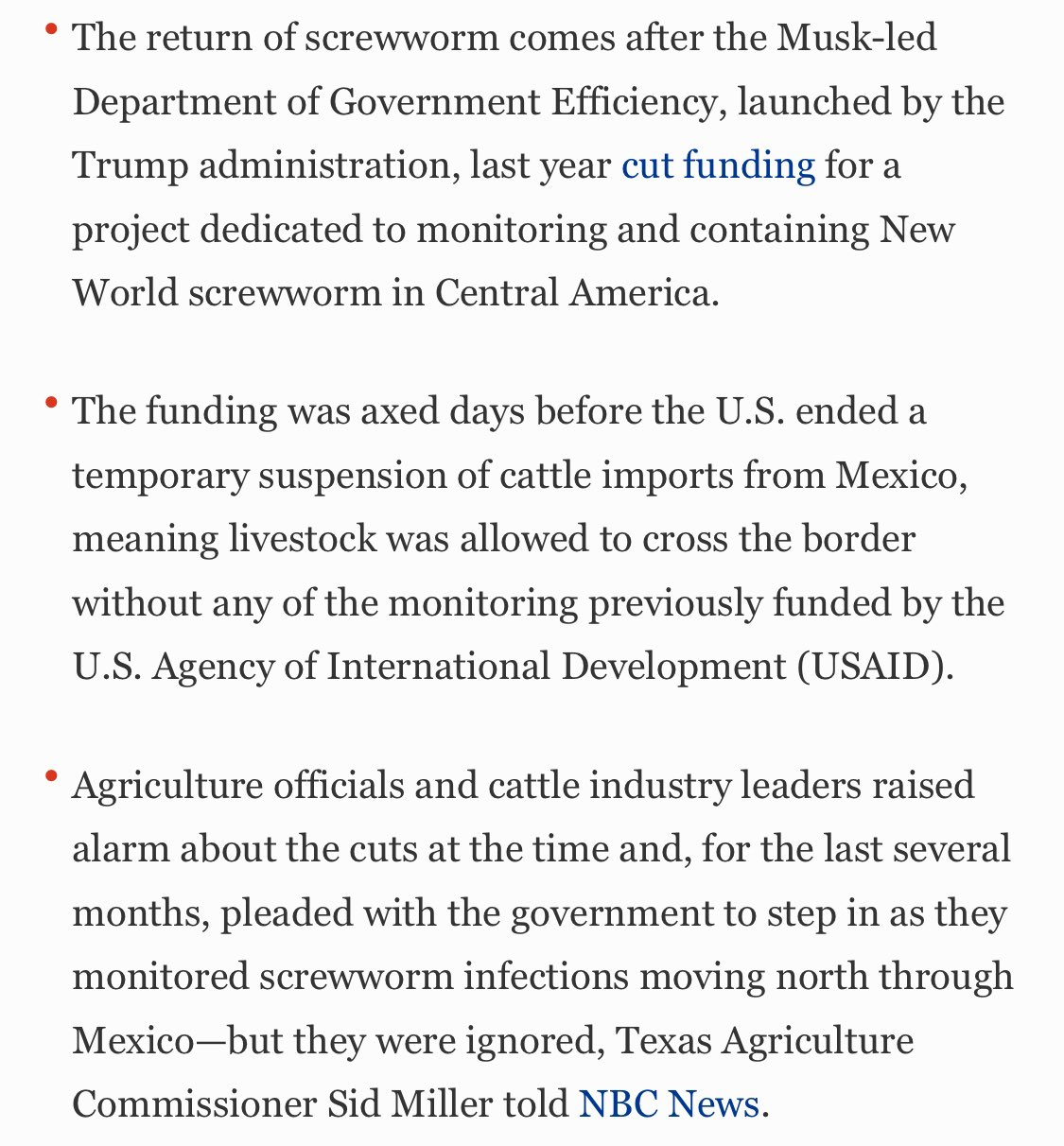
That is the uncomfortable policy failure here. You do not get to treat prevention like waste, weaken the bureaucracy, then act shocked when the thing being prevented walks back through the door.
The politics are already ugly. Texas Agriculture Commissioner Sid Miller has blasted Washington for moving too slowly. Agriculture Secretary Brooke Rollins has pushed back hard, calling some of Miller’s comments unserious. That is fun as cable-news drama, but the cows do not care who gets the better quote.
The parasite is not reading press releases. It is looking for wounds.
And ranchers have plenty to worry about. America’s cattle herd is already near historic lows. Beef prices are already high. If inspections, quarantines, movement limits, and treatment costs start stacking up, this becomes another pressure point on a food system that was already expensive before the maggots showed up.
Defenders of the federal response will say USDA is moving fast now. That is partly true. Officials have announced emergency actions, treatment approvals, expanded surveillance, sterile fly releases, and new spending for control technology. Nobody serious should pretend the agency is doing nothing.
But “doing something now” is not the same as having kept the wall fully staffed before the breach.
That is the problem with prevention. If it works, people call it waste. If it fails, people ask why nobody stopped it.
The victims here are obvious: ranchers, pet owners, vets, state inspectors, and eventually consumers if beef costs get another shove upward. The people who benefit are the same people who always benefit from performative budget-cutting. They get a cheap applause line about wasteful government, then someone else gets the bill.
The screwworm story is gross, but the policy lesson is simple.
You can mock the fly program, or you can keep the flesh-eating fly out.
Pick one.