 Strategic Resource Intelligence
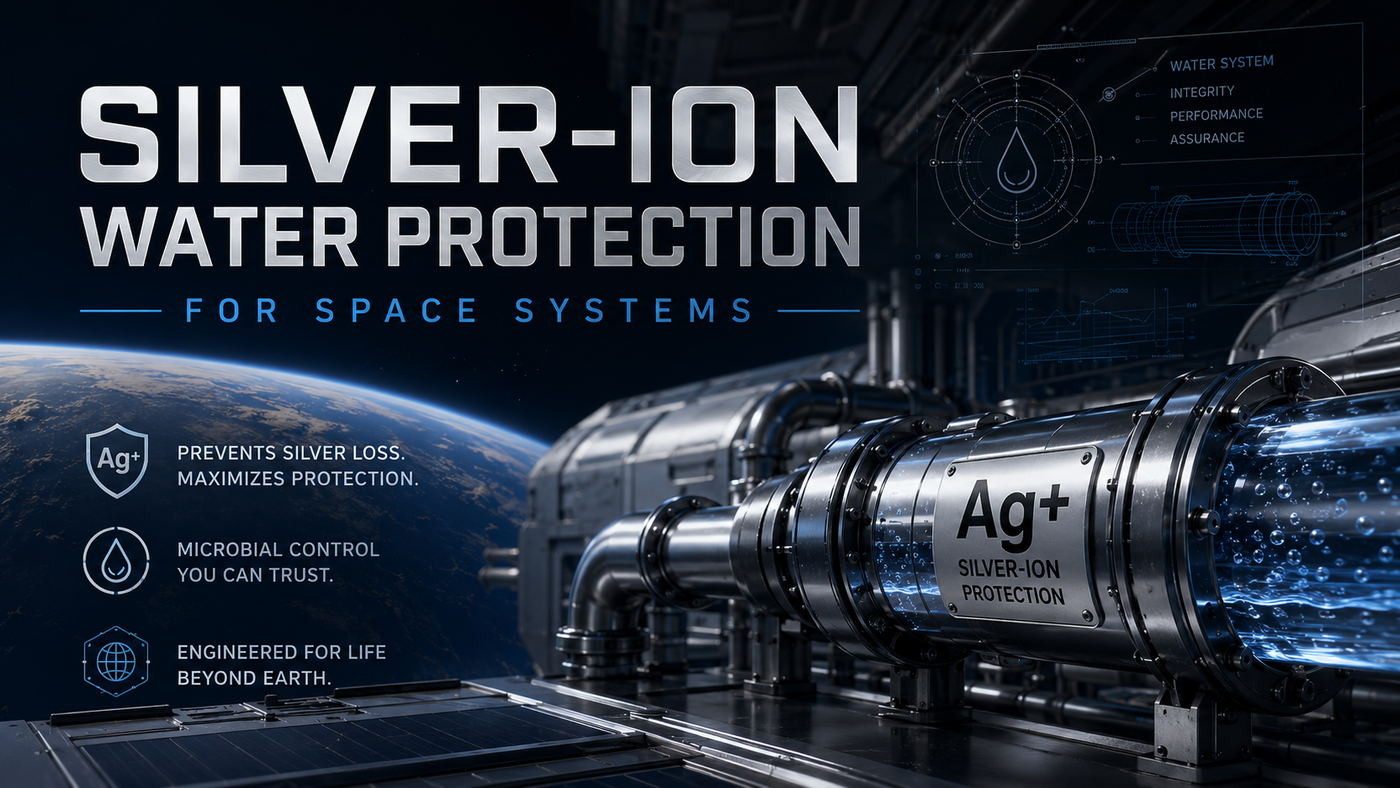
One way to think about a spacecraft is that it is a machine for turning very small failures into very large problems. A rocket failure is spectacular, so everyone understands it. A water-system failure is less cinematic. It is also one of the more direct ways to make a crewed mission become unsafe, expensive, or impossible.
A 2025 International Conference on Environmental Systems study from NASA Johnson Space Center and Amentum researchers looked at ionic silver biocide in spacecraft potable water systems, and the real question was not whether silver can kill microbes. The question was whether the spacecraft can keep enough silver in the water long enough for it to matter.
That is the more interesting problem. It is also the more annoying one.
Silver is attractive for future spacecraft water systems because it can provide residual microbial control at low concentrations. For missions such as Orion and Gateway, the study notes that silver fits several constraints better than some other options, including mass, hardware limits, antimicrobial performance, and crew-safety needs. The catch is that silver has to remain in the water to do the job.
| Mission Layer | Public Version | Hardware Reality | SilverWars Read |
|---|---|---|---|
| Orion / Gateway | Deep-space capsule and lunar station branding. | Potable water needs residual microbial control over long mission windows. | The mission is only futuristic if the water stays safe. |
| Silver Biocide | A small chemistry choice inside the life-support system. | Silver ions must remain active in the water at low concentrations. | Silver is not decoration here. It is part of the survival stack. |
| Water Lines | Small tubes nobody thinks about. | High surface-area-to-volume geometry gives silver more contact with the wall. | The tiny pipe is the battlefield. |
| Legacy Metals | Titanium, Inconel, and stainless steel. | Metal surfaces can pull silver ions out of solution. | Great metal. Bad silver behavior. |
The Wall Steals the Medicine
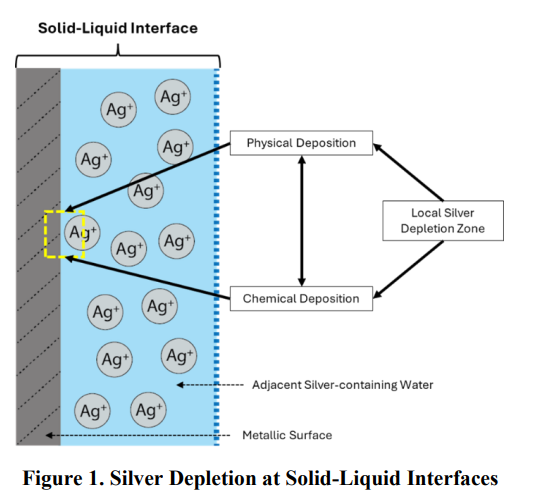
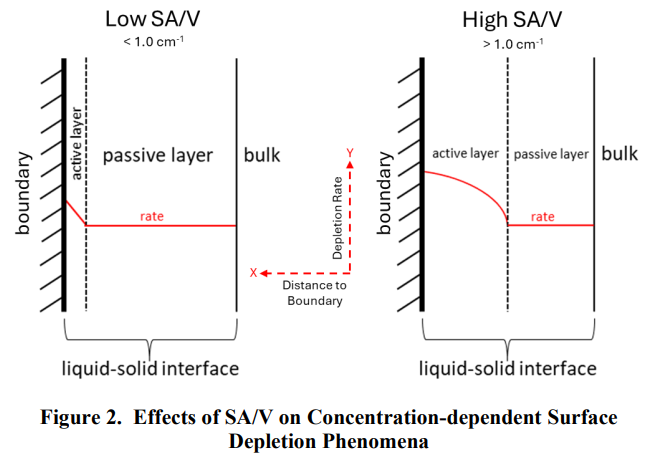
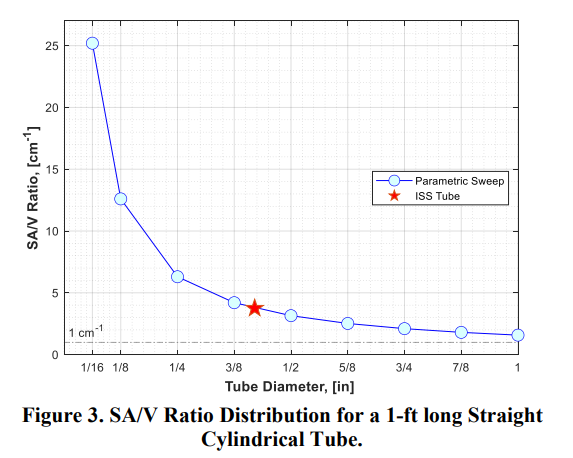
How the wall steals the medicine: Silver ions can leave the water and interact with metal surfaces. In compact spacecraft plumbing, the surface-area-to-volume problem makes that interaction harder to ignore.
The mechanism is fairly simple. Dissolved silver ions can interact with metal surfaces. In a compact water system, especially one with small tubes and a high surface-area-to-volume ratio, there are many opportunities for those ions to leave the water and interact with the wall.
That sounds like chemistry trivia until you remember the dose. Silver biocide targets are very low, around 0.2 to 0.4 parts per million. At that scale, a little loss is not cosmetic. It can move the system out of the useful range.
The water does not need to vanish for the system to fail. The protection can vanish first.
 Speedwagon Foundation
The Coating Trade
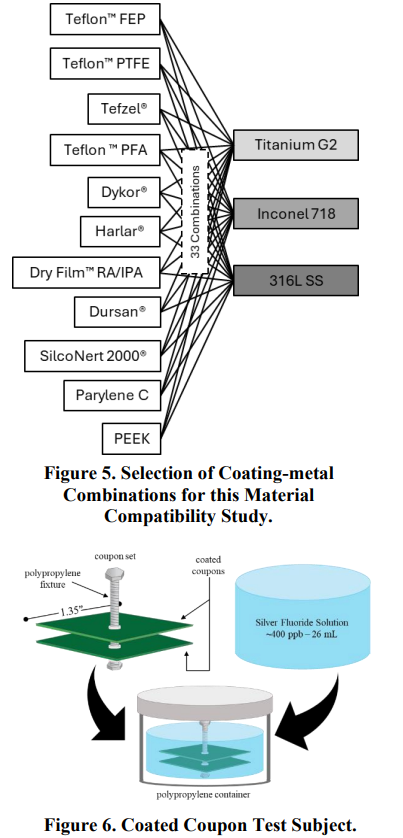
So the researchers tested coatings. Eleven chemically resistant coatings were applied to Titanium Grade 2, Inconel 718, and 316L stainless steel coupons. The coated samples were exposed to silver-containing water at a target of roughly 400 parts per billion, then tracked over long exposure periods and repeated cycles.
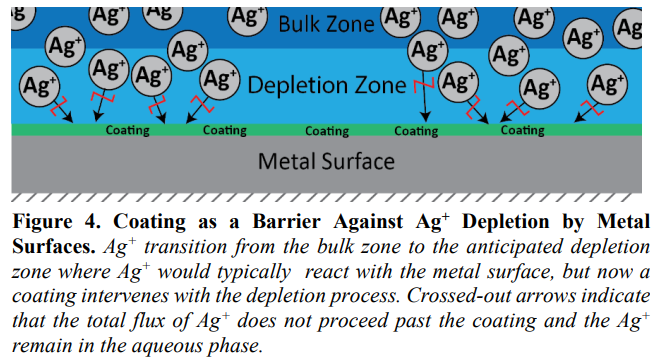
The question was not whether silver works. The question was whether the hardware lets it keep working.
| Coating Signal | Observed Behavior | Engineering Meaning | SilverWars Read |
|---|---|---|---|
| DryFilm RA/IPA | One of the strongest performers across metal types. | Strong candidate for deeper component-level testing. | Clean lab signal. |
| Teflon PFA | Maintained strong silver retention during exposure testing. | Good barrier behavior against silver depletion. | Less drama. More useful chemistry. |
| Parylene C | Showed favorable silver levels across scenarios, with strong performance on titanium. | Potential fit for coated aerospace wetted parts. | A serious candidate if application quality holds. |
| PEEK | Performed well, though coating thickness creates practical application questions. | Works in the lab, but geometry and manufacturing matter. | A good result still has to fit the spacecraft. |
| Tefzel | Performed poorly at first, then improved after repeated exposure. | Surface history may change performance over time. | The material did not fail cleanly. It got weirder. |
The Qualification Problem
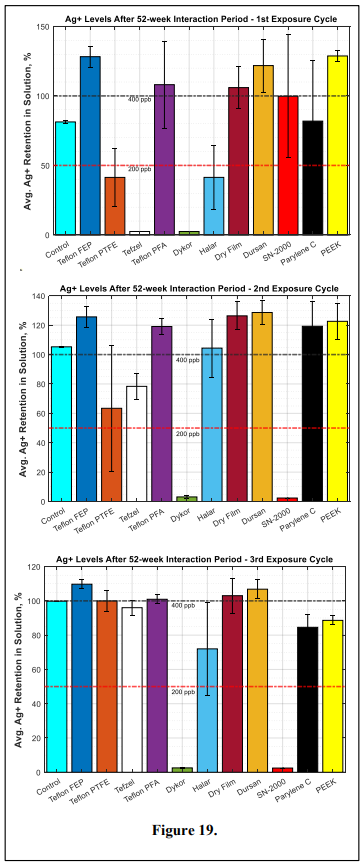
The result was encouraging, though not final. Most coatings maintained silver levels inside the desired 200 to 400 parts-per-billion range after 52 weeks. Several continued to perform during repeated exposure to fresh silver-containing water. That is a good sign for the coating approach, but it is not the same as proving a full spacecraft water system.
A coupon is not a valve. A flat test sample is not a bend in a tube. A controlled storage jar is not an operating life-support loop. The study points toward the next problems: complex geometries, realistic flow conditions, long-term coating durability, and possible effects on water quality.
That is where this stops being a chemistry note and becomes a supply-chain problem. Space programs do not merely need silver. They need qualified silver-compatible systems: the right metals, the right coatings, the right manufacturing process, and the right test data.
| Failure Trigger | System Consequence | Who Eats The Risk | SilverWars Read |
|---|---|---|---|
| Silver Depletion | Biocide concentration drops while the water system still appears operational. | Crew safety and life-support teams. | The water is still there. The protection is not. |
| Biofilm Growth | Water lines become a contamination and maintenance problem. | Flight operations and system engineers. | Microbes are undefeated when materials teams lose. |
| Coating Failure | More redesign, qualification work, backup hardware, and mass. | NASA, primes, suppliers, and taxpayers. | In space, extra plumbing is never free. |
| Geometry Gap | Flat coupon results must still survive bends, fittings, valves, and hidden surfaces. | Manufacturing and qualification teams. | The coupon is not the spacecraft. |
The Silver Problem Under the Space Economy
The obvious objection is that spacecraft water systems will not use enough silver to move the global market. True. That is not the point.
The point is that silver keeps appearing in systems where failure is expensive and replacement is hard. Solar needs it for conductivity. Aerospace uses it in high-reliability hardware. Defense uses it in electronics and RF systems. Now spacecraft water systems are still treating silver as a serious option for microbial control.
The public space story is about heroic machines. The operating story is quieter. It is materials, chemistry, interfaces, and time.
A Moon base does not fail only because the rocket explodes. It can also fail because the plumbing slowly stops doing what the mission plan assumed it would do.
That is the dry lesson inside the study. Human spaceflight is not just a propulsion problem. It is a materials problem.
And in this case, it is a silver problem.