 Strategic Resource Intelligence
Independence Day is supposed to be the easy holiday: burgers, buns, gas in the tank, and somebody's uncle arguing near the cooler like C-SPAN got trapped in a lawn chair.
This year, the receipt gets the microphone.
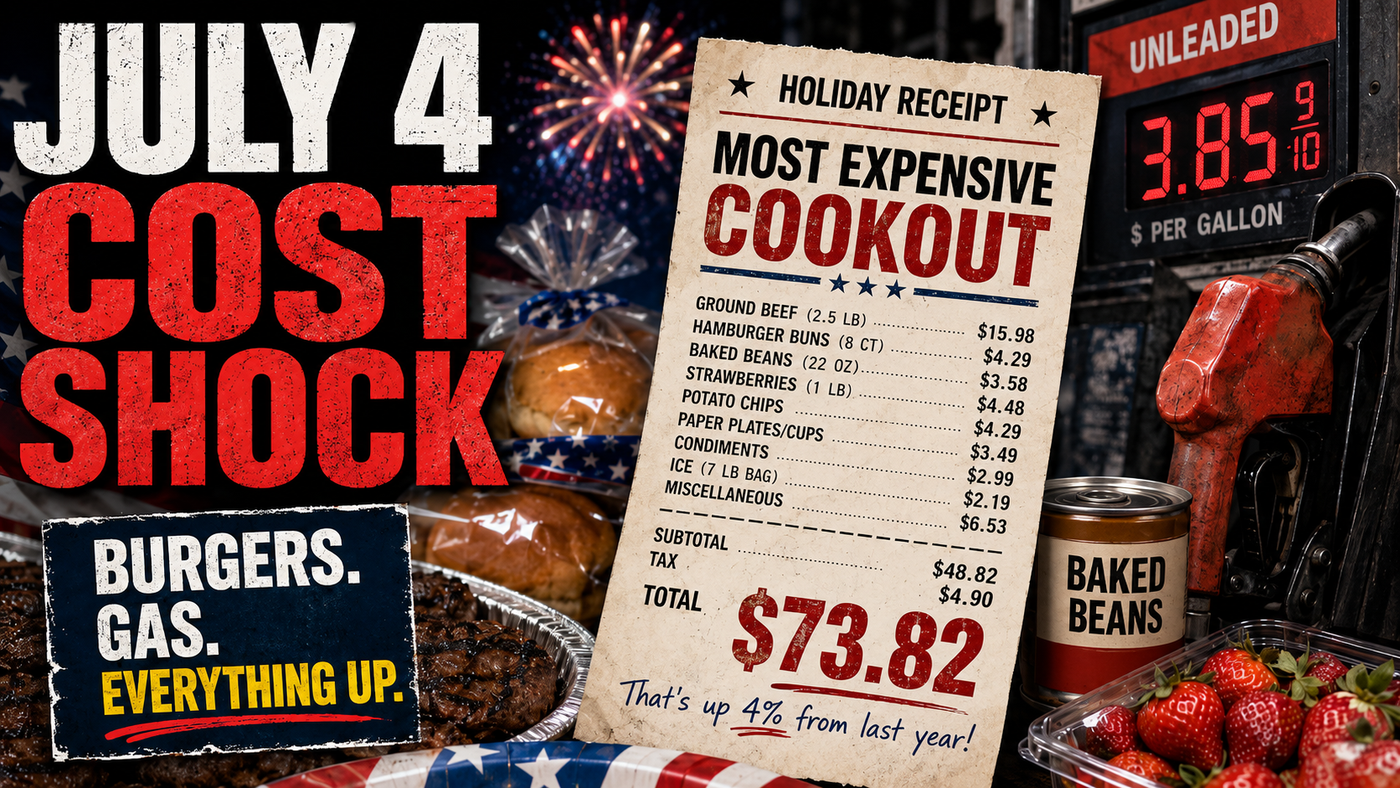
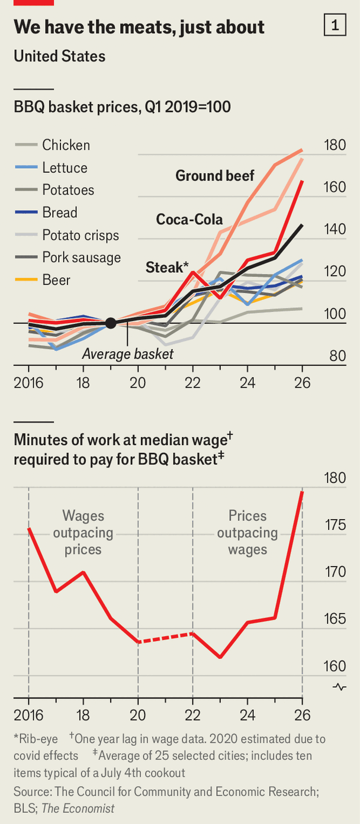
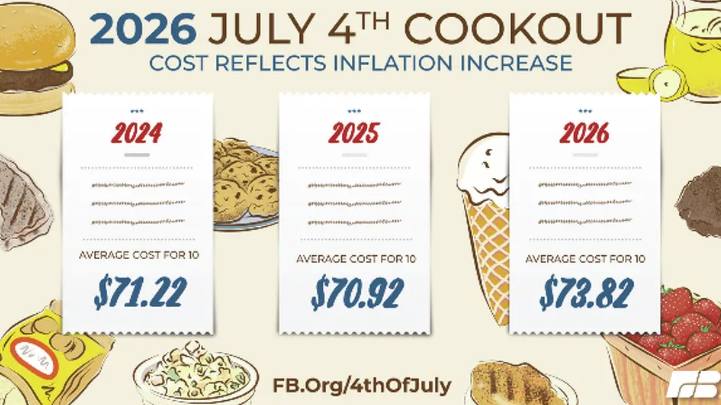
An Independence Day cookout for 10 people now costs $73.82, according to the 2026 American Farm Bureau Federation marketbasket survey reported by Our Midland. That is up 4% from last year, or $7.38 per person. Farm Bureau says it is the most expensive holiday cookout since it began tracking the basket in 2016.
Fine, yes, there is a caveat: adjusted for inflation, the cookout is still below the 2022 peak. That is the comfort prize we are being handed. The family barbecue is not as financially absurd as it was during the recent price explosion. Very inspiring; put that on a paper plate.
The official comfort line is that inflation is slowing or that the price level is "stable" in real terms. Normal people do not shop in real terms. They shop with the credit card they have right now, in the store they are standing in, with a kid asking for strawberries and a fuel gauge making threats in the parking lot.
The basket is not getting hit in one clean place, either. The pressure is scattered across the holiday: ground beef, strawberries, hamburger buns, and pork and beans, partly because aluminum cans got more expensive. That one is almost too perfect. Even the bean can has a supply-chain lecture now.
 IA
IA
| Pressure | 2026 Signal | Why It Moved | What Families Feel |
|---|---|---|---|
| Cookout Basket | $73.82 for 10 people, up 4% from 2025. | Ten of 12 Farm Bureau items rose year over year. | The holiday meal becomes a budget decision, not just a menu. |
| Ground Beef | Two pounds rose to $14.06, up 5.5%. | Drought recovery keeps cattle supplies tight. | The default burger tray quietly gets more expensive. |
| Strawberries | Two pints rose to $5.27, up 12.4%. | Florida frost, labor and fuel costs hit supply. | The harmless side item starts acting like a luxury. |
| Travel | AAA expects 61.4 million Americans to drive. | The holiday is tradition even when fuel is expensive. | People still go, but they edit the trip around the bill. |
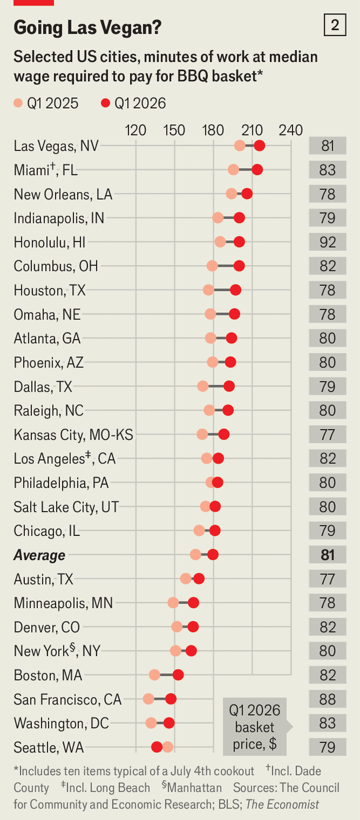
This is why "Americans are still spending" is such a lazy victory lap. Of course they are still spending; they still have families, traditions, and one day where the country is supposed to feel more pleasant than a payment plan with fireworks.
AAA expects 72.2 million Americans to travel at least 50 miles from home between June 27 and July 5, including 61.4 million by car, according to CT Insider's report on AAA's forecast. That is a lot of movement, but movement is not the same as comfort. A person can drive to see family while cutting the restaurant stop, packing cheaper food, skipping the extra night, or praying the check-engine light learns patriotism.
Gas is not helping. The national average was around $3.85 a gallon going into the holiday, The Guardian reported, cheaper than a month earlier but still above last year's holiday level. Treasury Secretary Scott Bessent went on Fox and warned oil and gas companies that "we're watching." Trump demanded retailers get prices down toward $2.50.
Sir, that is a price-control monologue wearing a free-market hat.
The same political ecosystem that calls every consumer-protection rule socialism is now doing patriotic eyebrow language at gas stations because the holiday optics are bad. Retailers deserve scrutiny, and oil companies are not sentimental charities with pump handles. But threatening the last link in the chain while cheering tariffs, deficit-financed tax politics and fossil-fuel theatrics is not an inflation plan. It sounds like a customer-service complaint from the people running the store.
That is where the GOP branding gets especially obnoxious. The party sells itself as the home of stable dollars, anti-inflation seriousness and fiscal discipline. Then the policy mix shows up: tariffs that act like import taxes, giant tax-and-spending bills, immigration shocks that can tighten labor markets, defense and border splurges, and tariff revenue being treated like a magic coupon for the deficit. The Congressional Budget Office projected the GOP tax-and-spending law would raise deficits by $4.7 trillion over a decade while tariffs partly offset that by $3 trillion, with higher inflation and slower growth as side effects, according to The Washington Post's report.
So the pitch is: trust us, we hate inflation, which is why we are going to tax imports, juice deficits, pressure the Fed when convenient, and then yell at the gas station guy before the barbecue photos. Incredible. A full governing philosophy assembled from bumper stickers and accounting smoke.
Democrats do not get sainthood here. Pandemic-era stimulus, corporate pricing power, supply shocks, energy policy failures and years of cheap-money politics were bipartisan enough to make everyone uncomfortable. But Republicans are the ones currently trying to cosplay as the only adults in the inflation room. Adults do not hide a tax in the tariff drawer and call it national strength.
The Silver price belongs in this story only in the honest way: as a monetary tell, not a magic answer. No, a $73.82 cookout does not mean silver rockets tomorrow; stop being weird about the chart for two seconds. The simpler point is the one families already feel. When ordinary people watch the dollar buy less at the grocery aisle, the gas pump and the holiday table, they start understanding physical stores of value before they start using that language. They may not say "monetary debasement." They say, "How is this much money for burgers?"
That question is political, and it is also material. Food requires land, fuel, labor, refrigeration, trucking, cans, fertilizer, water and time. Gas requires oil markets, refinery capacity, shipping risk and policy choices. The receipt is not vibes; it is the physical economy sending an invoice to the paper economy.
The real July 4 inflation story is not that Americans canceled the holiday; they did not. The story is that the holiday survived because people absorbed the squeeze, shaved the edges, swapped items, drove anyway and pretended the receipt was normal long enough to get through dessert.
That is not consumer strength; that is endurance with a paper flag in it.