

For most of modern history, the American economy has been understood through the lens of markets—prices rising and falling based on supply, demand, and competition.
The underlying assumption is simple: that the game is fair, and that outcomes are shaped by open participation rather than unseen direction. It is an idea that resonates deeply with the American public, whether as a lived reality or a widely held expectation.
"I summon every person and every community to make, with a spirit of neighborliness, whatever sacrifices are necessary for the welfare of the Nation." - Proclamation 2914 | Harry S. Truman | Dec 16, 1950
But beneath that surface, a parallel framework has operated alongside it. One shaped not by price signals, but by strategic necessity.
For decades, U.S. policy has prioritized stable access to critical materials over free-market price discovery—using emergency authorities, strategic planning, and supply coordination mechanisms that can influence pricing outcomes.
That Switch That Stayed On
When Harry S. Truman declared a national emergency in December 1950, the United States was entering a new phase of global conflict. The Korean War had escalated. The Cold War was hardening. The prospect of a broader confrontation was no longer theoretical.
In his address to the nation the night before the proclamation, Truman made clear that the United States was preparing for something beyond a limited conflict. The required buildup would not simply match World War II—it would exceed it in scope, duration, and complexity.
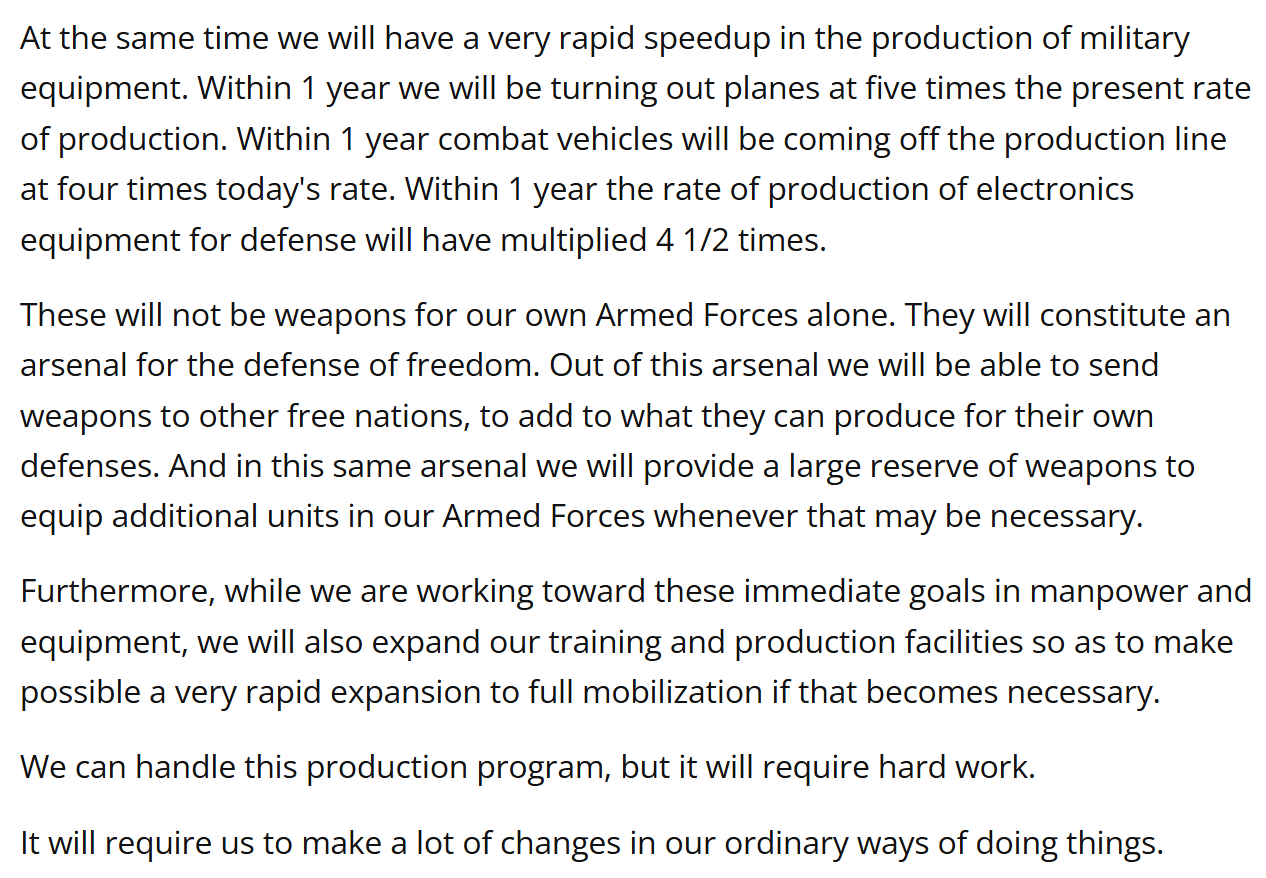
This was not a temporary surge. It marked the beginning of sustained mobilization. To meet it, the federal government activated authorities that reached deep into the structure of the economy—directing industrial production, prioritizing contracts and materials, coordinating output across sectors, and aligning private industry with national objectives. The market did not disappear, but it was no longer the deciding force.

The economy had become an instrument of war.
That shift carried a second requirement: continuity.
Civil defense doctrine of the period made this explicit. It did not assume cities would be abandoned in the event of attack. It assumed they would endure—and continue to function. Federal guidance, including materials produced by the Federal Civil Defense Administration, made clear that American cities were expected to remain in place and operate even under the conditions of modern warfare.
This was not simply a matter of morale. It reflected a structural reality. Industrial capacity could not be relocated. Supply chains could not be paused indefinitely. The systems that sustained production—and, by extension, national defense—had to remain active.
The implication was direct. If the system could not stop, the materials that sustained it could not be allowed to fail. In prioritizing continuity, the government made a choice—not between competing resources, but between competing principles. The preservation of the system—the “soul” of the nation—was treated as paramount.
But the Constitution does not enshrine the survival of systems. It enshrines the rights of individuals. And one cannot be made subordinate to the other without consequence.
Scale Was the Signal
Truman’s warning was not rhetorical. It carried a material implication.
World War II had already demonstrated what total mobilization required. The United States consumed vast quantities of industrial inputs—steel, copper, aluminum, oil, and a range of specialized materials essential to modern warfare. Among them was silver, used in electronics, communications systems, and nuclear development. The scale was unprecedented.
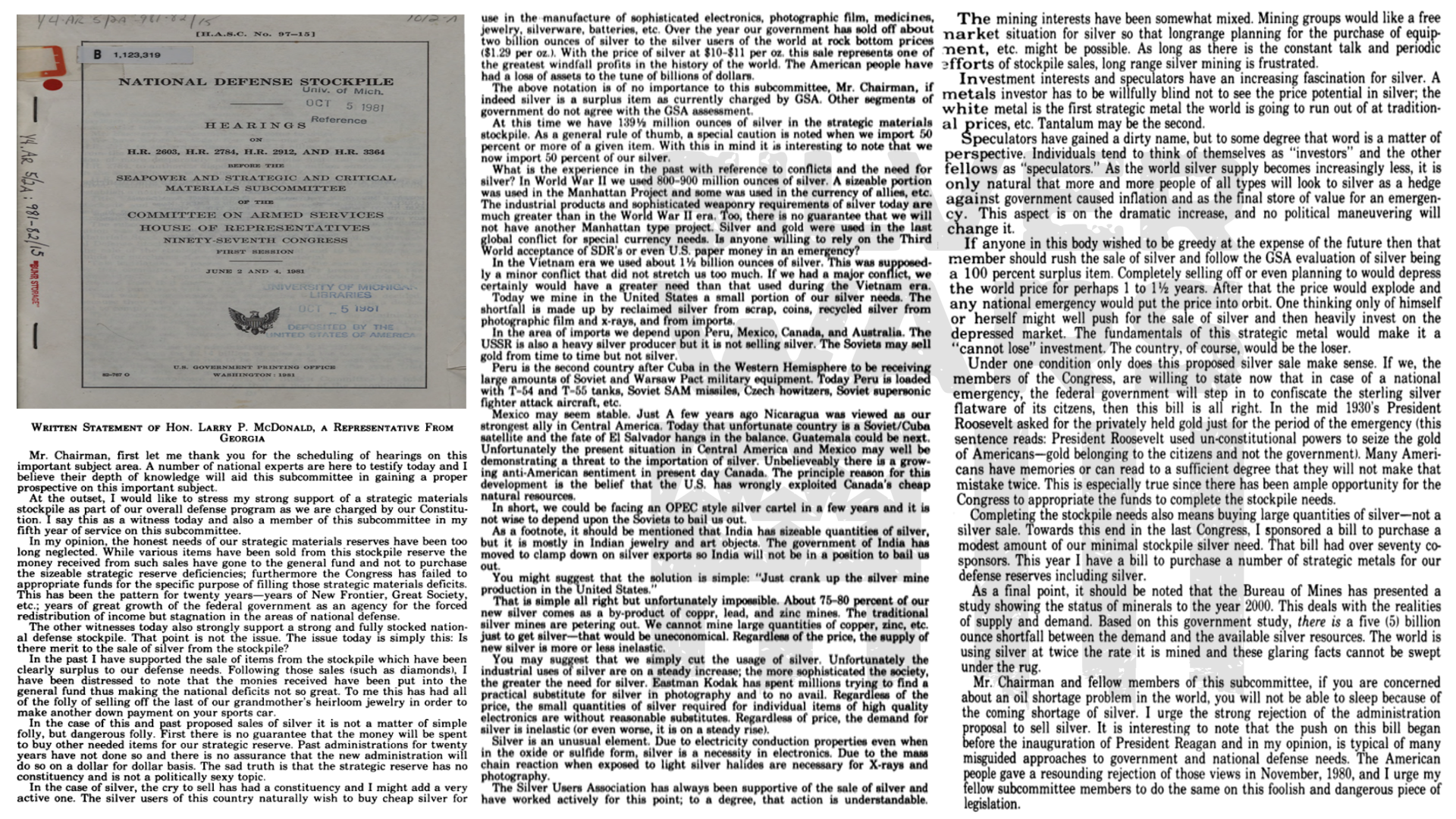
Congressional records later reflected the magnitude of those demands. During World War II, the United States used approximately 800 to 900 million ounces of silver, a substantial portion directed toward critical applications such as electromagnetic separation for nuclear development and advanced communications systems.
The pattern did not end with the war.
By the Vietnam era, an additional roughly 1.5 billion ounces of silver had been consumed—driven by expanding technological requirements, including electronics, imaging systems, and industrial applications with no practical substitute.
These are not abstract figures. They reflect a structural reality: modern conflict is not only fought with weapons, but with the materials that make those systems possible. A mobilization exceeding World War II was not simply a question of manpower or production capacity. It was a question of inputs. And these inputs are finite.
A System That Does Not Announce Itself
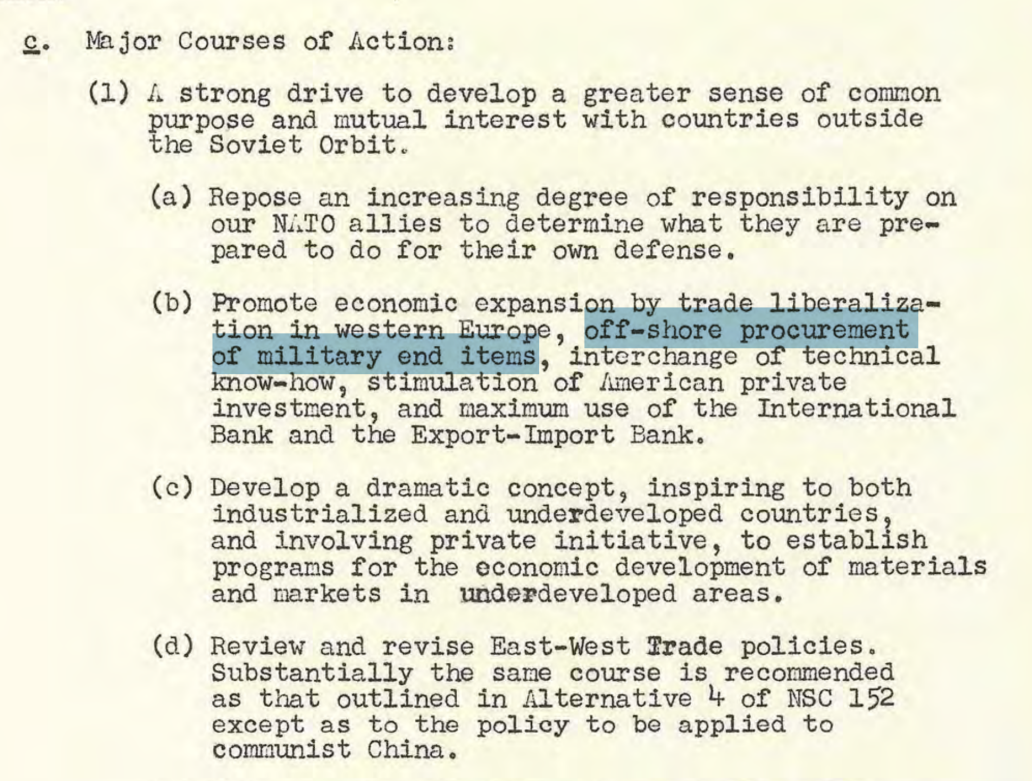
There is no single directive declaring control over markets. There is no moment where the system openly replaces price with policy. Instead, it operates through layers—legislation enabling intervention, agencies executing policy, industry responding to incentives, and allied nations coordinating supply. The system extends beyond production and materials.
It includes the management of information itself:
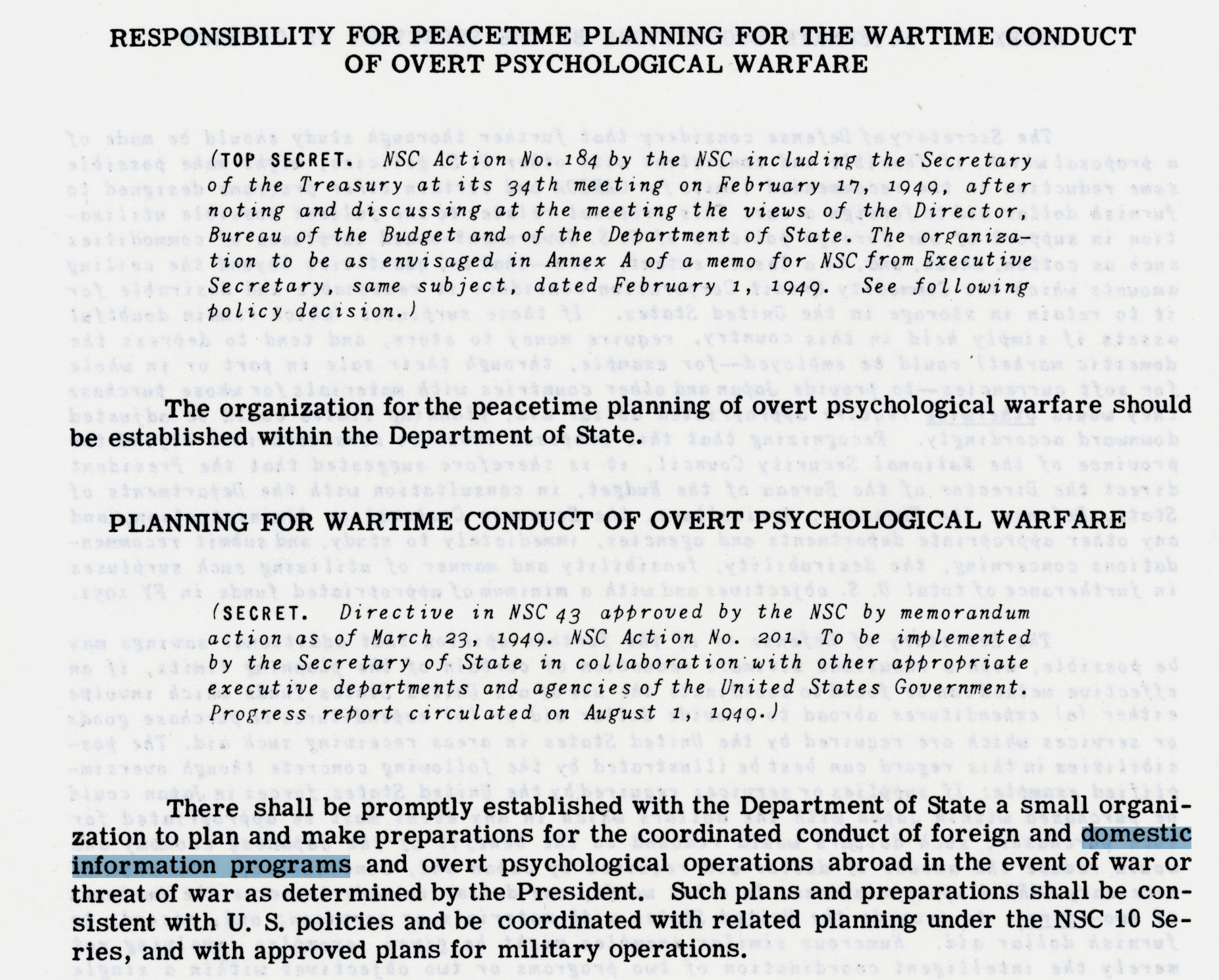
Policy frameworks of the period, including NSC 43, made clear that communication was not incidental to strategy—it was part of it. Information, both abroad and at home, was to be coordinated alongside military, industrial, and economic objectives. Planning for “domestic information programs” was embedded within the same operational structure as foreign psychological efforts, reflecting a unified approach to managing perception in parallel with material capacity.
This did not produce a command economy in the traditional sense. Markets continued to operate. Prices still moved. Participation remained visible.
But only within bounds. When market outcomes aligned with strategic priorities, they were allowed to function. When they did not, intervention followed—procedurally, and often without announcement.
The historical record shows how far that principle could extend. The system rarely explains itself. But occasionally, it does.
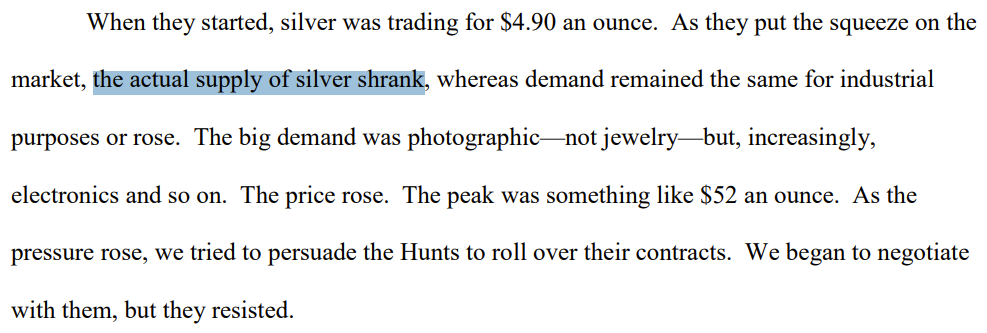
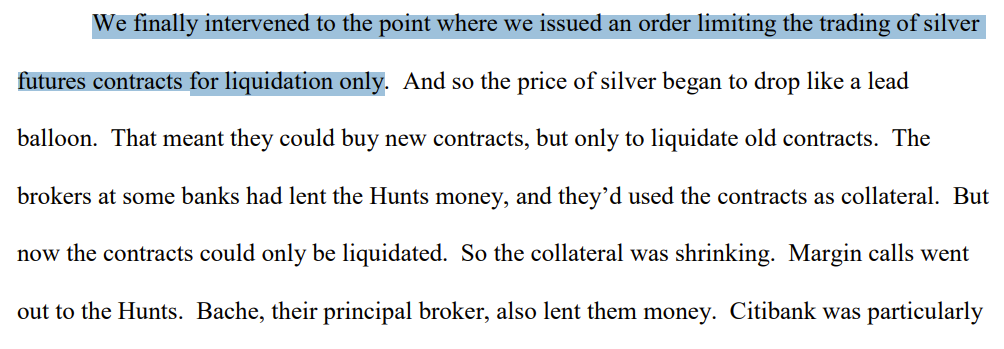
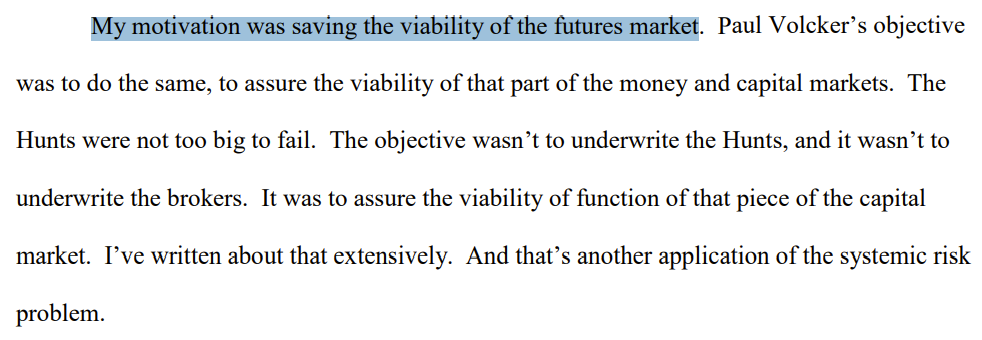
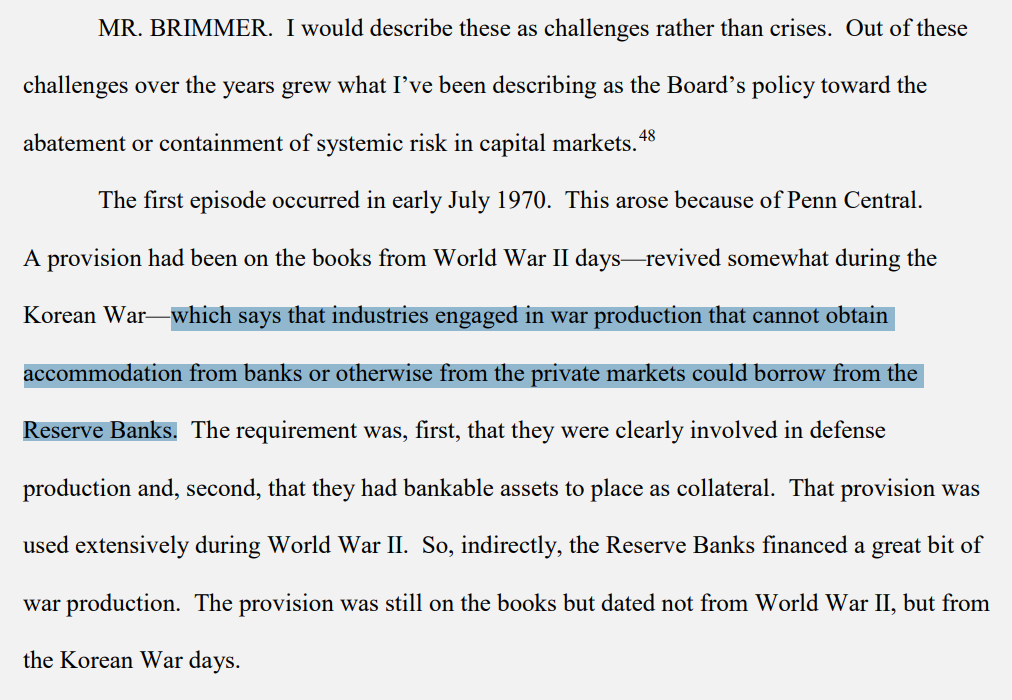
In the case of silver, the objective was not to preserve any individual participant, but to preserve the system itself. As Andrew Brimmer later reflected, the priority was “saving the viability of the futures market”—not the fortunes of those within it. Measures such as restricting trading to liquidation-only were not taken to express market opinion, but to stabilize a structure considered too important to fail. The implication is difficult to ignore.
Where a material underpins industrial capacity, financial infrastructure, and defense readiness, its market is no longer just a venue for price discovery. It becomes a point of strategic vulnerability—and therefore, a point of control.
Not because every government prefers control. But because every government that depends on such materials eventually confronts the same constraint: If the system must endure, the market cannot be allowed to break it.

“The system is not hidden. It is simply not described as a system. It is a labyrinth by design.” - IA